


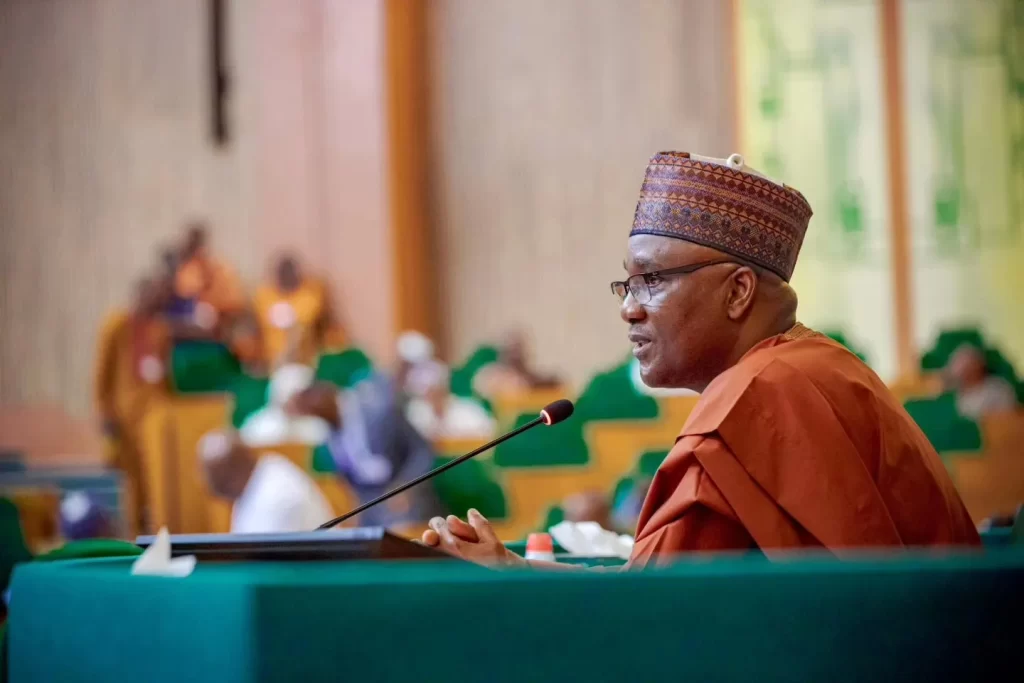
Three years after its inauguration, Nigeria’s 10th House of Representatives has built a record marked by extensive legislative activity, major reforms and persistent political controversies.
Led by Speaker Abbas Tajudeen and Deputy Speaker Benjamin Kalu, the 360-member House was inaugurated on June 13, 2023, with a promise to strengthen legislative oversight, improve governance and make parliament more responsive to Nigerians.
Since then, lawmakers have introduced 2,747 bills, with 363 successfully passing all legislative stages. Of the total, 57 were Executive bills, 95 concurrence bills from the Senate, while 2,595 were sponsored by individual lawmakers.
The House also considered 220 motions, referred 192 to standing committees and 28 to ad hoc committees. It admitted 121 matters of urgent public importance and reviewed 48 public petitions.
Among its notable legislations are the Tax Reform Bills, Student Loan Amendment Bill, National Minimum Wage Bill, National Anthem Bill, Electoral Act Amendment Bill and Electricity Act Amendment Bill. The chamber also approved annual and supplementary budgets, defence-related legislation, cybercrime bills and regional development commission bills.
Many of the major laws formed part of President Bola Tinubu’s economic reform agenda, with the House playing a key role in approving government loan requests and fiscal policies.
On constitutional reforms, the House Committee on Constitution Review, chaired by Deputy Speaker Benjamin Kalu, embarked on one of the most extensive amendment exercises in recent years. Public hearings were held across the six geopolitical zones to gather contributions from citizens, civil society organisations and professional bodies.
Key proposals include electoral reforms, judicial reforms, fiscal federalism, local government autonomy, reserved legislative seats for women and the establishment of state police to address insecurity.
The House also intensified efforts to tackle insecurity by organising a National Dialogue on State Policing and adopting a 54-point security reform recommendation covering intelligence gathering, military operations, inter-agency cooperation and community policing.
Politically, the composition of the House changed significantly during the three-year period. While the All Progressives Congress (APC) began with 178 seats, defections from opposition parties, particularly the Peoples Democratic Party (PDP), Labour Party and others, increased the ruling party’s numerical strength ahead of the 2027 elections.
The emergence of the Nigeria Democratic Congress (NDC) also reshaped opposition politics, while court judgments that removed several Plateau State lawmakers further altered the chamber’s composition.
Although Speaker Abbas Tajudeen and Deputy Speaker Benjamin Kalu retained their leadership positions, changes occurred within the minority caucus following the resignation and eventual defection of former Minority Leader Kingsley Chinda to the APC.
Fred Agbedi later emerged as the new Minority Leader, while Abdulsamad Dasuki became Deputy Minority Leader and Mansur Soro assumed the position of Minority Whip.
The House also reshuffled several committee leadership positions in 2024, increasing its standing committees to 134, the highest since Nigeria’s return to democracy in 1999.
Despite its legislative achievements, the chamber has faced several controversies.
One of the most prominent involved disagreements over minority leadership, including allegations of forged endorsements. Lawmakers also clashed over President Tinubu’s tax reform programme after claims emerged that versions of the tax laws signed by the President differed from those passed by the National Assembly.
The House equally denied allegations by one of its members that lawmakers paid between ₦1 million and ₦3 million to facilitate bills, motions and petitions.
Another contentious issue was the approval of emergency rule in Rivers State, which sparked heated exchanges among lawmakers on the floor of the House.
The chamber also experienced moments of grief following the deaths of several members, including Deputy Chief Whip Oriyomi Onanuga, Isa Dogonyaro, Abdulkadir Danbuga, Olaide Akinremi and Yaya Tongo, leading to bye-elections and tributes across party lines.
While House leadership insists the Assembly has delivered unprecedented legislative productivity, strengthened oversight and promoted citizen engagement, civil society organisations maintain that the true measure of performance lies in the quality, implementation and impact of legislation.
The Executive Director of the Civil Society Legislative Advocacy Centre (CISLAC), Auwal Rafsanjani, acknowledged the House’s legislative output but argued that oversight, transparency, legislative independence and accountability require further improvement.
As the 10th House enters the final phase of its tenure ahead of the 2027 general elections, its legacy will ultimately be judged not only by the number of bills passed but by the lasting impact of its reforms on governance, accountability and the lives of Nigerians.