


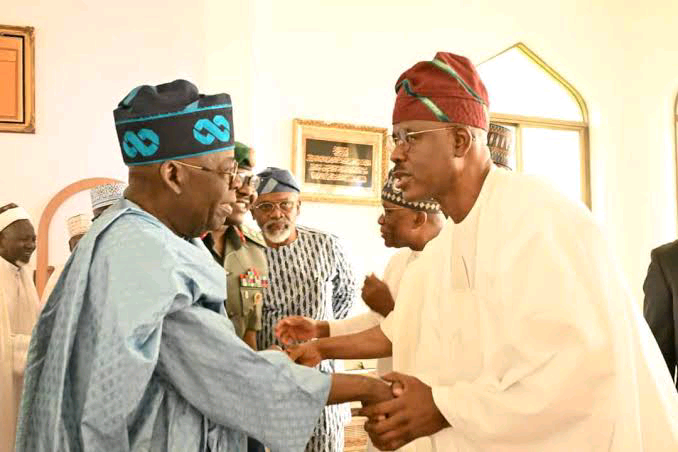
Former Minister of State for Defence and All Progressives Congress (APC) chieftain, Senator Musiliu Obanikoro, has said that President Bola Ahmed Tinubu’s loss in Lagos State during the 2023 presidential election was driven by concerns over the party’s Muslim-Muslim presidential ticket rather than the popularity of Labour Party candidate Peter Obi.
Obanikoro made the remarks during an interview on Mic On, a current affairs podcast hosted by Channels Television’s Seun Okinbaloye, where he reflected on the factors that shaped the 2023 elections and the implications for the 2027 general elections.
According to the former minister, many Lagos residents, particularly Christian voters, were uncomfortable with the APC’s decision to field Tinubu and former Borno State Governor Kashim Shettima as its presidential ticket.
He said the fears stemmed from concerns that Christians could be sidelined politically under an administration led by two Muslim leaders.
“What defeated us in Lagos was the Muslim-Muslim ticket, not Peter Obi,” Obanikoro said, stressing that public perception of the ticket played a more significant role than the opposition candidate’s appeal.
He explained that uncertainty over how a Tinubu administration would handle religious inclusiveness influenced voting patterns in the state.
Despite the initial concerns, Obanikoro argued that President Tinubu has since demonstrated that those fears were unfounded.
He described the President as a leader with a longstanding record of religious tolerance and inclusiveness, noting that his political career has been marked by collaboration with people of different faiths.
The APC chieftain also pointed to the fact that First Lady Senator Oluremi Tinubu is a Christian pastor and highlighted the presence of Christians in key positions within the current administration as evidence of the President’s commitment to religious balance.
The APC’s decision to field a Muslim-Muslim ticket in 2022 sparked widespread debate across Nigeria, with religious organisations, political stakeholders and sections of the Christian community expressing concerns over the country’s religious diversity. However, the ruling party defended its choice, insisting that competence, experience and electoral strategy informed the decision.
The controversy remained a dominant issue throughout the 2023 election campaign.
The February 25, 2023 presidential election delivered a major political upset when Labour Party candidate Peter Obi defeated Tinubu in Lagos State, the President’s long-standing political base. It marked the first time Tinubu lost a presidential election in Lagos, where he served as governor and has maintained significant political influence for over two decades.
Although he lost Lagos, Tinubu secured victories in several other states, won the presidential election nationwide and was inaugurated as President on May 29, 2023.
Obanikoro’s latest comments are expected to revive conversations on the influence of religion in Nigeria’s electoral politics as political parties begin consultations and strategic planning ahead of the 2027 general elections.