


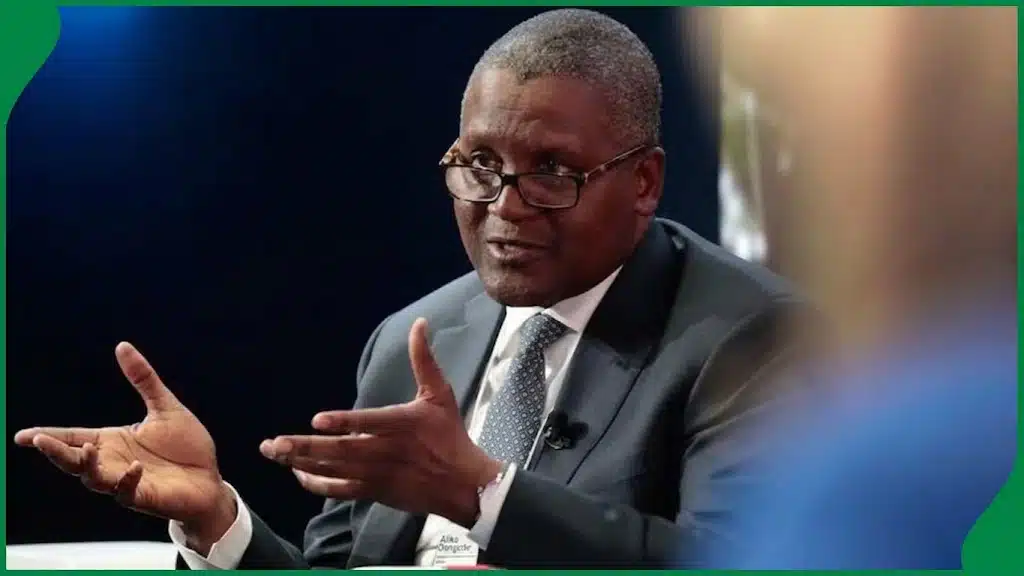
Aliko Dangote, President of the Dangote Group, has cautioned Nigerians against expecting a sharp drop in petrol prices simply because the country now has large-scale local refining capacity.
Speaking in an interview with Arise TV on Tuesday, Dangote explained that the cost of crude oil and wider developments in the international market continue to determine the price of petrol produced at his refinery. The facility buys crude at prevailing global rates and sometimes pays significant premiums, making it unsustainable to sell products below market levels.
Addressing concerns over current pump prices, the billionaire businessman described the cost as relative. He noted that petrol remains 30 to 50 per cent more expensive in neighbouring countries, a gap that continues to drive smuggling of Nigerian-produced fuel across the borders.
Dangote disclosed that the refinery paid as much as $124 per barrel for crude in May and stressed that the company cannot keep absorbing the difference. “We can’t go now and subsidize everything,” he said.
Despite the challenges, he assured the public that the refinery would keep meeting local demand. “Nigerians don’t need to worry. There will not be any shortage from our own part. There will be no queues, and we’ll make sure we keep satisfying the market despite all odds,” Dangote stated.
On broader economic issues, Dangote identified high borrowing costs as a major obstacle to industrialisation. He said it is extremely difficult to industrialise a country when interest rates stand at 30 per cent, adding that he could not see any “magician” who could succeed under such conditions.
He further warned that Nigeria is unlikely to attract another major refinery investment under the current policy environment, particularly in the downstream sector. “Under the current things that are going on, especially downstream, I cannot see any new refinery in our lifetime,” he said.
Dangote called on the government to deliberately protect productive local industries, arguing that they create jobs, generate tax revenue and stimulate economic activity. Importing finished goods, he said, amounts to “importing poverty and exporting jobs.”
He also listed inconsistent government policies and unreliable electricity supply as additional hurdles facing manufacturers, declaring: “You cannot manufacture goods with diesel.”