


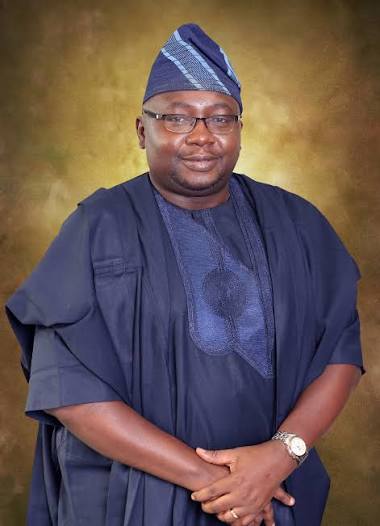
As the 2027 electoral cycle approaches, Oyo State’s political terrain is clearly evolving, shaped by performance, strategic positioning, and demonstrated leadership. Chief Adebayo Adelabu, Nigeria’s current Minister of Power, a former deputy governor of the Central Bank of Nigeria (CBN), and two-time APC gubernatorial candidate presents a candidature grounded in technocratic achievement, political resilience, and a credible pathway to governance.
Adelabu’s public sector profile is unusually deep for a state political aspirant. Before his ministerial appointment in August 2023, he was Deputy Governor, Operations at the CBN, overseeing core monetary and financial systems. That background, coupled with executive leadership roles in major financial institutions equips him with analytical rigour rare among state governance aspirants.
At the federal level, his stewardship of the Ministry of Power has been the government’s most visible technocratic portfolio. Under his watch, the Nigerian grid recorded historic peaks in generation capacity, including a record 6,003 megawatts and expanded transmission reliability through infrastructure rehabilitation and policy reforms. These are not incremental adjustments but measurable shifts in a notoriously dysfunctional sector.
This blend of macroeconomic management, infrastructural navigation, and complex stakeholder coordination offers a replicable governance playbook for Oyo State’s multi-sector challenges.
Unlike many political resumes built on rhetoric, Adelabu’s tenure is marked by identifiable outcomes:
Power Sector Modernisation: Under his leadership, the ministry has implemented reforms to decentralise Nigeria’s electricity market, broadened access through renewable scale-up initiatives, and facilitated state autonomy in energy generation and distribution. These reforms, anchored in the Electricity Act 2023 and subsequent implementation strategies, have begun delivering improved load factors and grid stability.
System Stabilisation and Access Improvements: Federal records indicate that significant portions of Nigerian businesses and households now enjoy more consistent power, with continuous efforts to increase installed generation capacity beyond historical thresholds.
For a state like Oyo, balancing urban industrial centres like Ibadan with rural electrification needs such experience in utility sector reform is immediately relevant. Energy stability is a prerequisite for manufacturing, digital enterprise, health services, and youth employment growth.
Adelabu’s re-entry into APC’s political mainstream reflects both personal resilience and strategic calculation. He contested the APC governorship primaries in 2019 and again sought elective office in 2023 via the Accord Party before returning to the APC fold. That electoral persistence signals commitment to public service, not opportunistic repositioning.
Adelabu has repeatedly framed his governorship ambition as rooted in public service, not personal elevation. In engagements across Oyo’s geopolitical zones, he has articulated priorities tied to socio-economic uplift, inclusion, and grassroots empowerment, appealing directly to voters beyond party loyalists.
This aligns with a broader requirement in Nigerian sub-national politics: credible, citizen-centred narratives beat empty slogans. Oyo voters are increasingly driven by lived realities — infrastructure, jobs, electricity, education, and transparent governance — over heritage or patronage.
In conclusion, Chief Adebayo Adelabu presents a unique political and governance profile that transcends routine rhetoric. His combination of technocratic competence, measurable achievements in a complex federal ministry, demonstrated political resilience, and capacity to unify APC stakeholders positions him as the most viable candidate for the APC in Oyo State in 2027.
His candidature does not merely reflect personal ambition; it represents an APC opportunity to redefine governance narratives, deliver infrastructure-driven development, and mount a robust challenge against entrenched political competitors.