


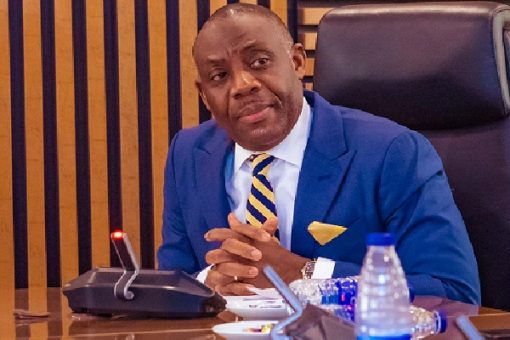
The Federal Executive Council (FEC) has approved a six-year moratorium on the establishment of new private universities, polytechnics and colleges of education as part of sweeping reforms aimed at strengthening Nigeria’s education sector.
The decision was announced on Wednesday by the Minister of Education, Dr. Tunji Alausa, while briefing journalists at the State House in Abuja after the FEC meeting presided over by President Bola Ahmed Tinubu.
According to the minister, the temporary ban is designed to allow the government to improve the quality and financial sustainability of existing tertiary institutions, particularly private universities.
Alausa explained that while demand for higher education in Nigeria continues to rise, many institutions—especially private ones—are struggling to remain sustainable.
“Access is still a challenge. We have many tertiary institutions, both public and private, but we must help existing private institutions become financially sustainable,” he said.
He cited data from the Joint Admissions and Matriculation Board (JAMB) indicating that more than 2.3 million candidates applied for university admission last year, while public universities could only accommodate fewer than 228,000 students.
The minister noted that the moratorium would allow the government to focus on strengthening existing institutions and improving academic standards.
In another key decision, the Council approved the restoration of the National Commission for Mass Literacy, Adult and Non-Formal Education as an independent commission after it was previously downgraded to a department within the education ministry.
Alausa said the move aligns with the government’s ambitious plan to educate more than 50 million young adults within the next two to three years and improve digital literacy nationwide.
He revealed that Nigeria currently has about 56 million illiterate citizens, a figure the administration is determined to drastically reduce.
The commission, originally established in 2013, will intensify adult education programmes, particularly in rural areas, using radio and television campaigns, community learning centres and public awareness initiatives.
The Council also approved amendments to the National Postgraduate Medical College Act to recognise medical fellowship qualifications as equivalent to doctoral (PhD) degrees.
The reform, developed in collaboration with the Office of the Attorney-General of the Federation, aims to remove career barriers faced by medical specialists.
Alausa noted that many doctors spend over a decade in medical school, residency and fellowship training, yet are still required to obtain a PhD before qualifying for professorial positions in universities.
“These professionals often spend more years in training than the average PhD candidate, so we need to harmonise that,” the minister said.
The amendment will take effect after the executive bill is transmitted to and approved by the National Assembly.
In addition, the Council approved comprehensive insurance coverage for the country’s 180 Federal Unity Schools.
The initiative involves the engagement of insurance underwriters to provide fire and general insurance protection for critical infrastructure and assets within the schools.
The move is intended to protect government investments in public educational facilities and ensure the safety and sustainability of federal schools across the country.
The reforms, according to the minister, reflect the administration’s commitment to raising educational standards and ensuring that Nigerian students receive globally competitive education.