


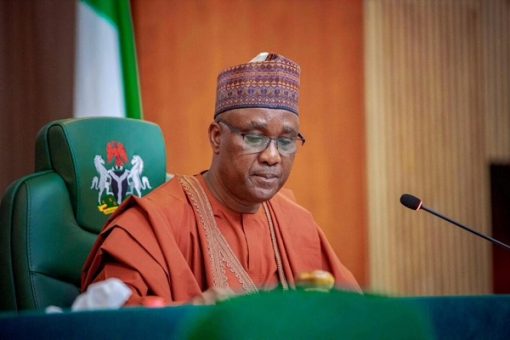
Speaker of the House of Representatives, Abbas Tajudeen, has defended the National Assembly’s decision to adopt a hybrid system for the transmission of election results, arguing that Nigeria’s 40 per cent internet coverage gap makes exclusive electronic transmission impractical.
Speaking on Sunday while hosting Spain’s Ambassador to Nigeria, Felix Costales, Abbas said restricting elections to real-time electronic transmission would risk disenfranchising millions of voters and worsening voter apathy.
According to the Speaker, data from the Nigerian Communications Commission (NCC) indicates that nearly 40 per cent of Nigeria’s territory remains underserved by internet connectivity.
“Even in advanced cities like Abuja, stable internet service is not guaranteed,” Abbas noted, warning that adopting a fully electronic system could exclude large segments of the electorate.
He stressed that voter turnout already hovers between 12 and 15 per cent of registered voters under the existing manual system, describing the trend as alarming. Introducing an electronic-only model, he argued, could further depress participation.
“If we insist on electronic transmission alone, we may record the lowest voter turnout in our history. That is avoidable,” he said, adding that the Electoral Act was deliberately amended to allow both manual and electronic transmission where feasible.
Beyond connectivity gaps, Abbas pointed to Nigeria’s persistent energy challenges, noting that internet infrastructure depends heavily on stable electricity supply.
“How do you power the entire country on election day to guarantee phones and internet services are working?” he asked, insisting that infrastructural realities must guide electoral reforms.
The Speaker maintained that opposition lawmakers pushing for exclusive electronic transmission are aware of the country’s digital limitations but have chosen to amplify public sentiment.
“There is no way you can guarantee transparent elections using an inadequate system,” he said.
Despite the concerns, Abbas expressed optimism about the 2027 general elections, following consultations with the Chairman of the Independent National Electoral Commission (INEC).
He revealed that after discussions with INEC leadership, he is confident the next polls will be “more transparent, more accommodating, and more inclusive.”
Describing democracy as a gradual process, Abbas said Nigeria’s system would continue to improve over time, drawing parallels with other established democracies that evolved through challenges.
In his remarks, Ambassador Costales disclosed that Spain also transmits election results manually, reinforcing the legitimacy of hybrid approaches in certain contexts.
He said Spain would closely follow Nigeria’s 2027 elections and pledged support to strengthen democratic institutions.
“You can count on us in whatever way possible to deepen Nigerian democracy,” the envoy assured.
Costales added that his visit was aimed at enhancing legislative diplomacy between Spain and Nigeria, noting that parliamentary collaboration remains underdeveloped compared to other bilateral relationships.
He observed that political polarization is a global phenomenon, citing developments in Europe and the United States, and stressed that democratic governance ultimately requires compromise and consensus.
For Nigeria’s parliament, the debate over election result transmission reflects a broader balancing act between technological advancement and infrastructural realities — a calculation that could shape the credibility and inclusiveness of the 2027 polls.