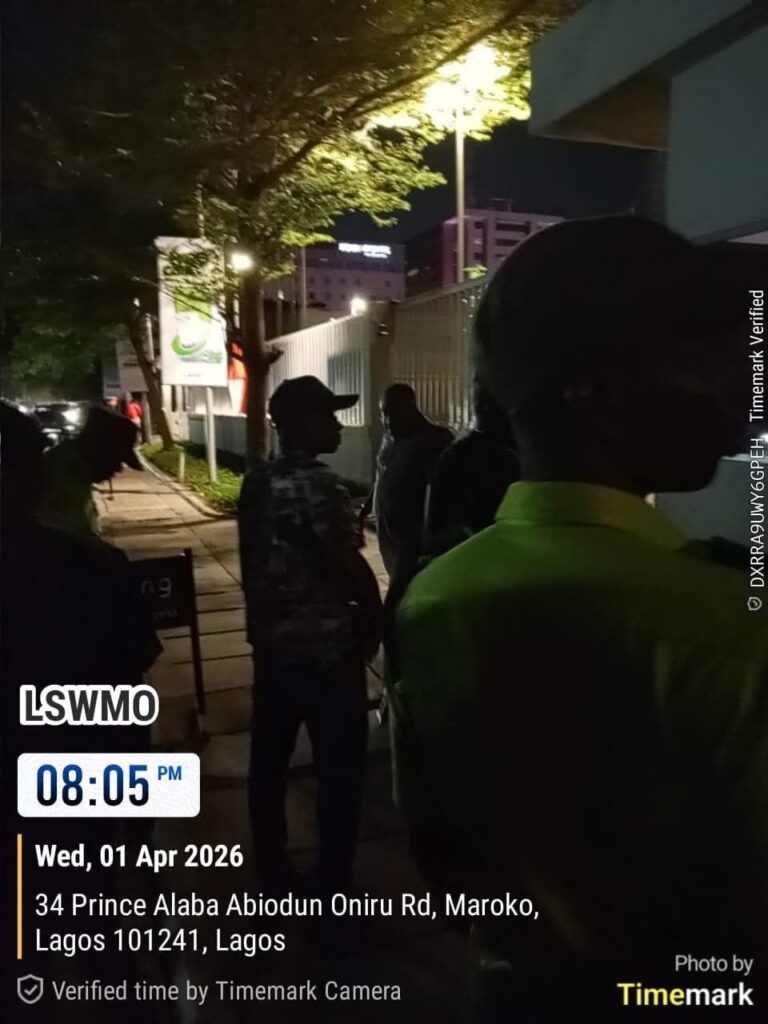
A major public health hazard is festering in the heart of Victoria Island as Access Bank Plc allegedly pumps untreated faecal matter into public drains serving one of Lagos State’s most densely populated commercial districts, prompting the state government to seek a court order to forcibly seal the bank’s Oniru premises.
Lagos State Commissioner for Environment and Water Resources, Tokunbo Wahab, confirmed that a whistleblower alert triggered an inspection by the Lagos State Wastewater Management Office, during which officials found the bank’s wastewater treatment plant completely non-functional.
Laboratory analysis of sampled effluent confirmed contamination, meaning raw sewage from the facility has been flowing unchecked into the public drainage network that residents, pedestrians, market traders and nearby businesses share daily.
The danger this poses is direct and serious. Untreated faecal discharge carries pathogens responsible for cholera, typhoid, hepatitis A, and a range of gastrointestinal diseases. In a high-density zone like Victoria Island, where drainage channels connect to broader waterways and flooding regularly pushes drain contents onto streets, the contamination risk does not stay contained. Every flood event becomes a potential vehicle for disease transmission across the community.
What compounds the crisis is Access Bank’s reported conduct during the enforcement visit. Rather than cooperate, security personnel and management representatives allegedly denied officials entry and physically attacked members of the enforcement team, a brazen obstruction that delayed containment of an active public health threat.
Wahab has since vowed to prosecute those involved in the alleged assault and confirmed that enforcement officers will return to seal the property. “There will be no sacred cows in the enforcement of environmental regulations,” he stated.
That assurance now carries weight beyond regulatory procedure. The bank’s alleged actions represent a textbook case of corporate negligence: a failed internal system left unrepaired, illegal discharge sustained over time, and institutional resistance deployed against the officials sent to protect the public. Residents of Oniru and surrounding Victoria Island communities have been absorbing the consequences of that negligence without their knowledge or consent.
Lagos State’s next step in court will test whether environmental accountability in Nigeria can hold institutions of Access Bank’s scale to the same standard as smaller violators. The broader message is already clear: corporate size is not a licence to contaminate.