


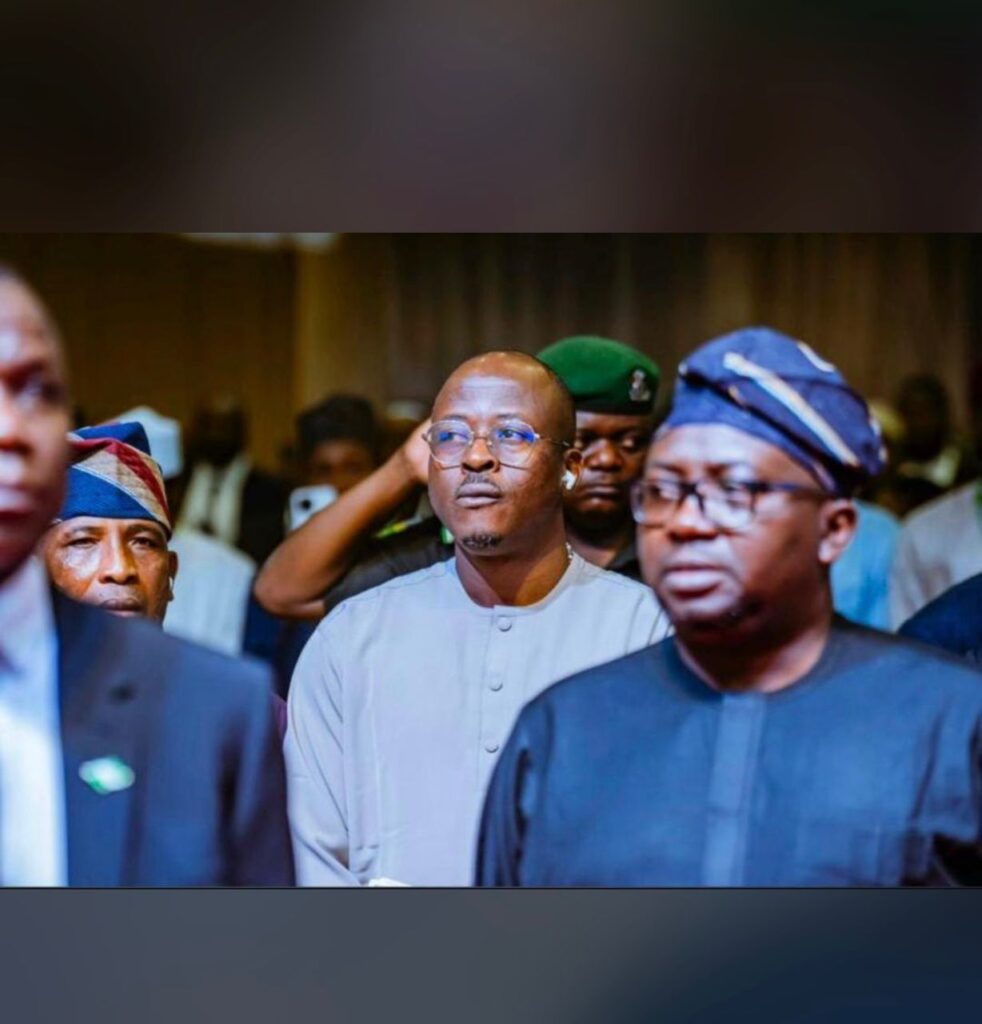
In Nigerian politics, elections are not won by reputation alone; they are secured by structure, sentiment, and the credibility of the men who translate ambition into acceptance. For Chief Bayo Adelabu, Nigeria’s Minister of Power and a leading contender for the Oyo State governorship in 2027, that translating force is Ajiboye Akande—popularly known as Boye Nation.
Akande has evolved far beyond the traditional confines of a Personal Assistant. Today, he functions as Adelabu’s political field marshal: coordinating grassroots energy, shaping public perception, and ensuring that Abuja’s policy gravitas connects seamlessly with the everyday realities of Ibadan, Ogbomosho, Oyo, Oke-Ogun, and Oyo South. In a state where voters demand both competence and connection, Akande supplies the latter in abundance—without compromising the former.
According to Akande, Adelabu remains the most credible option for Oyo in 2027 for one clear reason: capacity matched with character. “Oyo needs a governor who understands systems, resources, and results—not experiments,” Akande often insists. In his view, Adelabu’s blend of private-sector discipline, technocratic experience, and national exposure positions him as a governor who can deliver infrastructure, energy reforms, and economic stability while restoring the state’s competitive edge in the Southwest.
Akande’s political instincts are not accidental. Groomed in the school of mass-oriented politics associated with the late Olusola Saraki, he understands a timeless truth: voters must feel seen before they are persuaded. Elections are emotional before they are analytical. This philosophy has made him a rallying point for youths, artisans, transport unions, community influencers, and emerging political blocs across the state.
What critics sometimes label as “over-visibility” is, in reality, Akande’s most potent strategic advantage—accessibility. His constant presence at community events, youth engagements, funerals, weddings, religious gatherings, and informal political meetings is not noise; it is intelligence gathering. Through this organic network, Adelabu’s camp receives real-time feedback on public mood, local grievances, and emerging opportunities—insights no opinion poll can fully capture.
Crucially, Akande is also a bridge—between the grassroots and the elite, between political tradition and modern campaign mechanics. He translates Adelabu’s policy-driven vision into language the market woman understands and converts grassroots expectations into actionable strategy for the campaign’s inner circle. In a state that prides itself on intellectual depth and political sophistication like Oyo State, this dual fluency is a decisive advantage.
As 2027 draws closer, Akande’s confidence is unequivocal: Adelabu is not just running to win; he is running to govern. And winning, Akande argues, requires more than slogans—it requires trust, structure, and relentless engagement. These are the very pillars he has been quietly but effectively building.
Ajiboye Akande is not merely part of Adelabu’s political machinery; he is one of its engines. With his grassroots credibility, strategic awareness, and people-first approach, Boye Nation embodies the campaign’s connective tissue. If Adelabu emerges victorious in 2027, history will likely record that the groundwork was laid not only in policy rooms and party caucuses—but in the streets, communities, and conversations Akande mastered long before the ballots were cast.