


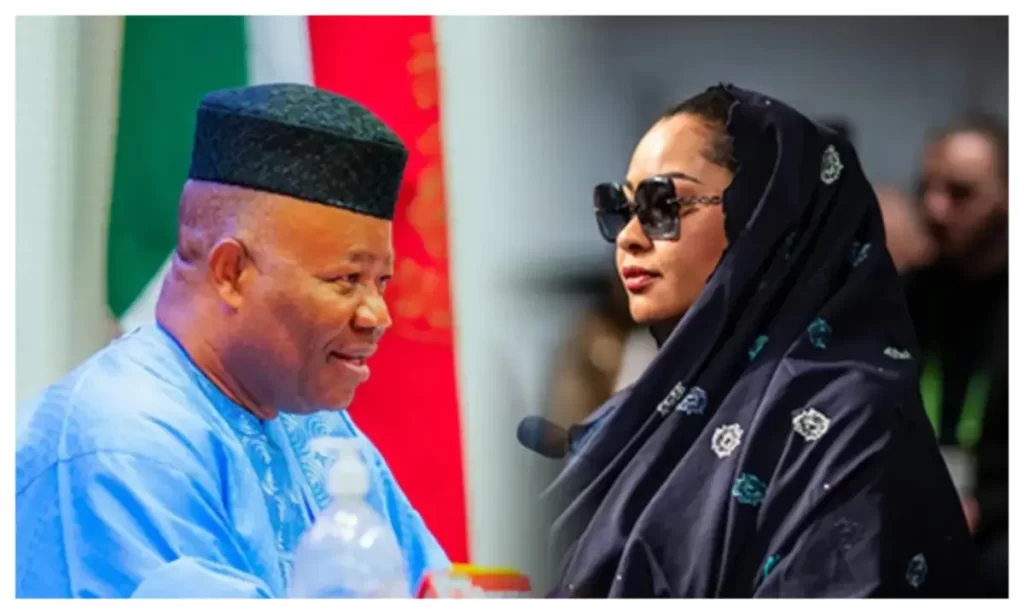
President of the Senate, Godswill Akpabio, has said the judgment of the Court of Appeal affirming the suspension of Senator Natasha Akpoti-Uduaghan reinforces the constitutional principle of separation of powers among Nigeria’s arms of government.
Akpabio made the clarification in a statement issued on Tuesday by his Special Adviser on Media and Publicity, Eseme Eyiboh, following the appellate court’s ruling delivered on Monday, February 9, 2026.
According to the Senate President, the court’s decision confirmed that the Senate’s disciplinary actions were lawful and procedurally sound, thereby affirming the legislature’s constitutional authority to regulate its internal affairs.
“The judgment of the Court of Appeal represents a consequential affirmation of the constitutional principles that sustain Nigeria’s democratic order and the orderly functioning of its institutions,” the statement read.
By upholding the Senate’s actions, Akpabio said the court had robustly reinforced the doctrine of separation of powers, which he described as a cornerstone of Nigeria’s constitutional democracy.
He noted that the ruling clearly established that the Senate’s authority to discipline its members is firmly grounded in the Constitution and its Standing Orders, stressing that such powers are essential to preserving order, decorum and institutional integrity.
Akpabio added that the Court of Appeal further clarified the limits of judicial intervention in the internal affairs of a coordinate arm of government, while still recognising the judiciary’s role as guardian of fundamental rights.
“The judgment recognises that the legislature must retain the autonomy necessary to enforce its rules and maintain discipline, provided it acts within the law,” he said, describing the balance as vital to democratic stability and effective governance.
While describing the circumstances that led to the litigation as regrettable, Akpabio emphasised that parliamentary democracy thrives on respect for established rules, collective responsibility and deference to the authority of the presiding officer.
He said actions such as refusal to comply with lawful directives of the Senate leadership and failure to appear before the Committee on Ethics, Privileges and Public Petitions undermined institutional authority and distracted from the Senate’s legislative responsibilities.
Although the Court of Appeal set aside the contempt proceedings and related fine on procedural grounds, Akpabio noted that the core findings affirming the Senate’s disciplinary powers remained intact.
He said the Senate would move forward in the spirit of reconciliation, institutional maturity and renewed commitment to its constitutional duties.
Akpabio added that the affected senator, who has since resumed legislative duties, is expected to adhere strictly to parliamentary rules and uphold mutual respect and collective responsibility.
“The strength of our democracy ultimately lies in the strength of its institutions, each operating responsibly within its constitutional remit,” he said, adding that the judgment reinforces the resolve to build a disciplined, stable and forward-looking legislature in service of the Nigerian people.