


The long-running campaign for the creation of Anioma State has entered a decisive phase in Nigeria’s National Assembly, with proponents declaring that the proposal is now closer than ever to becoming law.
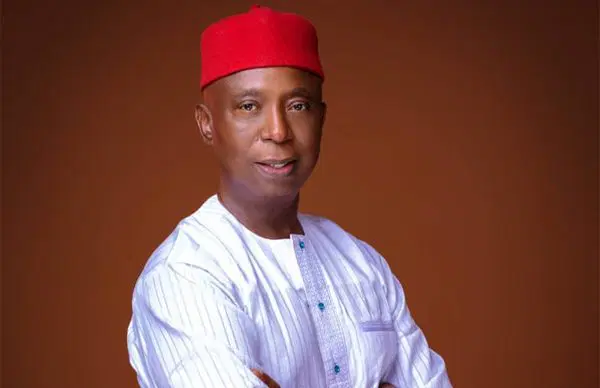
Speaking on the development, the Media and Publicity Director of the Anioma State Creation Technical Committee, Chief Tonnie Oganah, said the movement—championed in recent years by Ned Nwoko—has reached its most advanced legislative stage in decades.
According to Oganah, the bill has successfully passed key hurdles and is now awaiting a third reading in the National Assembly. If approved, both chambers will harmonise their positions before the process moves to a referendum overseen by the Independent National Electoral Commission (INEC).
“At that point, the people will simply be asked: ‘Do you want Anioma State? Yes or No,’” he explained, noting that the referendum would strictly focus on public consent rather than political appointments.
Despite the progress, Oganah acknowledged that the proposal is entangled in broader political dynamics, particularly due to Nwoko’s alignment with President Bola Ahmed Tinubu. He argued that this association has attracted opposition rooted less in policy concerns and more in national rivalries.
“The challenges he faces are largely because of his alignment with the President. He has inherited many of the President’s political enemies,” Oganah said.
He also described Nigeria’s political landscape as highly fluid, with shifting loyalties that complicate consensus on constitutional matters like state creation.
“Some politicians are APC in the morning and PDP at night,” he remarked, highlighting the transactional nature of party politics.
Nevertheless, Oganah expressed optimism, crediting the leadership of Senate President Godswill Akpabio and members of the House of Representatives for enabling the bill’s steady progress.
Beyond legislative politics, the Anioma agitation carries deep historical and cultural roots. Oganah traced its origins back over 70 years, linking it to early nationalist figures such as Barrister Dennis Osadebe and traditional leaders from the Anioma region.
He emphasised that the demand is not solely political but also tied to identity, noting that the Anioma people, though culturally Igbo, are currently a minority within Delta State.
“The creation of Anioma State is about identity, not just politics,” he said, arguing that it would help address historical imbalances stemming from colonial-era boundaries.
On economic viability, Oganah maintained that the proposed state is well-positioned to function independently. He pointed to existing infrastructure in Asaba—including an airport, courts, and government institutions—as well as the region’s contribution to oil and gas revenues.
He added that statehood would unlock new opportunities, including job creation, infrastructure development, and expanded political representation.
Proponents also argue that Anioma State would bring the South-East geopolitical zone in line with other regions by increasing its number of states to six. Oganah suggested that such restructuring, alongside broader reconciliation efforts like the release of Nnamdi Kanu, could ease political tensions in the region.
“It will be a win-win for Nigeria, politically and economically,” he said.
Oganah further revealed that the proposal enjoys backing from more than 70 traditional rulers in the region, urging remaining dissenting voices to prioritise collective interest over political considerations.
“The ultimate honour is to save your people. It is better to save your people and lose politically than to go against them and win,” he stated.
If the bill eventually secures final approval, a transitional arrangement would be introduced, with an administrator appointed to oversee the new state before the establishment of full democratic structures.
After decades of agitation, stakeholders now believe the realisation of Anioma State may finally be within reach for the current generation.