


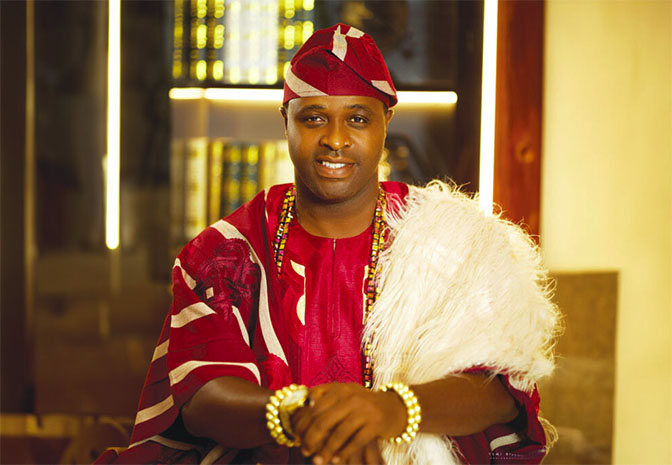
Nollywood actor and filmmaker Femi Adebayo has opened up about why he continues to prostrate before Yoruba traditional rulers even though he is a practising Muslim, drawing a clear line between religious worship and cultural respect.
Speaking on the VJ Adams Live podcast, which aired on YouTube on 31 August 2026, Adebayo addressed the often complex interplay between Islamic teachings and longstanding Yoruba customs.
He stressed that in Islam, full prostration — chest and head touching the ground — is reserved solely for Allah. In contrast, the Yoruba practice of prostrating before parents and monarchs is, for him, an act of cultural deference rather than worship.
“Islam says your chest should touch the ground and your head should touch the ground only for your Almighty, which is Allah. And Yoruba says you should prostrate for your father,” he explained.
Adebayo outlined his personal approach to reconciling the two: “Now I see my father and my mother as mini gods. I see the almighty as a super god. So I applied common sense. Okay, let me give the super one my chest and my head and let me just bow for the mini god.”
He emphasised that intention is key. When visiting a Yoruba palace where prostration is customary, he does not regard the gesture as conflicting with his faith.
“If I go to a Yoruba land and I feel that okay, everybody prostrate, I believe my own God will permit me to prostrate at that time,” Adebayo said. “So I would not say, ‘Oh, I’m a Muslim, I cannot prostrate.’ I will at that time because I believe my God sees the reason I’m prostrating.”
His remarks touch on a familiar debate among many Yoruba Muslims who navigate Islamic principles alongside pre-Islamic cultural practices that place high value on respect for elders and traditional institutions.
Adebayo presented his stance as a personal solution rather than a religious ruling. As an actor and filmmaker whose work frequently engages with Yoruba language, customs and social hierarchies, he also noted the importance of exposing his children to these traditions while guiding their religious upbringing.
The comments have sparked wider conversation about where cultural courtesy ends and religious observance begins. For Adebayo, the distinction remains clear: Allah holds a unique spiritual place, while gestures of respect towards earthly figures express honour without constituting worship.