


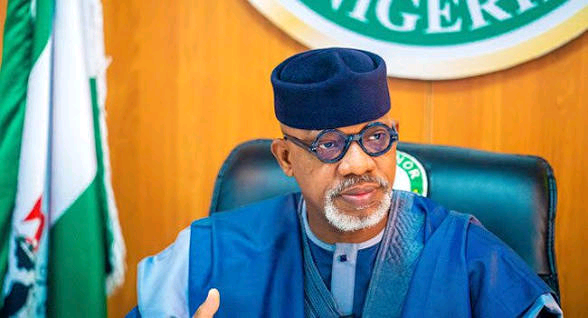
— Written by Adewale Onifade
He was the insider. He had the mandate. He had the access. When Aliko Dangote came to Ogun State with the largest single refinery investment in African history, one man sat in the chair designated to deliver the deal — and walked away empty-handed. That man is now Ogun State’s outgoing governor.
Before Dapo Abiodun was governor, before he held any elected office, Ibikunle Amosun appointed him to a role of singular strategic importance: Chairman of the Ogun State Committee on the Olokola Free Trade Zone project.
This was not a ceremonial posting. Abiodun was a seasoned player in the oil and gas sector — precisely the reason Amosun chose him. His mandate was explicit: engage Aliko Dangote, negotiate terms, and secure the siting of a proposed $16-19 billion refinery and petrochemical complex in Ogun Waterside. Kemi Adeosun, then Commissioner for Finance and herself a daughter of the host community, served alongside him. The assignment could not have been better tailored to the man’s background.
Dangote had already acquired the 20% core investor equity in the Olokola Free Trade Zone, making him a direct stakeholder in a joint venture structured with the Federal Government holding 51%, Ondo State 14.5%, and Ogun State 14.5%. The refinery was not a speculative pitch — it was a live, capitalised project looking for a home.
Abiodun’s committee let it walk out the door.
The Olokola Free Trade Zone was not a new idea when Dangote came knocking. Its foundations were laid in March 2007, when then-Governor Otunba Gbenga Daniel signed the landmark MOU in Abuja alongside the NNPC, Chevron, Shell, and British Gas. Daniel positioned Ogun State at the nerve centre of Nigeria’s offshore industrial future, anchoring a zone designed to host a refinery, petrochemical park, deep seaport, heavy industries, and residential infrastructure — all on land sitting directly in front of confirmed offshore oil and gas discoveries.
OGD built the platform. He put Ogun State in the room.
When Abiodun took the chairmanship of the OKFTZ committee under Amosun, that platform was live, the investor was willing, and the financing architecture was in place. Dangote had secured $3.3 billion in syndicated loans. The project cost was estimated at $9 billion at the time. The only deliverable required from the Ogun State committee was competent, focused negotiation.
It did not happen.
Dangote has been precise about the cost of the failure. He stated publicly that the three years and eight months of delay over the Olokola land cost him $500 million — on top of the $2.5 billion he had borrowed from banks to fund the project. That delay did not occur in a vacuum. It occurred while Abiodun was the designated committee chairman, the man tasked with preventing exactly that kind of costly stasis.
When the refinery was eventually commissioned in Lagos in May 2023, Amosun issued a direct challenge to his successor that has never been satisfactorily answered: he called on Abiodun, as the chairman specifically appointed to oversee and ensure that the project was sited at Olokola, to disclose with facts where he or his administration was remiss and which might have led to the project moving to Lagos.
Abiodun has not provided that account. Instead, his government spent its energy blaming Amosun.
When Abiodun became Ogun State’s governor in 2019, the refinery had already broken ground in Lagos. That window had closed. But the more damning question is what he did — or did not do — in the years between his committee assignment and that groundbreaking.
From the moment Dangote signalled his intention to locate the refinery at Olokola to the day construction commenced in Ibeju-Lekki, Dapo Abiodun occupied the most operationally relevant position in Ogun State’s engagement with the project. He was not a bystander. He was not an observer. He was the chairman of the body whose singular purpose was to prevent the loss of this investment.
At the commissioning ceremony in Lagos, Dangote pointedly referenced Abiodun’s role in the process — an allusion that Abiodun’s own spokesman cited as proof of his client’s efforts, without explaining why those efforts produced a refinery in another state.
Abiodun himself supplied the most damaging verdict. He described the day the Dangote Refinery groundbreaking was performed in Lagos as “the day of heartbreak for the sons and daughters of Ogun State as they watched helplessly on television.”
Helplessly. The word is precise and self-indicting. The man who watched helplessly was the chairman of the committee built specifically so that Ogun State would not have to watch helplessly.
Lagos under Babatunde Fashola did not ambush this project. It responded to an investor who had been frustrated out of a neighbouring state and needed a functioning, willing partner. The Lekki Free Trade Zone offered what Olokola negotiations could not: certainty, speed, and a government that treated the investment as a priority rather than a negotiating chip.
The refinery now sits on 2,635 hectares in Ibeju-Lekki. It employs tens of thousands. It anchors an industrial corridor that will generate wealth for Lagos for generations. None of that needed to be Lagos’s story.
The three structural failures that drove this outcome all trace back to the same actor.
Firstly, the governance vacuum at Ogun State’s 14.5% equity level could have been overcome by a skilled, energetic committee chairman converting minority equity into maximum leverage through negotiation. Abiodun had that assignment. He did not convert it.
Secondly, the succession disruption following OGD’s tenure required the next administration’s designated representative — Abiodun — to carry the institutional memory and strategic intent forward. He did not.
Lastly, the territorial disputes between Ogun and Ondo over Olokola’s coastal boundaries required a chairman with the political dexterity to manage inter-state complexity without allowing it to become a fatal obstacle. It became a fatal obstacle.
Ogun State lost a $19 billion refinery. It lost the thousands of permanent jobs, the industrial multiplier effect, the tax revenues, and the strategic economic identity that the project would have delivered to Ogun Waterside and the broader state.
Dapo Abiodun, the man assigned specifically to prevent that loss, presided over it as committee chairman — and then, as governor, spent years deflecting blame onto his predecessor rather than accounting for his own documented role.
OGD signed the MOU. He built the zone. He brought the investors to the table.
His successors fumbled the inheritance. One of them, the outgoing governor, held the mandate to prevent the fumble, acknowledged the loss as “heartbreak,” and has never explained to the people of Ogun State why he, the designated chairman of the deal, could not deliver it.
That explanation is still owed.