


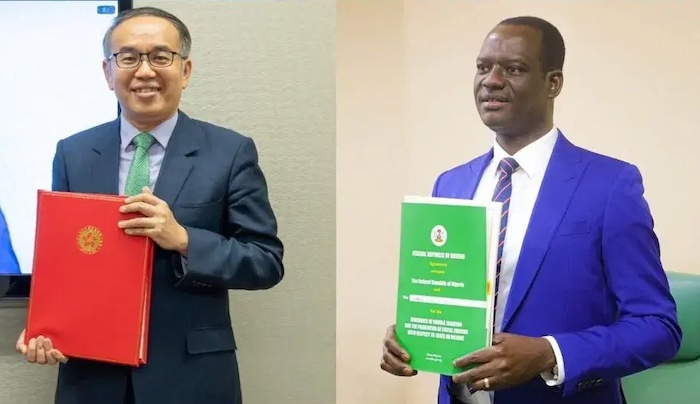
Nigeria and the Hong Kong Special Administrative Region of the People’s Republic of China have signed a Double Taxation Agreement (DTA) aimed at eliminating double taxation, curbing tax evasion, and enhancing trade and investment between both jurisdictions.
The agreement was signed virtually on Monday by the Chairman of the Presidential Committee on Fiscal Policy and Tax Reforms, Taiwo Oyedele, on behalf of Nigeria, and Christopher Hui, Secretary for Financial Services and the Treasury, representing Hong Kong.
According to a statement issued by the Ministry of Finance, the treaty will remove the burden of double taxation on income earned across Nigeria and Hong Kong, while introducing measures to prevent tax evasion and avoidance. It is also expected to provide greater certainty for businesses and investors operating in both markets.
The ministry stated that the agreement aligns with Nigeria’s broader strategy of expanding its network of tax treaties to facilitate international trade, attract foreign investment, and strengthen global tax cooperation.
Speaking during the virtual signing ceremony, Oyedele described the agreement as a significant milestone in the growing economic and commercial partnership between Nigeria and Hong Kong.
He said the treaty demonstrates Nigeria’s commitment to creating a transparent, predictable, and investor-friendly tax system capable of supporting trade, investment, and sustainable economic growth.
Oyedele noted that although the signing was conducted virtually, it reflected the determination of both governments to deepen economic cooperation and create a more favourable environment for cross-border trade and investment.
He added that the agreement comes at a crucial period as Nigeria seeks to strengthen its integration into global value chains and expand economic partnerships across Asia.
Describing Hong Kong as one of the world’s leading financial and commercial centres, Oyedele expressed confidence that the treaty would stimulate stronger private sector participation and unlock new opportunities for mutually beneficial investments.
The minister also commended the negotiating teams from both jurisdictions for producing what he described as a balanced, forward-looking agreement that meets international best practices while safeguarding the interests of both parties.
He further appreciated the Government of the Hong Kong Special Administrative Region and all stakeholders whose efforts contributed to the successful conclusion of the agreement.