


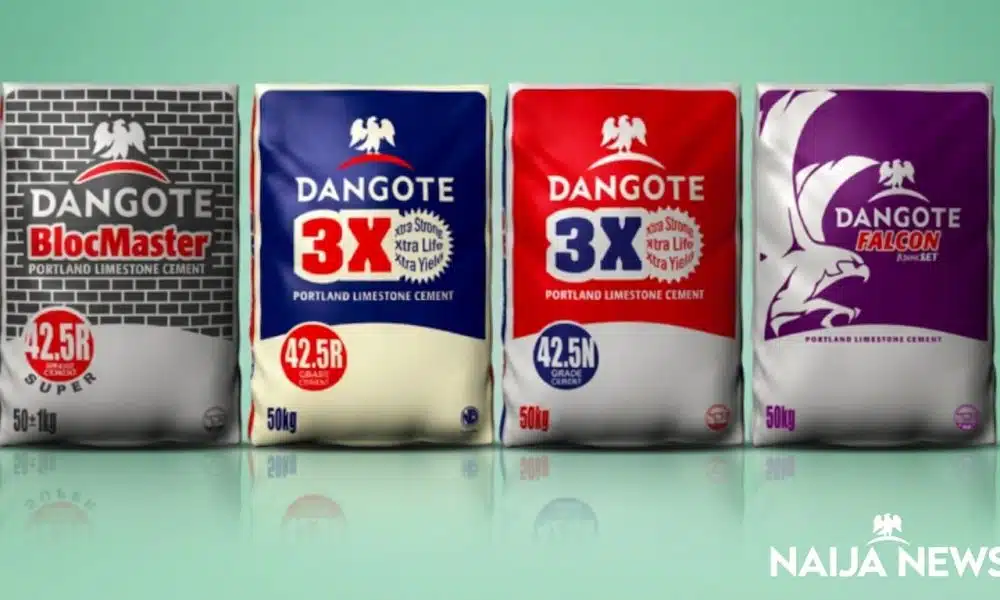
The price of cement — one of the most critical materials in Nigeria’s building and construction sector — has skyrocketed since the return to democratic rule in 1999.
At the start of the Fourth Republic, a standard 50kg bag sold for roughly ₦460 to ₦500 in many markets. More than 27 years later, the same bag has traded between ₦10,000 and ₦15,000 across different parts of the country.
The rise has not been steady. Periods of increased local production, government intervention, and competition among manufacturers occasionally brought prices down. At other times, scarcity, inflation, naira depreciation, high energy costs, and transport expenses drove sharp increases.
Historical comparisons require caution. Nigeria lacks a continuous, publicly available nationwide annual retail-price series for cement dating back to 1999. Earlier figures therefore come from contemporary market surveys, academic studies, and industry reports and should be treated as indicative rather than official national averages. For consistency, this review uses the price of a standard 50kg bag as the benchmark.
1999–2003: The Early Years
When Olusegun Obasanjo assumed office in May 1999, a bag cost around ₦500. An academic study in Ede, Osun State, recorded an annual average of ₦460. Prices hovered between ₦500 and ₦650 in 2000–2001 and edged up to ₦600–₦760 by 2003, reflecting continued reliance on imports and limited domestic capacity.
2004–2008: Crossing the ₦1,000 Mark
By August 2004, bags were selling for about ₦1,000 or more. Prices climbed further to ₦1,200–₦1,550 in 2005–2006. In 2007, factory and distributor prices rose modestly, but scarcity pushed retail prices to ₦1,700–₦1,800 in some areas. In 2008, a bag that sold for ₦1,300 suddenly hit ₦2,000 in Lagos depots amid shortages.
2009–2013: Relative Stability Amid Capacity Growth
Prices settled around ₦1,500–₦1,700 between 2009 and 2010. A major shock hit in 2011 when scarcity drove prices to ₦2,500–₦3,000 in parts of Lagos and Ogun before government intervention brought some relief. By 2012–2013, expanded production capacity (reaching about 28 million tonnes) helped keep prices mostly below ₦1,700.
2014–2019: Volatility Returns
Scarcity in early 2014 pushed prices to ₦2,200 before a major Dangote Cement price cut and higher output brought the average down to about ₦1,400 by December. Prices ranged between ₦1,400 and ₦1,800 in 2015, then climbed above ₦2,200 by late 2016 amid foreign-exchange pressure. From 2017 to 2019, bags generally sold for ₦2,400–₦3,000.
2020–2023: Post-COVID Surge
Cement entered 2020 at ₦2,400–₦2,600 but rose to ₦3,000–₦3,500 by year-end due to pandemic disruptions. In 2021, prices jumped to ₦3,800–₦4,600. They continued upward to ₦4,300–₦4,700 in 2022 and ₦5,000–₦5,600 in 2023.
2024–2026: The Sharpest Spike
Prices that stood at ₦5,000–₦5,500 in late 2023 soared within weeks. By February 2024, bags sold for ₦7,000–₦9,500, with some locations reporting ₦10,000–₦15,000 at the peak. The market later moderated to around ₦7,500 by September 2024.
In 2025, prices fluctuated between ₦7,500 and ₦10,500. By January 2026, the Federal Competition and Consumer Protection Commission (FCCPC) recorded ₦9,300–₦9,700. Mid-year figures climbed to ₦10,500–₦13,000, and by July some areas saw ₦13,000–₦15,000. As of August–September 2026, ordinary cement has generally traded at ₦9,500–₦13,000, though isolated reports of prices near ₦15,000 persist.
The FCCPC has expressed concern that retail prices remain elevated despite Nigeria’s installed production capacity of 60–65 million metric tonnes against estimated domestic consumption of only 25–30 million tonnes.
The long-term trajectory underscores how currency weakness, energy costs, logistics challenges, and occasional supply disruptions have repeatedly outweighed gains from local production capacity in determining what Nigerians ultimately pay for