


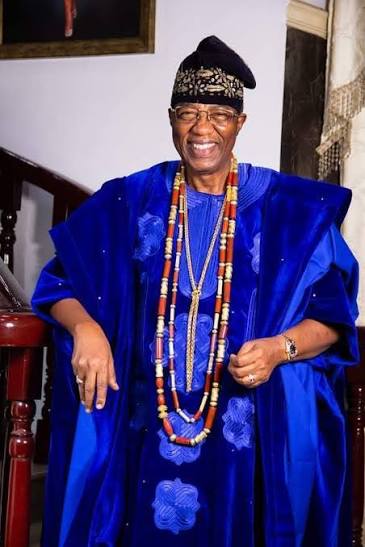
By Wale Onifade
As Ogun State marks its 50th year since inception on February 3, 2026, retrospectives of political leadership in the Gateway State have cast renewed light on the pivotal role of Otunba Engr. Gbenga Daniel — both as the state’s transformative governor from 2003 to 2011 and as a current federal lawmaker shaping national policy from the Senate.
A Visionary Takeover: Governance Philosophy and Policy Framework
When Gbenga Daniel assumed office on May 29, 2003, he brought a blueprint that married infrastructure-led development with human capital expansion, prioritising the twin goals of economic competitiveness and social inclusion. His governance philosophy rested on three pillars: physical infrastructure, educational empowerment, and industrial growth — each backed by institutional reform and private sector engagement.
Daniel’s administration pursued proactive Public–Private Partnerships (PPPs), institutionalised state agencies to improve service delivery, and implemented youth-focused empowerment strategies that sought to reduce unemployment and stimulate grassroots entrepreneurship.
Infrastructure as a Development Engine
Under his stewardship, Ogun State witnessed infrastructure expansion rarely seen before:
Transport Networks: The dual-carriage upgrade of the Sagamu–Abeokuta expressway became symbolic of Daniel’s commitment to linking people, places, and markets. Across the state, more than 2,000 kilometres of roads were rehabilitated or constructed, improving mobility and enhancing trade flows.
Stadia and Sports Facilities: Daniel’s administration constructed world-class stadia in Ijebu-Ode, Sagamu and Ilaro. Notably, the Gateway International Stadium in Ijebu-Ode hosted the 2009 FIFA U-17 World Cup, showcasing Ogun on the global stage.
Cargo and Trade Infrastructure: Visionary planning led to the construction of the Gateway Agro-Cargo International Airport to link Nigerian agribusiness to export markets, while free trade zones — notably the Ogun-Guangdong Free Trade Zone, Kajola Transportation Free Trade Zone, and the proposed Olokola Free Trade Zone/Deep Sea Port — aimed to position Ogun as a logistics and manufacturing hub.
Tourism and Urban Redevelopment: Historic sites such as Olumo Rock were refurbished with modern amenities, enhancing their appeal and adding to the state’s tourism offerings. Public urban housing schemes reshaped cityscapes in Abeokuta and beyond.
Education: A Legacy of Access and Specialisation
Daniel’s investment in education remains one of the most defining aspects of his governance:
Established the Tai Solarin University of Education (TASUED) — the first specialised university of its kind in Nigeria dedicated to teacher training.
Spearheaded the relocation of Olabisi Onabanjo University (OOU) to its permanent campus at Ago-Iwoye, and expanded its multi-campus footprint with specialised faculties.
Founded multiple polytechnics and ICT centres, including Gateway ICT Polytechnic (Sapade / Igbesa) and Abraham Adesanya Polytechnic (Ijebu Igbo) — strengthening vocational and technical education across the state.
Built the NYSC Orientation Camp in Sagamu, widely regarded as one of the country’s best.
These educational investments not only broadened access, but also aligned with the state’s economic priorities by equipping students with skills tailored to industry demands.
Economic Growth: Industrialisation and Investment Attraction
Under Daniel’s watch, Ogun cemented its reputation as an investment destination of choice:
His administration’s strategic positioning of the state’s industrial corridors attracted multiple industrial giants and foreign direct investment, catalysing job creation and economic diversification.
The Gateway Industrial & Petro-Gas Institute (GIPI) and other sectoral institutes aimed to develop talent pipelines for emerging sectors including oil, gas, and petrochemicals.
An active Ogun State Employment Generation Programme (OGEGEP) and targeted SME empowerment accelerated economic participation among youths and artisans.
People-Oriented Policies and Social Investment
Beyond hard infrastructure, Daniel’s administration rolled out initiatives that directly impacted social welfare:
Youth empowerment and entrepreneurship programmes proliferated, supporting young Nigerians into careers and business formation.
Subsidies, training grants, and social intervention initiatives aimed to reduce education and healthcare barriers.
Creation of state agencies such as the Ogun State Rural Medical Scheme (OGRUMED) improved access to primary and secondary healthcare services in underserved communities.
From Statehouse to Senate: A Continuum of Public Service
After concluding two terms as governor, Daniel briefly stepped back from frontline politics, focusing on leadership development through his Political Leadership Academy (POLA). His return to the elective office came in 2023, when he won the Senatorial seat for Ogun East representing the region at the National Assembly.
In the Senate, Daniel’s influence has extended to national security, economic planning, and regional development priorities:
As Chairman of the Senate Committee on Navy, he played a central role in securing federal approval for the Abigi-Makun-Omi Naval Base project — a strategic infrastructure expected to fortify maritime security and local economic activity.
He has championed legislative initiatives to establish specialised federal institutions in Ogun East — including a Federal College of Aviation Technology — strengthening the state’s role in national human capacity development.
His chairmanship of the Nigerian-Finnish Business Council drew international recognition for fostering bilateral economic partnerships.
Commemorating a Half-Century: Legacy and Lessons
As Ogun State celebrates 50 years since its creation, the imprint of Otunba Gbenga Daniel’s leadership endures — from highways and higher education to maritime strategy and federal engagement. While public discourse on governance outcomes may vary, the infrastructure, institutional foundations, and policy initiatives Daniel advanced remain central to conversations about the state’s development trajectory.
At the crossroads of history and aspirations yet unmet, Ogun stands as both testament and challenge: a state shaped by pioneering governance and propelled by citizens eager for innovation, inclusion, and sustained progress. In that narrative, the Daniel era is indisputably a defining chapter.