


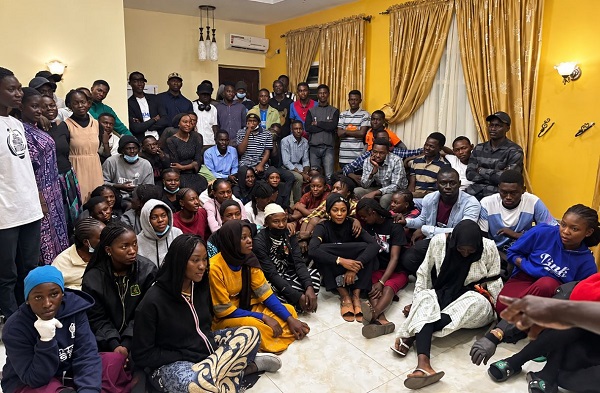
Conflicting accounts have surfaced over the release of 20 prospective National Youth Service Corps (NYSC) members and one civilian who were abducted in Imo State, leaving unresolved questions about whether ransom payments played any role in their freedom.
Parents of some of the corps members based in Ibadan have claimed they paid a total of N6 million to secure their children’s release. In contrast, a relative of the civilian victim, identified as Eberechukwu, a plantain chips seller, told The Nation that the family transferred N500,000 to the abductors after negotiations. The family had earlier reported that the kidnappers demanded N2 million for her freedom.
Imo State Commissioner of Police Audu Bosso, however, stated he was unaware of any ransom payment. He attributed the release solely to sustained operational pressure mounted by security agencies on the kidnappers.
The victims were abducted on 1 October along the Owerri-Onitsha Road while travelling from Ibadan, Oyo State. The prospective corps members were heading to orientation camps in Abia and Akwa Ibom states, while Eberechukwu was travelling to Ogbaku. They spent seven days in captivity before being freed on Wednesday from the Amakohia-Ubi forest in Owerri West Local Government Area.
A family member of the civilian victim, who identified himself only as Nnaji and requested anonymity for security reasons, said: “We paid the money through the bank,” linking the transfer directly to her release after repeated negotiations and appeals.
Police accounts differ sharply. Bosso has questioned the circumstances of the alleged payments, including who received any money, and maintained that intensified security operations forced the abductors to free their captives. The commissioner noted that the rescued individuals were receiving medical attention at the Department of State Services (DSS) office in Owerri.
Security agencies had mounted a major response following the abduction. Operatives used drone surveillance to locate the kidnappers’ camp but initially could not advance because the site was reportedly mined with improvised explosive devices (IEDs). The presence of explosives complicated the operation and required caution, after which agencies increased pressure on the suspects.
The identities of any alleged recipients of the reported payments, the precise timing and method of the transactions, and whether the money influenced the release have not been independently verified. The families’ claims and the police account remain at odds, raising questions that investigators may still need to examine: who negotiated with the abductors, whether any funds changed hands, who received them, and what role, if any, payments played alongside the security operation.
While the release brought relief to the families, the discrepancies leave central questions unanswered about the events that led to the victims’ freedom.