


The Federal Government has warned against any attempt to restore the petrol subsidy, saying the move could reverse economic gains recorded under President Bola Tinubu’s administration.
Minister of Information and National Orientation, Mohammed Idris, said Nigeria could not afford to return to what he described as a “retrogressive path” of fuel scarcity, fiscal pressure and economic uncertainty.
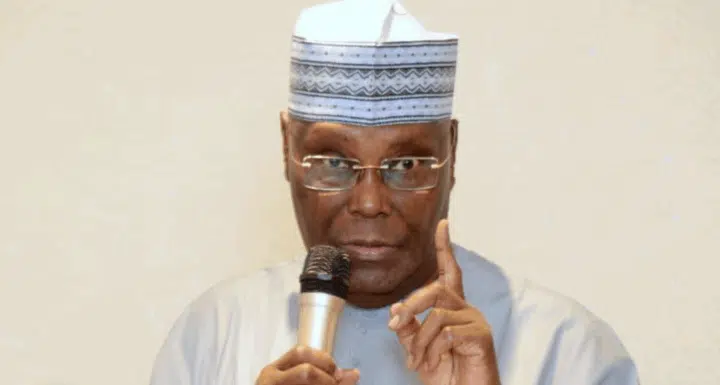
Idris made the position known while reacting to calls by African Democratic Congress (ADC) presidential candidate Atiku Abubakar for the reversal of the fuel subsidy removal.
Atiku had last week pledged to reverse the policy if elected president in 2027, alleging that proceeds from the subsidy removal had been mismanaged.
However, the minister argued that restoring the subsidy would undermine the economic reforms introduced since May 29, 2023.
According to Idris, the removal of the petrol subsidy, alongside the unification of the foreign exchange market, remains central to the Tinubu administration’s economic reform programme.
He said the reforms had released additional resources to the three tiers of government, citing figures from the Federal Government’s reform scorecard.
Idris said subsidy savings generated between June 2023 and December 2025 amounted to N15.8 trillion in resources for the federation, with about N5.43 trillion accruing to the Federal Government, N6.52 trillion to states and N3.88 trillion to local governments.
The minister clarified that the N15.8 trillion was not kept in a separate government account as cash, but represented resources released within the wider fiscal system and made available to the three tiers of government.
He said the additional fiscal space had helped governments meet salary and pension obligations while supporting investments in infrastructure, healthcare, education, agriculture, security and other sectors.
Idris also disclosed that about N6.47 trillion had been spent on strategic infrastructure, including major projects such as the Lagos-Calabar Coastal Highway, Sokoto-Badagry Superhighway and Trans-Sahara Superhighway.
He added that more than 10 million Nigerian households had benefited from social transfers, while over N400 billion had been committed to major social investment programmes, including NELFUND, MREIF and CREDICORP.
The minister warned that restoring petrol subsidy could also create fresh uncertainty for investors as Nigeria expands domestic refining capacity.
He argued that returning to the old subsidy regime could recreate the fuel shortages and fiscal pressures that contributed to Nigeria’s economic difficulties before the reforms.
Idris further said Nigeria was already spending heavily on electricity subsidies, which cost the country N3.14 trillion between June 2023 and December 2025.
He maintained that adding a petrol subsidy to the existing electricity subsidy would place further pressure on government finances.
Meanwhile, Atiku has modified his position, insisting that his proposed intervention would not amount to a return to the old subsidy regime.
In a statement by his media aide, Phrank Shaibu, Atiku said his economic plan proposed a targeted, capped and transparently budgeted intervention with independent auditing and a clear exit mechanism.
He also called for accelerated domestic refining, increased competition, improved mass transportation and measures aimed at restoring household purchasing power.
Atiku had previously supported the removal of fuel subsidy during the 2019 and 2023 presidential campaigns.
His latest position has attracted criticism from several economists, labour activists, manufacturers and political figures.
Accord chieftain Gbenga Olawepo-Hashim accused Atiku of dishonesty for changing his position without adequately explaining the reasons for the shift.
Hashim said politicians were entitled to change their positions when circumstances changed but should be transparent with Nigerians about the reasons behind such changes.
He, however, called for a reformed and targeted subsidy system for petroleum products and other strategic commodities, insisting that it should have clear eligibility criteria, publicly disclosed costs, measurable objectives and strict accountability.
The debate over fuel subsidy is expected to remain a major issue ahead of Nigeria’s 2027 presidential election.