


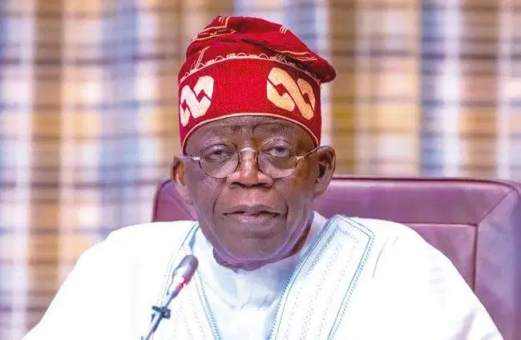
Tinubu Deploys 65 Ambassadors Worldwide as UK, France Approve Dalhatu, Oke
President Bola Ahmed Tinubu has approved the deployment of 65 ambassadors to Nigeria’s foreign missions across the globe and the United Nations, marking a major step toward restoring the country’s full diplomatic presence abroad.
The list includes 31 non-career ambassadors and 34 career diplomats who were earlier confirmed by the Senate in December 2025 following their nomination by the President.
In a statement issued on Friday, the Special Adviser to the President on Information and Strategy, Bayo Onanuga, said the Ministry of Foreign Affairs had already secured diplomatic approval—known as agrément—from the United Kingdom and France for two key envoys.
According to the Presidency, the UK has accepted Ambassador Aminu Dalhatu as Nigeria’s High Commissioner-designate, while France has granted approval for Ambassador Ayo Oke.
The ministry has also forwarded the names of other ambassadors-designate to their host countries, seeking diplomatic clearance in line with international protocol.
“President Tinubu has directed the Ministry of Foreign Affairs to immediately commence the induction programme for the ambassadors-designate and High Commissioners,” the statement said.
Several high-profile political figures and former public officials are among the non-career ambassadors approved for deployment.
Former Adamawa South senator, Grace Bent, will represent Nigeria in Lomé, Togo, while former presidential adviser Ita Enang has been posted to South Africa. Former Abia State governor, Okezie Ikpeazu, will serve in Spain, and former Chairman of the Independent National Electoral Commission, Mahmood Yakubu, has been assigned to Qatar.
Other notable postings include former Chief of Naval Staff, Vice Admiral Ibok-Ete Ibas (rtd), to the Philippines; former Interior Minister, Lt-Gen. Abdulrahman Dambazau (rtd), to China; former Ogun State deputy governor, Olufemi Pedro, to Australia; and former Director-General of the National Intelligence Agency, Ayodele Oke, to France.
Also on the list are former presidential aide Reno Omokri to Mexico, former Aviation Minister Femi Fani-Kayode to Germany, Senator Jimoh Ibrahim as Nigeria’s Permanent Representative to the United Nations, and former Health Minister Prof. Isaac Adewole to Canada.
Additional non-career envoys include Chioma Ohakim to Poland, Senator Nora Daduut to South Korea, Yakubu Gambo to Saudi Arabia, and Lateef Kayode Are to the United States.
Among the 34 career ambassadors approved for posting are Ambassador Nwabiola Ezenwa Chukwumeka to Côte d’Ivoire, Ambassador Besto Maimuna Ibrahim to Niger, and Ambassador Monica Okwuchukwu Enebeli to São Tomé and Príncipe.
Others include Ambassador Mohammed Mahmud Lele to Algeria, Ambassador Endoni Syndoph Paebi to Burkina Faso, Ambassador Ahmed Mohammed Monguno to Egypt, and Ambassador Jane Adams Michael to Jamaica.
Additional postings cover countries such as Zambia, Mali, Equatorial Guinea, Lebanon, Italy, Mozambique, India, Ghana, Ethiopia, Malaysia, Tanzania, Botswana, Iran, Kenya, Belgium, Switzerland, Namibia, Gabon, Sierra Leone, Sudan, and Thailand.
The latest postings represent a key phase in the Tinubu administration’s effort to fully restore Nigeria’s diplomatic representation abroad after many ambassadorial positions remained vacant for over two years.
President Tinubu had recalled Nigeria’s ambassadors in September 2023 as part of a comprehensive review of the country’s foreign policy structure.
The process of appointing new envoys began in November 2025 when the President transmitted the first batch of ambassadorial nominees to the Senate. Additional lists followed later that month and in early December, bringing the total number of nominees to 68.
The Senate subsequently screened and confirmed the candidates in December 2025, paving the way for their deployment.
Before the confirmations, many Nigerian missions abroad were headed by chargés d’affaires due to the absence of substantive ambassadors.
Government officials say the new ambassadors are expected to strengthen Nigeria’s diplomatic engagement, promote economic partnerships, and deepen bilateral relations with countries around the world.
With their postings now approved and induction programmes underway at the Ministry of Foreign Affairs, the ambassadors-designate are expected to prepare for deployment once host nations complete the agrément process.