


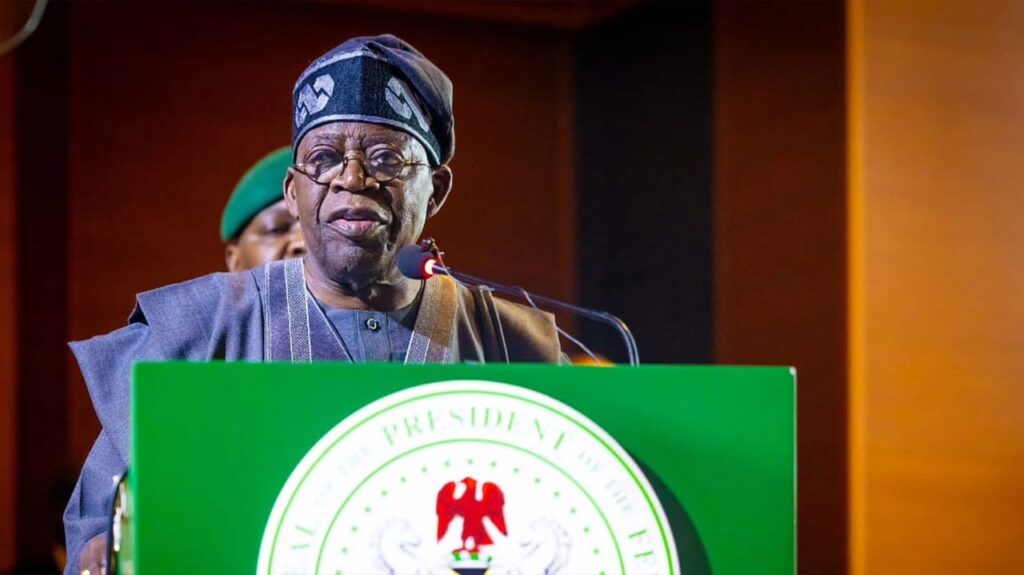
President Bola Tinubu is set to receive a comprehensive report on the proposed establishment of state police as consultations on the constitutional framework required for its implementation approach their final stages.
Chief of Staff to the President, Femi Gbajabiamila, disclosed this after a high-level consultative meeting held at the Presidential Villa in Abuja, revealing that significant progress has been made toward developing a workable structure for decentralised policing in Nigeria.
According to Gbajabiamila, discussions on state police commenced several months ago following a directive from President Tinubu, who has repeatedly advocated for decentralising policing to strengthen the country’s security system and improve responses to local threats.
He explained that the consultations, which began about three to four months ago, have focused largely on addressing constitutional and legal issues surrounding the creation of state police formations.
“The process has advanced considerably, and attention is now centred on the constitutional amendments required to pave the way for state policing,” Gbajabiamila said.
He noted that the immediate objective is to secure the necessary constitutional changes before introducing enabling legislation that would establish the legal and operational framework for state police across the federation.
The Chief of Staff added that discussions have largely moved beyond the question of whether state police should be established, with stakeholders now concentrating on the institutional safeguards and implementation mechanisms needed to ensure the system functions effectively.
Gbajabiamila further disclosed that President Tinubu would be briefed on the outcome of the consultations and presented with recommendations submitted by stakeholders involved in the process.
The meeting is part of a broader series of engagements involving the Presidency, the National Assembly, security agencies, and other key stakeholders working to develop a sustainable model for state policing.
Supporters of the initiative argue that decentralised policing will strengthen intelligence gathering at the grassroots level, improve community policing efforts, and enable state governments to respond more effectively to local security challenges.
Momentum for the reform has continued to grow. In February, President Tinubu urged the National Assembly to commence constitutional amendments necessary for the establishment of state police, describing the move as essential to addressing Nigeria’s evolving security concerns.
The Senate has also indicated its willingness to expedite constitutional amendments related to the proposal, while a committee established earlier this year by the Inspector-General of Police has already submitted recommendations on the operational structure and transition process for the new policing model.
Nigeria currently operates a centrally controlled policing system under the Nigeria Police Force. However, persistent security challenges, including terrorism, banditry, kidnapping, and communal clashes, have intensified calls for a decentralised approach that would empower states to establish and manage their own police services while maintaining coordination with federal authorities.
With consultations nearing completion and constitutional amendments actively under consideration, the proposed state police initiative is edging closer to reality, potentially ushering in one of the most significant security reforms in Nigeria’s democratic era.