

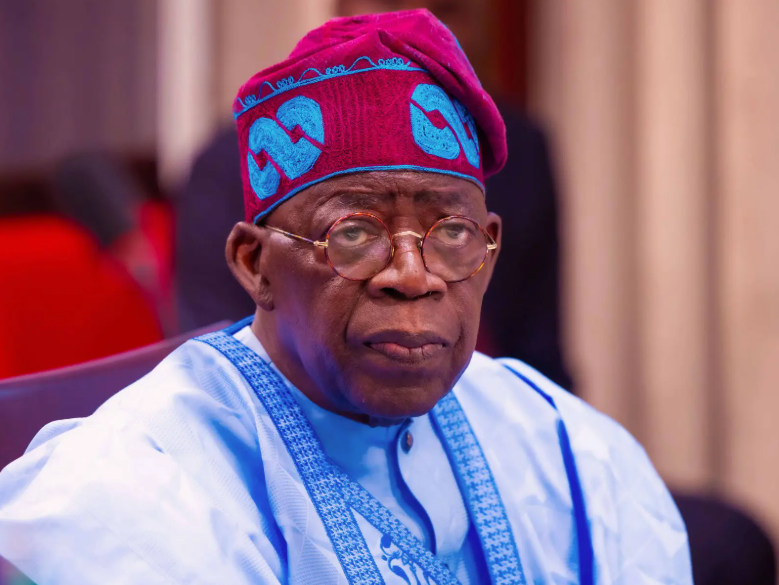
President Bola Ahmed Tinubu has initiated a sweeping reform of Nigeria’s sports sector, directing key ministries and agencies of the Federal Government to overhaul sports funding and reposition the industry as a viable driver of economic growth.
The President announced the reform agenda on Friday evening in a post on his verified X handle, @officialABAT, describing sports as one of Nigeria’s strongest national brands and a powerful tool for unity, youth engagement and global influence.
According to Tinubu, the reforms are anchored on the Renewed Hope Initiative for Nigeria’s Sports Economy (RHINSE), a strategy designed to transform sports into a catalyst for job creation, tourism, private investment and international visibility.
He said his administration plans to build a stronger and more sustainable sports ecosystem through scientific elite athlete development, expanded grassroots participation, revitalised sports federations and the hosting of major international sporting events in Nigeria.
“Sports is our national asset and thus must be administered, managed and funded in alignment with its special nature and demands, devoid of any bureaucratic bottlenecks,” the President said.
Tinubu pledged that the future of Nigerian sports would be “planned, properly funded and competitive,” assuring that athletes would receive early support, adequate preparation and deserved recognition.
“Nigeria will continue to win, with pride,” he declared.
Highlighting recent achievements, the President disclosed that Nigerian athletes won a total of 373 medals across all sports in 2025, describing the feat as unprecedented and evidence of the country’s vast sporting potential when backed by structure and preparation.
“In 2025, scores of athletes representing Nigeria made our nation proud,” Tinubu said, citing individual champions in athletics and other disciplines, Nigeria’s successful female football and basketball teams, and the Super Eagles, who secured a bronze medal at the 2025 Africa Cup of Nations.
“From grassroots competitions to continental and global stages, the evidence is clear: when talent is supported with structure and preparation, Nigeria delivers,” he added.
The President commended the National Sports Commission (NSC) for recording progress despite systemic challenges, praising its leadership under Chairman Malam Shehu Dikko for driving reforms aligned with the administration’s Renewed Hope Agenda and shared prosperity vision.
However, Tinubu acknowledged longstanding structural problems that have hampered Nigeria’s sports development, particularly delayed funding and inadequate investment in infrastructure.
“For too long, sports funding has been slowed by bureaucracy, fragmented across institutions and released too late to support proper preparation or participation,” he said. “There has also been little meaningful investment in sports infrastructure that meets international benchmarks.”
Declaring an end to the cycle, Tinubu announced that he has approved and directed the Ministries of Finance, Budget and Economic Planning, as well as the Budget Office of the Federation, to reset sports funding beginning from the 2026 fiscal year.
He said adequate budgetary provisions must be made annually for sports infrastructure development and maintenance, sporting programmes and events, as well as Nigeria’s participation in international competitions.
The President further directed that all funds appropriated for sports must be released immediately upon passage and assent of the national budget.
“Nigerian athletes deserve certainty, not excuses,” Tinubu stated.
As part of the reform, Tinubu revealed that funds currently spread across various ministries, departments and agencies for sporting activities would be reviewed, restructured and streamlined.
Savings from the exercise, he said, would be transferred into a unified funding framework under the National Sports Commission to strengthen domestic sports development and international participation.