
Nigeria’s political landscape is steadily shifting as the 2027 general elections draw closer, with a familiar pattern emerging among second-term governors seeking new relevance in the National Assembly.
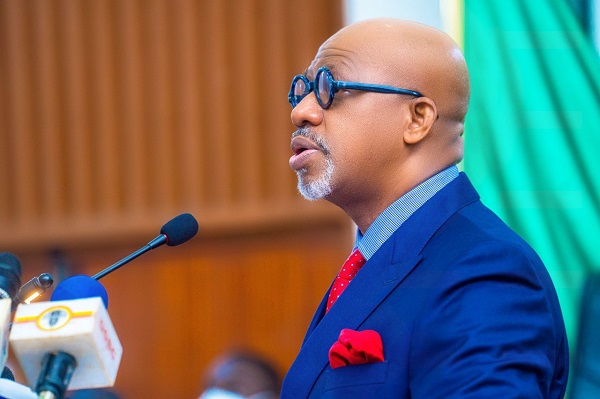
Among them is Ogun State Governor, Dapo Abiodun, who is positioning himself for a Senate seat in Ogun East, a constituency currently represented by his predecessor, Gbenga Daniel.
This transition, however, raises a critical question: does success in executive office naturally translate into legislative competence? The answer is far from straightforward.
Executive governance is largely defined by direct control—over budgets, projects, and administrative systems. Legislative work, by contrast, demands influence without control, relying on lawmaking, negotiation, and oversight to achieve results. Moving from one sphere to the other requires more than experience; it requires a demonstrable shift in approach.
In Ogun State, official records reflect ambitious fiscal planning, with budgets running into hundreds of billions of naira, often prioritizing infrastructure and healthcare. Yet, beyond these figures, the lived reality across Ogun East—particularly in rural and semi-urban communities—suggests uneven progress.
Road networks in several areas remain underdeveloped, affecting mobility, slowing emergency responses, and limiting economic growth. Infrastructure, widely regarded as the backbone of development, continues to fall short of expectations in key parts of the state.
The situation is perhaps most evident in the state’s emergency healthcare system. The deployment of tricycles as response vehicles, presented as an innovative solution, has drawn criticism as a sign of systemic limitations rather than sustainable progress.
While temporary measures can be necessary, their prolonged use often signals deeper policy challenges. Effective emergency response systems rely on speed, coordination, and adequate capacity—standards that improvised solutions struggle to meet consistently.
At the heart of the debate is not the existence of interim fixes, but their normalization. For a state with significant capital allocations, the expectation is clear: long-term, scalable solutions rather than continued adaptation to constraints.
This distinction speaks directly to leadership philosophy. A governance model that consistently adjusts to limitations rather than eliminating them raises concerns about its readiness for legislative responsibilities, where the focus shifts to shaping policies that address systemic issues.
Ogun East voters have previously demonstrated their expectations. The election of Gbenga Daniel to the Senate in 2023 was widely seen as a reflection of his track record in office, setting a benchmark that executive performance should underpin legislative trust.
As Dapo Abiodun eyes the same seat, the scrutiny is intensifying. Key questions remain: Has infrastructure meaningfully improved? Is healthcare delivery more reliable? Has governance shifted from stopgap measures to durable systems?
For many observers, the answers remain inconclusive.
Ultimately, the 2027 contest in Ogun East may come down to more than political continuity or name recognition. It is shaping up as a referendum on performance, capacity, and evidence.
In a chamber like the Senate—where influence is exercised through ideas, laws, and oversight—track record matters. The outcome, therefore, may hinge not on ambition, but on whether that ambition is backed by measurable results.