

The Alaafin of Oyo, Oba Abimbola Owoade, has instituted an annual heritage and homecoming event designed to reunite people of Oyo ancestry from across Nigeria and the diaspora.
Christened the “Oyo Empire Day Celebration,” the three-day cultural festival will hold every year on the third Thursday, Friday and Saturday of December. Organisers project an average daily attendance of about 20,000 people in Oyo town for the maiden edition.
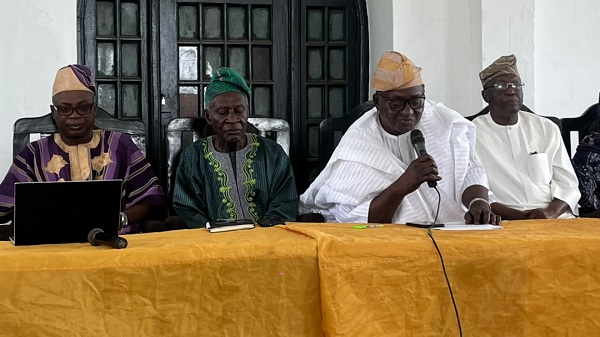
Dr Adekunle Ogunmola, Chairman of the Central Working Committee, made the disclosure on Wednesday during a press briefing at the Alaafin’s Palace in Oyo. He described the initiative as the brainchild of Oba Owoade, conceived as a platform for historical preservation, cultural education and socio-economic integration.
The celebration will embrace lineages linked to the old Oyo Empire across Kwara, Ogun, Osun, Ondo, Ekiti, Lagos and Kogi states, as well as the Republic of Benin, Togo and other parts of the world.
“It is important for us to place this on record from the outset: Oyo Empire Day is essentially an initiative of His Imperial Majesty, the Alaafin of Oyo. He conceived the idea of creating an annual platform through which people of Oyo ancestry, wherever they may be, can reconnect with their roots, celebrate our shared heritage, and collectively look towards the future,” Ogunmola said.
Addressing frequent questions about the scope of the event, the committee chairman stressed that it is distinct from local municipal festivals and does not seek to erase or subsume the identities of participating communities.
“Oyo Empire Day is not an Oyo Atiba celebration. Oyo Atiba is an important part of contemporary Oyo Empire history, and we acknowledge that history. But His Imperial Majesty’s vision for Oyo Empire Day is considerably broader… We are celebrating historical connections, not imposing identities,” he clarified, listing communities such as Ilaro, Arigidi Akoko, Modakeke, Ede, Saki, Ibadan, Ogbomoso and Porto Novo as examples that will retain their distinct identities.
Over 100 ancestral family compounds in the ancient city of Oyo have already been sensitised to welcome returning relatives. A large identification map showing the names and locations of these compounds will be erected at the entrance of the Alaafin’s Palace to help visitors locate their roots.
The programme of activities includes a grand carnival procession on Day One from Owode to the Palace, featuring Gelede performances, Egungun dances, Ṣẹ̀kẹ̀rẹ̀, Bàtá, horse riding and artistic re-enactments of the first five Alaafins. A physical replica of the ancient Oyo-Ile capital will also be mounted in the palace complex.
Day Two will focus on scholarship, youth programmes and historical theatre, highlighted by the classic epic drama Ajagunla by the late Duro Ladipo, alongside academic colloquia and musical performances. The festival will climax on Day Three with a grand royal and cultural parade at the Durbar Stadium.
Side attractions spanning the three days include the Amala Oyo Pavilion, visits to traditional Aso Ofi weaving sites, and guided historical excursions to the ancient ruins and royal burial sites of Oyo-Igboho and Oyo-Ile.
Ogunmola emphasised the non-partisan and non-political nature of the celebration: “Oyo Empire Day is not a political rally. It is non-partisan. It is not an attempt to recreate the Oyo Empire as a political entity. It is not about claiming that Oyo people are superior to other Yoruba groups. It is not a competition with other Yoruba festivals… It is about heritage, identity, scholarship, reconnection, and development. We are celebrating where we came from, preserving what we inherited, and using that inheritance to build the future.”