
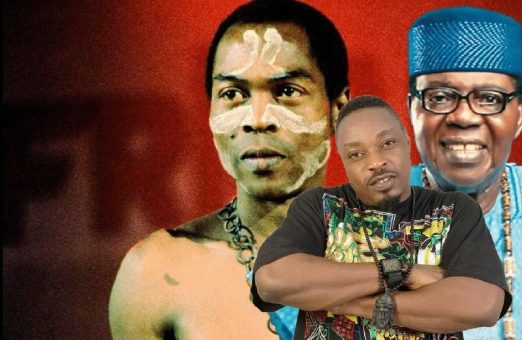
For decades, Nigerian musicians have done more than entertain audiences; they have used their music as a powerful platform to address societal challenges, criticise poor governance and amplify the struggles of ordinary citizens.
From the era of military rule to the present democratic dispensation, several artists have released songs that captured the nation’s mood, addressing issues such as corruption, insecurity, economic hardship and inequality. Many of these songs remain relevant today because the problems they highlighted continue to affect Nigerians.
Music icons and contemporary stars, including Fela Anikulapo Kuti, Ebenezer Obey, Orlando Owoh, Sound Sultan, 2Baba, Eedris Abdulkareem, African China and Sikiru Ayinde Barrister, have all used their craft to influence public discourse and inspire change.
The late Afrobeat legend, Fela Anikulapo Kuti, remains one of Nigeria’s most vocal musical critics of political oppression. His 1976 classic, Zombie, fiercely condemned military dictatorship by comparing soldiers to mindless followers who obey orders without questioning authority. The song became an enduring symbol of resistance and one of Nigeria’s most influential protest anthems.
In contrast, Juju maestro Ebenezer Obey adopted a more subtle approach. Through songs like Nigeria Si Ma Dun, he preached hope, hard work and faith in a brighter future for the country, encouraging Nigerians to remain optimistic despite prevailing challenges.
Highlife legend Orlando Owoh also used his music to address social and political issues. His song Democracy reflected on governance, leadership and the need for societal progress, particularly during periods of political uncertainty.
African China emerged as one of the strongest voices of his generation, using songs such as Mr President and Crisis to draw attention to insecurity, economic hardship and the daily struggles of Nigerians. His relatable storytelling resonated deeply with the masses.
In 2004, rapper Eedris Abdulkareem sparked national debate with his controversial hit Nigeria Jaga Jaga. The song criticised corruption, rising living costs and poor governance during the administration of former President Olusegun Obasanjo, cementing its place as one of Nigeria’s most iconic protest songs.
Afrobeats star 2Baba also lent his voice to national issues through songs like For Instance and E Be Like Say. In the tracks, he questioned the lavish lifestyles of political leaders and highlighted the widening gap between the ruling class and ordinary Nigerians.
Similarly, the late Sound Sultan used his music to challenge government failures. His 2010 song 2010 Light Up Naijaexpressed the frustrations of Nigerians over persistent electricity shortages despite repeated promises of improved power supply.
Fuji pioneer Sikiru Ayinde Barrister also played a significant role in shaping social consciousness through music. His albums and tracks frequently touched on leadership, governance and societal concerns, reaching audiences across different social classes.
From Fela’s revolutionary Afrobeat to the socially conscious tunes of modern musicians, these artists have demonstrated that music is far more than entertainment. It remains a powerful tool for documenting a nation’s history, expressing the pains of its people and inspiring hope for a better future.