

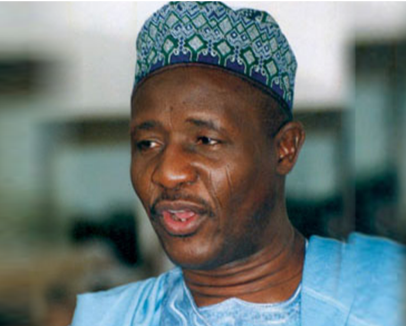
The death of Alhaji Ibrahim Galadima has cast a long shadow over Nigerian football, symbolising not just the loss of a respected administrator but the gradual disappearance of a generation that laid the foundation of the game in the country.
Galadima, who died on April 18, 2026, in Kano at the age of 78 after a prolonged illness, devoted his life to the development and organisation of football in Nigeria, rising from grassroots involvement to the pinnacle of national sports administration.
Born in Kano, his early years were shaped by a deep passion for football, nurtured in the vibrant local communities of Northern Nigeria where the sport served as a unifying force. That passion would guide his lifelong commitment to building structures that sustained the game beyond raw talent.
He began his administrative career at the state level, serving as Chairman of the Kano State Sports Council before becoming a two-time commissioner overseeing youth, sports, and infrastructure. In these roles, Galadima distinguished himself as a systems builder who understood that football required vision, planning, and institutional strength to thrive.
His impact was also felt on the pitch as a founding figure of Kano Pillars Football Club in 1990. The club would go on to become one of Nigeria’s most successful sides, reflecting his belief in grassroots development as the backbone of national success.
Galadima reached the height of his career in 2002 when he became president of the Nigeria Football Association (now Nigeria Football Federation), a position he held until 2006. His tenure coincided with a challenging period marked by increasing global competition, political interference, and rising expectations from fans.
While his administration pursued reforms and sought to stabilise Nigerian football, it was not without setbacks. The failure of the Super Eagles to qualify for the 2006 FIFA World Cup—losing to Angola on away goals—remains one of the most defining moments of his leadership. His remark at the time that World Cup qualification was “not Nigeria’s birth right” drew criticism but underscored his candid approach to leadership.
Beyond that episode, Galadima’s contributions extended to national sports development through roles in the Nigeria Olympic Committee and the National Sports Commission. He was also instrumental in shaping long-term strategies, including the 10-Year Football Development Master Plan.
Colleagues and associates remember him as a man of integrity and discipline. Retired FIFA referee Ibrahim Fagge described him as an honest leader who consistently resolved disputes within the football community, noting that his absence would be deeply felt.
Former Kano Pillars chairman, Alhaji Garba Bello Kankarofi, also paid tribute, recalling Galadima’s transparency during the 1999 FIFA U-20 World Cup organising committee, where all resources were fully accounted for and unused funds returned to the government.
“He was a man of honour who neither gave nor took bribes,” Kankarofi said, emphasising his commitment to merit-based leadership.
Following his retirement from active sports administration, Galadima assumed the traditional title of Galadiman Fagge in Kano, further cementing his role as a respected community leader.
Tributes have continued to pour in from across the country. President Bola Tinubu described him as a pillar of sports administration, while Kano State Governor Abba Yusuf hailed him as a statesman who dedicated his life to public service and football development.
Galadima was buried on April 19, 2026, in accordance with Islamic rites.
His passing highlights a broader transition within Nigerian football. Alongside contemporaries such as Sunday Dankaro and Mike Okwechime, Galadima belonged to a generation that steered the sport through political and structural changes. Today, only a few figures from that era remain, including Dr. Amos Adamu, Abdullahi Lulu, and Aminu Maigari.
As Nigerian football continues to evolve, the loss of Galadima represents not just the end of a life of service, but the fading of institutional memory that once guided the game’s growth.
In the story of Nigerian football, Ibrahim Galadima’s chapter stands as one of dedication, resilience, and enduring influence—an enduring reminder of the individuals who built the game beyond the spotlight.