

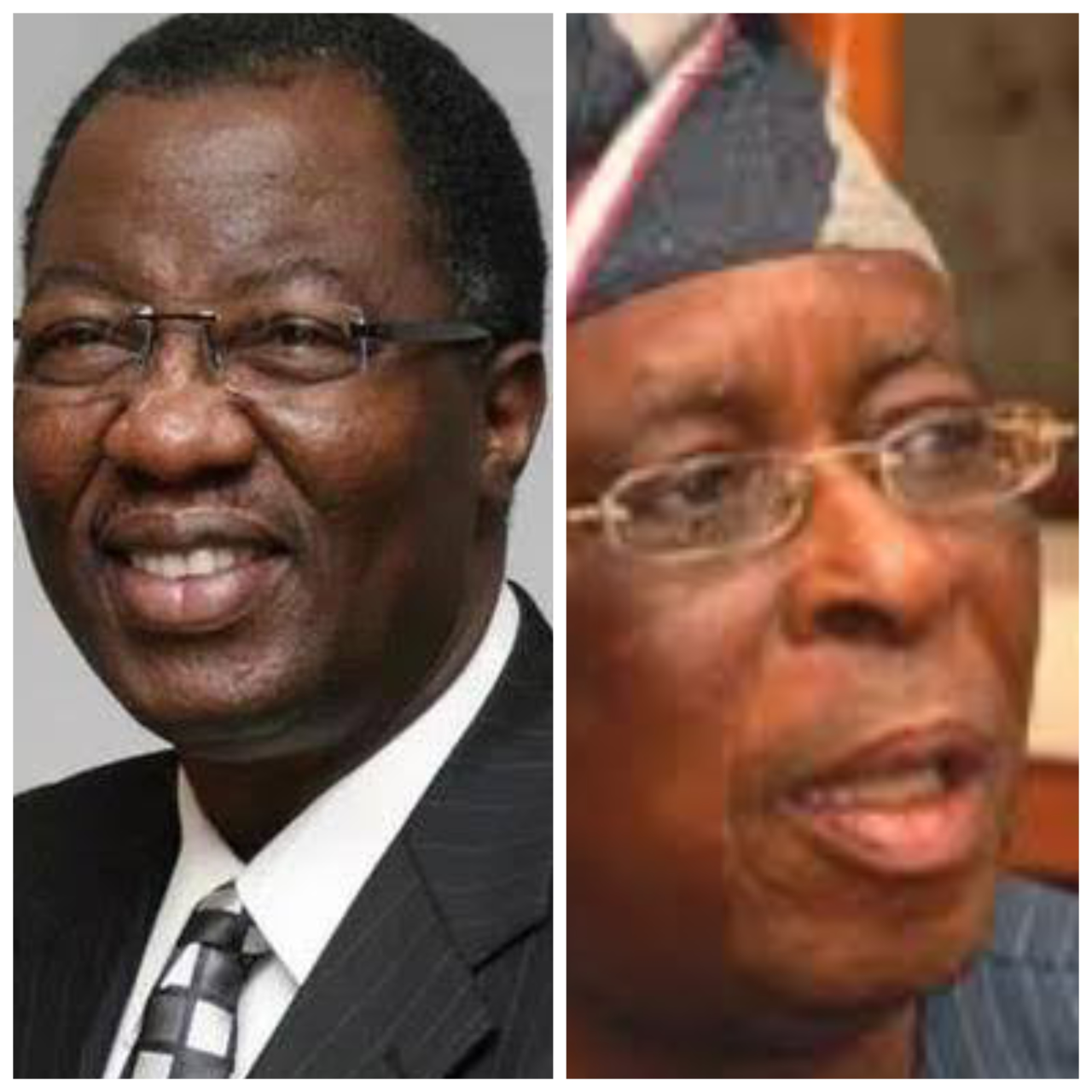
The 2003 governorship election in Ogun State remains one of the defining political upsets in Nigeria’s recent history, offering a lasting lesson on the limits of political dominance and the unpredictability of the electorate.
At the time, Chief Olusegun Osoba, popularly known as “Akinrogun,” was a formidable political figure and the incumbent governor of Ogun State. A respected journalist and prominent member of the Alliance for Democracy (AD), Osoba enjoyed strong political influence across the Southwest.
The AD was also widely regarded as the dominant political platform in the region, having built its identity around the progressive political tradition associated with the late Chief Obafemi Awolowo.
Against this backdrop, Osoba’s political camp appeared confident of retaining power in the 2003 election.
However, while the incumbent structure projected strength, the Peoples Democratic Party (PDP), led in Ogun State by Otunba Gbenga Daniel, was steadily expanding its grassroots network.
Daniel and his supporters reportedly intensified their mobilisation across communities, engaging youth groups, market women, traditional institutions, community leaders and other political stakeholders.
The strategy eventually paid off.
When the 2003 election results were announced, Daniel defeated Osoba, ending the AD’s hold on Ogun State and producing one of the major political upsets of the election.
Across the Southwest, the AD also suffered significant losses, with Lagos State, then governed by Bola Ahmed Tinubu, remaining under the party’s control.
The Ogun experience subsequently became an example of how political dominance can change rapidly when opposition forces successfully build grassroots support and capitalise on dissatisfaction within an established political structure.
The Yayi Question
More than two decades later, the political dynamics in Ogun State have changed considerably, but the lessons of 2003 continue to feature in discussions about the state’s political future.
Senator Solomon Olamilekan Adeola, popularly known as Yayi, has emerged as one of the prominent figures in Ogun politics, particularly following his political transition from Lagos to Ogun West.
His political network and influence have made him an important player in the state’s political calculations.
However, the history of Ogun politics demonstrates that political influence does not automatically translate into permanent electoral control.
The 2003 experience showed that an established political structure can face serious challenges when opposition forces unite, build grassroots networks and connect with voters who feel excluded or dissatisfied.
Political observers have also long noted that electoral decisions are influenced by several factors, including candidates’ records, party structures, grassroots mobilisation and voters’ desire for change or political balance.
For this reason, the story of Osoba and Daniel continues to serve as a reference point whenever political dominance in Ogun State is discussed.
Lessons From 2003
The 2003 election demonstrated that past political achievements cannot guarantee future electoral victories.
Osoba entered the contest with considerable political experience, a strong party structure and an established reputation. Yet, the political environment changed, allowing Daniel and the PDP to gain sufficient support to defeat the incumbent.
The episode highlights the fluid nature of Nigerian politics, where alliances shift, new political forces emerge and voter preferences can change from one election cycle to another.
For political actors in Ogun State, the enduring lesson is that grassroots engagement remains crucial.
Political structures may be powerful, but their strength ultimately depends on continued engagement with voters and an understanding of changing public sentiment.
The events of 2003 therefore remain a reminder that political power is not permanently guaranteed. It is tested and renewed at the ballot box.