
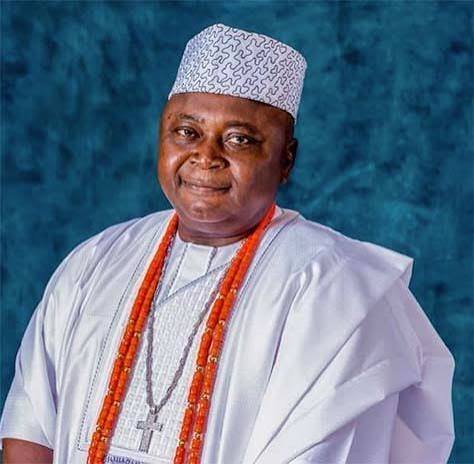
• Questions mount over PDP membership register as INEC keeps public waiting for detailed decision
Fresh controversy has erupted over the 2027 Ogun State governorship election following reports that the Independent National Electoral Commission (INEC) has rejected the petition of Peoples Democratic Party (PDP) governorship candidate, Hon. Ladi Adebutu, seeking restoration of his name to the commission’s list of candidates.
However, while several media organisations reported on Thursday that INEC had rejected Adebutu’s petition, the commission had, as of the time of filing this report, not publicly released a detailed formal statement explaining the legal and factual basis for the decision.
That distinction has become central to the developing controversy.
Reports attributed to an unnamed INEC source said the commission considered 69 petitions arising from the omission of candidates from its final governorship and State House of Assembly lists, with about 36 reportedly succeeding.
The same reports said Adebutu’s request did not succeed, while former Minister of Communications and Digital Economy, Prof. Isa Ali Pantami, and Kano governorship candidate Abdulsalam Gwarzo were reportedly cleared, subject to the outcome of pending court cases.
INEC was also reported to be awaiting final figures from its legal department before issuing a formal statement on the outcome of the petitions.
This means that, at present, the public has a reported outcome but not yet the commission’s detailed public reasoning for Adebutu’s case.
Adebutu’s exclusion from the October 10 final list followed INEC’s earlier explanation that some political parties had failed to comply with the membership-register provisions of the Electoral Act 2026.
INEC specifically relied on Section 77(5)–(7) of the Electoral Act and the Supreme Court’s September 24, 2026 judgment in INEC v. Zenith Labour Party, which upheld the constitutional validity of the relevant provisions and INEC’s timetable for submission of party membership registers.
The commission said political parties were required to submit their membership registers between April 21 and May 10, 2026.
But the application of that position to Adebutu has generated substantial controversy.
The issue is not merely whether Adebutu’s name appeared on a particular copy of the register.
The bigger question is what happened to the register, what documents were submitted by the PDP, what explanation was supplied for any omission, and whether INEC has properly considered the evidence presented by the candidate and his party.
The controversy gained another dimension on Thursday after the National Vice Chairman of the Labour Party in the South-West, Dr Arabambi Abayomi, and Action Alliance governorship candidate Prof. Awofala Awolola announced plans to challenge any alleged alteration of the PDP membership register submitted to INEC.
The two politicians said they had petitioned INEC to preserve the original register and investigate allegations concerning an affidavit purportedly explaining the omission of Adebutu’s name.
Significantly, the petitioners themselves acknowledged that they were not in possession of the alleged affidavit and had not independently verified its existence or contents.
They nevertheless asked INEC to establish whether the document exists, when it was submitted, who received it and what purpose it was intended to serve.
That development raises a critical question for the Adebutu case:
What precisely is contained in the official record before INEC, and did the commission consider all relevant documents before arriving at its reported decision?
The Ogun PDP has previously maintained that Adebutu complied with the requirements for his nomination.
The party had challenged his omission and argued that the candidate remained a legitimate PDP member who satisfied the party’s nomination requirements.
The controversy therefore goes beyond a simple administrative omission. It has become a dispute over the interpretation and application of the statutory membership-register requirements to a particular candidate.
INEC itself had announced that candidates and political parties whose names were wrongly omitted from the final list had a statutory window within which to complain.
Following publication of the final governorship list, affected parties were given 14 days to notify the commission of alleged wrongful omissions.
INEC subsequently scheduled October 29 for consideration of the petitions.
The PUNCH had reported ahead of Thursday’s meeting that INEC would determine the fate of Adebutu, Pantami and other affected candidates at the meeting.
The reported outcome therefore represents the culmination of that review process but the public is still waiting for the commission’s detailed explanation.
The treatment of Adebutu alongside Pantami has also raised questions about the application of the same statutory framework.
Both candidates were initially omitted from INEC’s final governorship list.
Yet Thursday’s reports indicate that Pantami’s case was reviewed differently and that he was cleared, although his candidacy remains subject to pending litigation.
Gwarzo was similarly reported to have been cleared subject to the outcome of litigation.
The issue for Adebutu’s supporters is therefore not simply why his name was omitted initially.
It is, What specific factual or legal circumstance makes Adebutu’s case different, and what evidence did INEC rely upon in reaching that conclusion?
Until those questions are answered formally, the debate is unlikely to end with Thursday’s reported decision.
Another important distinction must be made.
A reported INEC rejection does not, by itself, settle every possible legal question surrounding Adebutu’s participation in the 2027 election.
The electoral process operates within a legal framework, and disputes over candidate qualification, nomination, party compliance and INEC decisions may ultimately become matters for judicial determination.
Consequently, headlines suggesting that Adebutu’s political ambition has been finally and irreversibly terminated would go beyond what has presently been established.
What has been reported is that INEC rejected his petition.
What remains necessary is the formal decision, the reasons for that decision, the documentary basis upon which it was reached and any subsequent legal action by Adebutu or the PDP.
For Adebutu and the PDP, the immediate priority should therefore be transparency.
The commission should make public, within the limits of the law:
The specific grounds upon which Adebutu’s petition was rejected.
The relevant PDP membership register relied upon by INEC.
The documents submitted by the PDP in support of Adebutu’s candidacy.
Any affidavit or explanatory document relied upon in determining the matter.
The legal advice or statutory provision forming the basis of the decision.
Why Adebutu’s case was treated differently from other candidates whose petitions were reportedly successful.
Whether the decision is subject to further administrative review or judicial challenge.
These are legitimate questions in a democratic electoral process.
The emerging narrative should therefore be treated with caution.
Adebutu’s name was omitted from the final list.
INEC subsequently received his petition.
Reports now say the petition was rejected but the detailed formal reasons for that rejection remain crucial.
Indeed, the latest reports themselves acknowledge that INEC was awaiting its legal department’s final figures and preparing a formal statement.
Until that statement is published, declaring that every legal avenue has been exhausted would be premature.
For Adebutu’s supporters, the immediate issue is therefore not political rhetoric but documentation, due process and the precise interpretation of the Electoral Act 2026.
The controversy surrounding Ladi Adebutu deserves more than a headline announcing that INEC has “rejected” him.
It deserves answers.
If INEC has rejected the PDP candidate, Nigerians deserve to know why.
If the decision is based on a membership register, Nigerians deserve to know which register.
If an omission in that register is the basis of the decision, the parties involved deserve clarity on how that omission occurred and what evidence was presented to explain it.
And if the matter eventually proceeds to court, the courts will have the opportunity to determine whether the commission’s interpretation and application of the law withstand judicial scrutiny.
For now, the Adebutu matter remains an unfolding electoral and legal dispute not a story that should be reduced to a one-line political victory or defeat.
We will continue to monitor the official INEC position and any legal response from Adebutu and the Ogun PDP.