

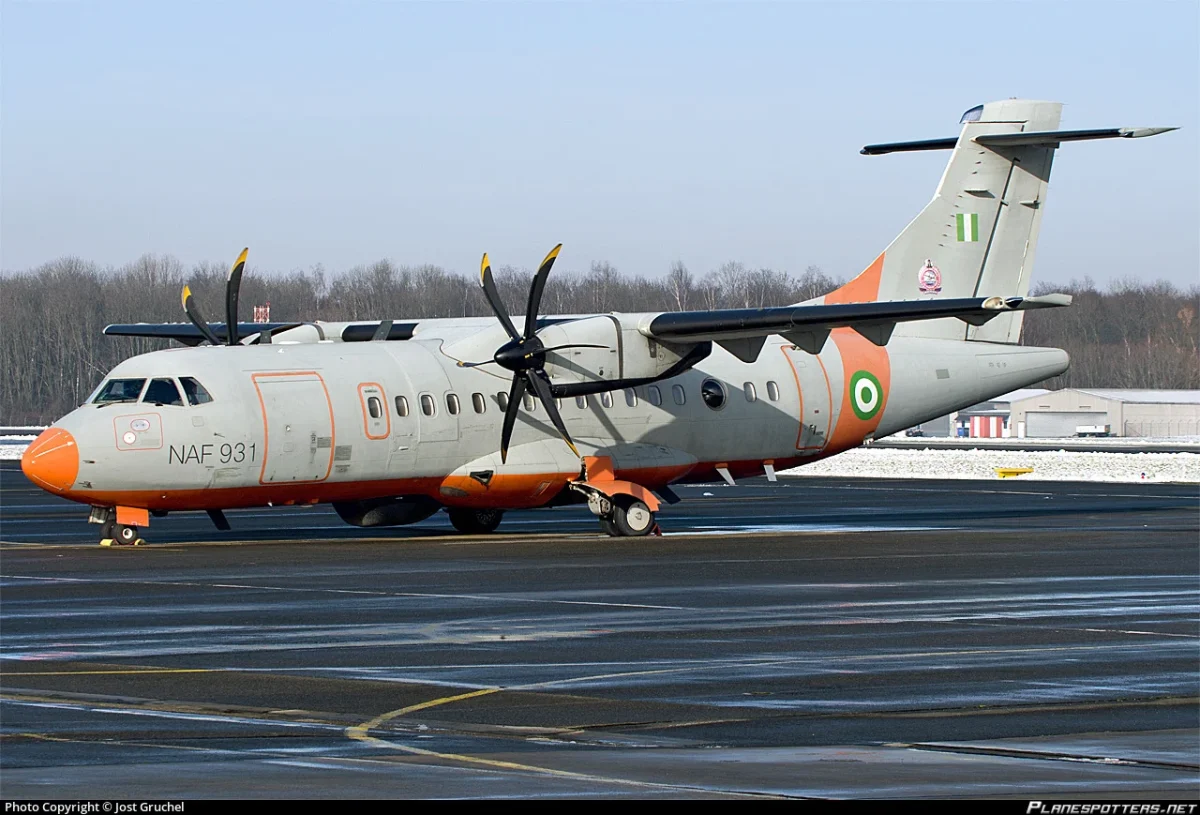
The Nigerian Air Force has activated a board of inquiry to determine the cause of the military aircraft crash that plunged into a swampy expanse in Igbokoda, Ondo State, on Monday. Recovery operations remain ongoing amid significant challenges posed by the dense vegetation and difficult terrain.
A military source confirmed that the board, traditionally chaired by the Superintendent of Standards and Evaluation, was constituted immediately after the incident involving the ATR-42 aircraft, NAF 931. “A board of inquiry has been set up. Immediately after an aircraft crashes, we activated the board of specialists,” the official said, noting that recovery efforts form an integral part of the investigation.
Access to the submerged wreckage has proven arduous. Response crews are clearing thick vegetation with specialised floating heavy equipment provided by a private construction firm. “I don’t think they’ve recovered all the bodies yet. The aircraft is deeply submerged in the swamp… It is going to take time,” the source added.
NAF spokesman Air Commodore Ehimen Ejodame stated that a comprehensive investigation is underway on the direct orders of the Chief of Air Staff. He dismissed speculation about the aircraft’s age, clarifying it was a relatively modern acquisition delivered around 2010 and properly maintained. Ejodame also addressed conflicting casualty reports, explaining Air Traffic Control terminology: “In this case, there were 25 souls on board: five were active crew, then two were passengers, but they are crew.”
Ondo State Governor Lucky Aiyedatiwa visited the site on Wednesday, 72 hours after the crash, describing it as a “very gory sight” with body parts, clothing and aircraft debris recovered. He directed the Ministry of Works to deploy amphibious swamp buggies to improve access. “The main body of the aircraft has not been sighted, because it has been submerged in the swamp,” the governor said, ordering that search and recovery continue. No survivors had been found at the time of his visit.
The Nigerian Navy has deployed state-of-the-art sonar equipment from its Hydrographic Department to map the turbid waters. Flag Officer Commanding Western Naval Command, Rear Admiral Abubakar Mustapha, visited the site and urged intensified efforts involving multiple agencies.
The tragedy has sparked renewed calls for closer civil-military aviation collaboration. Minister of Aviation and Aerospace Development Festus Keyamo met Chief of Air Staff Air Marshal Sunday Aneke and agreed to establish a joint committee focused on airworthiness, certification, training and safety. “It is one country, one people… We have decided that we will cooperate in terms of capacity building,” Keyamo said. Aneke welcomed the partnership, stressing both sectors serve the same Nigerians.
Former DSS director Mike Ejiofor described military aircraft crashes as “becoming one too many,” calling for a broader review of maintenance, operational standards and the condition of the fleet. He also highlighted record-keeping issues that fuelled initial confusion over the number of people on board and stressed the importance of recovering the black boxes.
President Bola Tinubu expressed profound sadness, declared three days of national mourning and ordered a full-scale investigation. Condolences poured in from figures including former Sokoto Governor Aminu Tambuwal, the Olugbo of Ugboland Oba Frederick Akinruntan, and Abia leaders mourning Squadron Leader Ahamefule Aham Man-Ugwueje, one of the pilots who had married just two weeks earlier.
Multi-agency teams continue the difficult recovery in the riverine terrain as Nigeria grapples with yet another painful loss of its service personnel.