

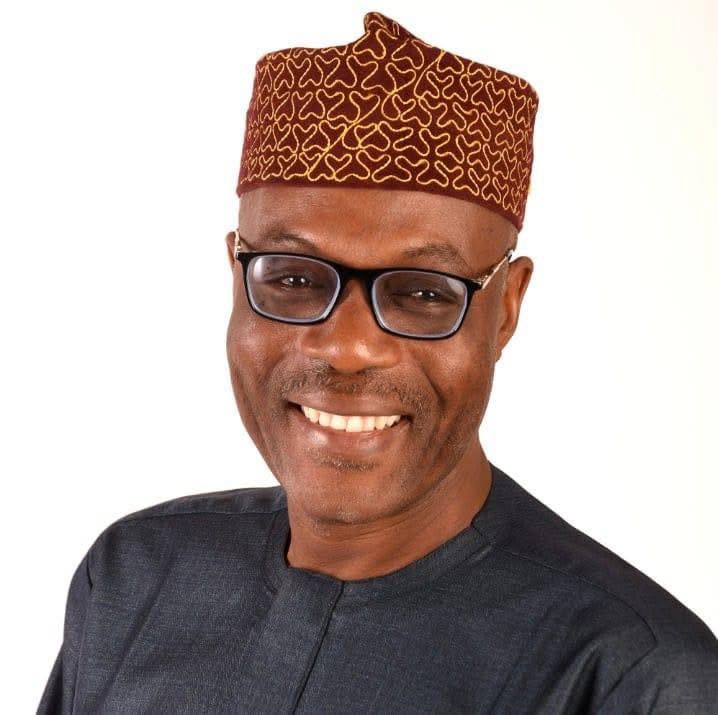
By Kehinde Sogunle
The central selling point of Senator Solomon Olamilekan Adeola’s (Yayi) ITESIWAJU campaign is the gospel of the “Lagos Template.” The electorate is told that Ogun State is an administrative backwater requiring an imported governance model to achieve modernization.
This pitch relies entirely on historical amnesia. The structural blueprint that stabilized and modernized Lagos State post-1999 was never the creation of an oligarchic political machine; it was conceived, drafted, and operationalized by a core of cerebral technocrats—chief among them distinguished sons and daughters of Ogun State.
When the post-military transition blueprint for Lagos was drawn in 1999, it was an illustrious Ogun son, His Excellency, Otunba Gbenga Daniel, who chaired the pivotal Transition Sub-Committee on Infrastructure. His committee laid down the foundational roadmaps for roads, electricity, and urban water rehabilitation, working alongside exceptional minds like Prof. Yemi Osinbajo, Dele Alake, Olawale Edun, Chief (Mrs.) Teju Phillips, Arc. Lanre Towry-Coker, the late Engr. Abiola Johnson, Arc. Kayode Anibaba, and Ogbeni Rauf Aregbesola.
The operational turnaround of the state’s key parastatals followed the same technocratic rigor. Anchored by Dr. Ismaila Adebayo Adewusi—first as Managing Director of Ibile Holdings and later as Commissioner for Finance and Budget/Economic Planning—a dedicated cohort of professionals that I led drove systemic institutional transformations:
- Mass Housing and Urban Regeneration: Under Arc. John-Bede Anthonio as Managing Director of the Lagos State Development and Property Corporation (LSDPC), public housing was revitalized through public-private partnerships, pioneering landmark urban renewals and residential transformations such as the Eko Akete project.
- Mortgage Systems and Housing Finance: At the Lagos Building Investment Corporation (LBIC), visionary administrators like Mr. Junaid and Mr. Kehinde Durosinmi-Etti restructured mortgage delivery and capital operations, turning the corporation into a viable vehicle that expanded middle-class home ownership and fueled construction employment.
- Environmental Infrastructure: At the Lagos State Waste Management Authority (LAWMA), working with Engr. Adesina, we dismantled an inefficient public monopoly to institute the Private Sector Participation (PSP) model, integrating private operators and generating thousands of dignified, sustainable waste management and recycling jobs.
- Commercial Equity and Enterprise: At Ibile Holdings, alongside Dr. Adewusi and Hakeem Muri-Okunola, we structured anchor equity investments in Econet Wireless Nigeria (now Airtel) and Julius Berger Nigeria Plc, establishing non-tax dividend streams and spurring telecoms and infrastructure growth. Working with the late Chief (Mrs.) Kemi Nelson at the Ministry of Job Creation, our vocational models attracted international acclaim, including a $500,000 grant from President Bill Clinton’s administration in 2000.
This public-sector transformation reached directly into property rights and land governance. My late wife, Mrs. Foluke Sogunle, dedicated 14 years (2000–2014) across the Tinubu and Babatunde Fashola administrations inside the Lagos State Lands Bureau. Working closely with Senator Gbenga Ashafa, Mr. Hakeem Muri-Okunola, and the current Head of Service, Mr. Bode Agoro, she served the Land Use and Allocation Committee (LUAC) and was instrumental in rolling out the Electronic Certificate of Occupancy (E-C of O) and the Electronic Data Management System (EDMS). Those reforms ended decades of land racketeering, secured property titles, and established the institutional transparency that unlocked trillions in private capital.
This was the genuine model: technocratic competence, institutional wealth creation, and private-sector leverage.
What was Senator Adeola doing while this foundation was being laid? He incorporated SOOTEM—an acronym drawn from his personal and marital identity: Suleiman Olamilekan Ogunleye Temitope. Operating as a private tax and audit consultancy, SOOTEM positioned itself as a commission-collecting beneficiary within the very revenue machinery designed by public-interest technocrats. He subsequently used legislative posts to preside over the tax architecture that fed private revenue collection.
Over the past two decades, an oligarchic machine hijacked that original public blueprint, converting it into a mechanism for outsourced revenue extraction, monumental public debt, and the systematic emasculation of local governments. For Senator Adeola to arrive in Ogun State brandishing this co-opted, debt-heavy distortion under the banner of “continuity” is to offer us a corrupted copy of our own intellectual property.
The Proof of Concept: The 2003–2011 Benchmark
The definitive proof that this developmental methodology works was demonstrated right here on Ogun soil. Between 2003 and 2011, where I served as the Economic Advisory Team and member of various parastatals boards to provide strategic governance advice, this model was effectively replicated and proven as a comprehensive developmental concept through the superlative performance of the PDP government led by His Excellency, Otunba Gbenga Daniel.
Some of us—and indeed many of those who now engage us from the other side—were active participants in that institutional evolution. That era gave birth to the historic 25-Year Ogun State Regional Master Plan (2004–2029), the direct-labor infrastructure revolution of OGROMA, the agro-cargo airport and industrial corridors, the Olokola free trade zone and deep sea ports and the creation of economic hubs from Sagamu to the Ogun-Guangdong Free Trade Zone in Igbesa.
Its orderly continuity, however, has been deliberately hampered by the engineered APC interregnum from 2011 till date. For over a decade, this interregnum abandoned long-range polycentric master planning in favor of cosmetic, debt-heavy, and uncompleted vanity projects. The people of Ogun State are now acutely aware of the painful missed opportunities for sustainable, inclusive growth that this disruption caused.
The Harvester’s Dilemma: Leasing Talent vs. Retaining the DNA
Senator Adeola looks around his campaign war room and mistakes the talent he has retained for the strength of his own foundation. The APC campaign in Ogun State is running on borrowed human capital nurtured by the very institutional academy now leading Hon. Ladi Adebutu’s movement.
It was the revolutionary Sports as a “Business” philosophy—conceived, financed, and institutionalized under our watch in Ogun State that provided the template and operational launchpad for our dear brother, Chief Bukola Olopade (now Director-General of the National Sports Commission). That model was not theoretical. It was honed and exemplified by the hosting of the 2006 Gateway Games, followed immediately by the hosting of two major international football tournaments at Abeokuta and Ijebu-Ode. Those historic events stimulated and sharpened the sports management acumen of Bukola Olopade, demonstrating how sporting infrastructure drives private investment, hospitality, and commercial brand sponsorships. It was that exact acumen, forged in our crucible, that he later deployed to create and manage the globally celebrated Access Bank Lagos City Marathon, propelling him to national and international prominence.
It was that same stable that shaped the strategic youth leadership capacity of Abiola Odetola. It was in our ideological cauldron that SF Ojo Emmanuel learned his social media orientation and strategic messaging. We provided the platforms, access, and tutelage for communicators like Ife Akinbode and Bolaji Adeniji to sharpen their voices, just as Adeniyi Sanusi and Wale Junaid learned field mobilization and grassroots political skills in our academy.
We do not begrudge them; a good institution takes pride in the growth of its alumni. But a merchant who purchases fruit at the market does not own the orchard. Senator Adeola may lease our alumni, but he does not possess the intellectual DNA, the strategic foresight, or the institutional memory that produced them. Those of us who designed the master plans and built the agencies retain the source code for Ogun State’s development. We can replicate, refine, and deploy those models because we built them from scratch.
Yet, beyond the borrowing of our alumni, there is an even more palpable, existential danger confronting our political landscape. The tragic reality of the campaign apparatus Senator Adeola has assembled is that these indigenous, homegrown talents are merely being used as frontline stagehands. Lurking in the shadows behind them is a predatory, third-generation breed of Lagos political opportunists waiting to seize the reins of Ogun State’s governance. The evidence is visible in the very structure of his campaign management: our local professionals do the heavy lifting and field footwork, while the strategic command, political entitlement, and commercial extraction are reserved for an imported cohort of cross-border political carpetbaggers.
We have already experienced this exact phenomenon under the incumbent administration—where state resources, prime assets, and policy directions were hijacked by external interests while qualified indigenes were reduced to spectators. We will not sit by and watch a reoccurrence of this phenomenon in 2027. The palpable fear across the length and breadth of Ogun State is real: should this enterprise succeed, our homegrown brains, seasoned technocrats, and indigenous professionals will once again be thoroughly subordinated, sidelined, and discarded in favor of these third-generation opportunists who see Ogun not as a fatherland to build, but as virgin territory to carve up and exploit.
The “Rescue Mission” vs. The “Continuity” of Hardship
Hon. Kayode Oladele recently proclaimed that “the ballot will settle it.” We welcome the ballot. But let the lines be drawn without deceit. Senator Adeola and the APC are campaigning on continuity, ITESIWAJU. We, under Hon. Ladi Adebutu and the PDP, are on an unapologetic Rescue Mission (ITURA DE).
When the APC asks the electorate for “continuity,” they are demanding:
- The continuity of economic hardship driven by draconian national and state policies that have crushed purchasing power, shuttered factories in Ota, and weaponized poverty to make citizens dependent on election-year handouts.
- The continuity of emasculated local governments whose statutory allocations are withheld at the center, leaving rural roads unpaved and clinics unequipped.
- The continuity of an aggressive political agenda designed to reduce the sovereign Gateway State into an outsourced, debt-ridden annex of the Lagos machine.
Our campaign is a Rescue Mission because Ogun State’s trajectory of orderly progress was deliberately truncated in 2011 by the APC interregnum. Under Hon. Ladi Adebutu’s ITURA DE blueprint, we are coming to rescue our local governments through immediate constitutional autonomy, rescue our artisans through statutory capitalization under the Bureau of Artisan Development (BADE), and rescue our spatial economy by operationalizing the 25-Year Regional Master Plan (2004–2029).
The Circus of Evasion: Bread, Circuses, and Governance
Recognizing that they cannot defend this record, the APC machinery has retreated into the ancient Roman politics of distraction: panem et circenses—bread and circuses.
They have saturated the public space with programmed diversions: theatrical prayer sessions convened in royal palaces, praise rallies, comedic performances, and musical jamborees. These spectacles are designed to dull the civic senses of the electorate. They stage carnivals so that nobody asks why the roads leading to those palaces are broken, why public hospital wards lack basic supplies, or why industrial towns are shedding jobs.
Providence may have granted Senator Adeola a fortunate legislative run, but mistaking that streak for the administrative capacity required to govern Ogun State is a perilous error. Ogun State is not an urban municipality of Lagos; it is an intricate, polycentric federation of proud sub-national identities—Egba, Ijebu, Remo, Yewa, and Awori—with centuries of administrative sophistication. It cannot be bought with branded tricycles or managed through comedic shows.
The people of Ogun State celebrate culture and honor faith, but they will never mistake a carnival for governance, nor will they trade their heritage of disciplined planning for imported political stagecraft.
When the music fades, the comedians exit the stage, and the confetti is swept away, the fundamental question remains: who has the institutional blueprint to rescue Ogun State from poverty, debt, and decay?
We built the original engine. We proved the concept between 2003 and 2011. We hold the source code. And in 2027, through Hon. Ladi Adebutu’s ITURA DE blueprint, the conscious people of Ogun State will perform their sacred civic duty—rejecting prebendal annexation and choosing structural liberation, constitutional local autonomy, and enduring institutional comfort.
*Hon. Kehinde Sogunle is the Director-General, Ladi Adebutu Campaign Organisation (LCO) and a former Commissioner for Finance, Ogun State