

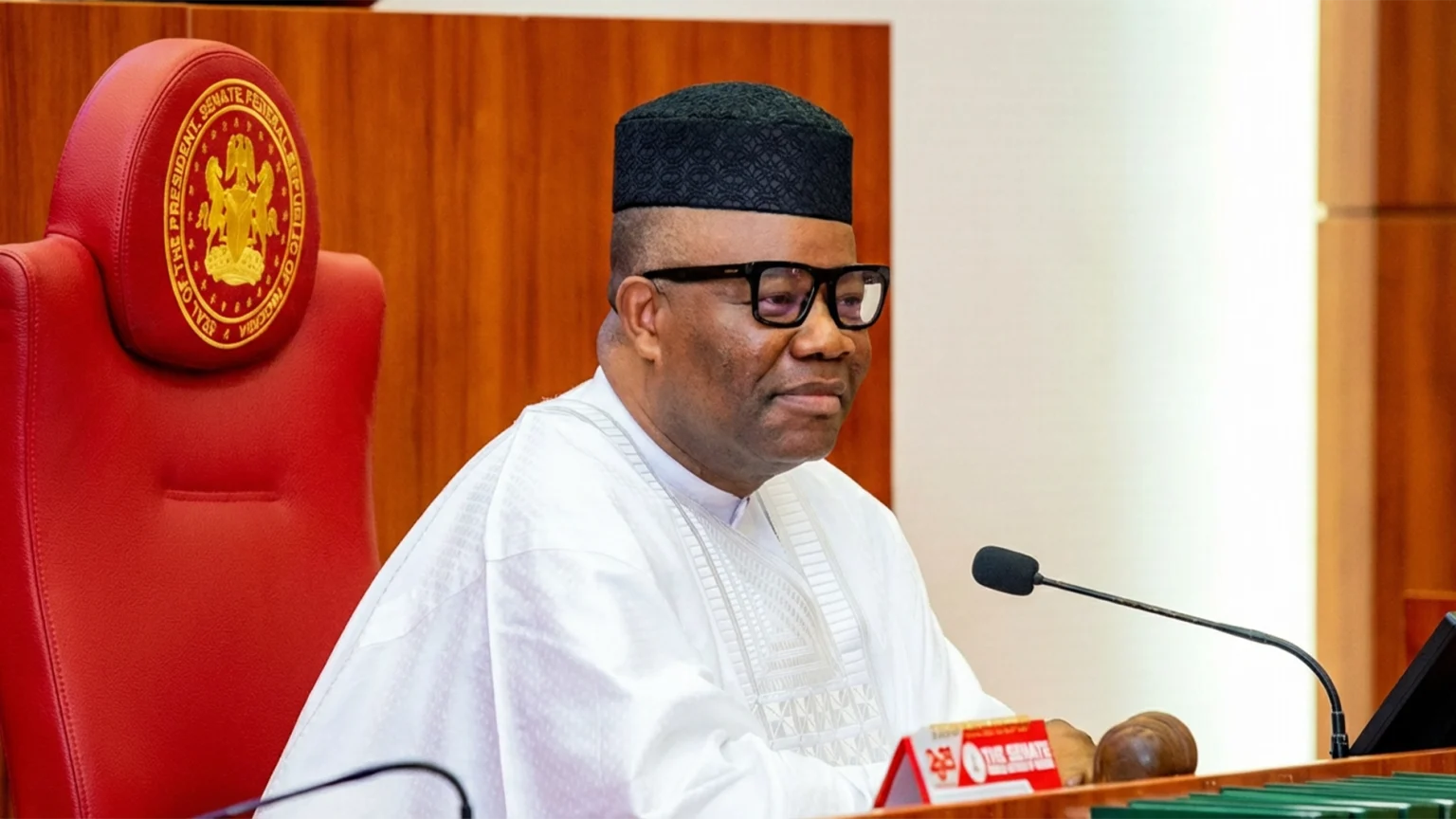
What was expected to be a routine legislative sitting in the Senate on Tuesday quickly escalated into a tense political showdown, as Senate President Godswill Akpabio and Senator Adams Oshiomhole locked horns in a dramatic exchange that exposed deeper undercurrents linked to the emerging 2027 political calculations.
The confrontation unfolded when Oshiomhole attempted to raise a point of order during the confirmation of the Votes and Proceedings of the previous sitting. However, repeated attempts to be recognized by the Senate President were unsuccessful, as Akpabio proceeded with proceedings, invoking his authority under the Senate Standing Orders.
Witnesses described the session as increasingly tense, with Oshiomhole persisting in his efforts to be heard, repeatedly interrupting proceedings and drawing attention from lawmakers on the floor. Efforts by Chief Whip Mohammed Monguno to restore order proved ineffective as the exchange escalated.
In response, Akpabio firmly asserted his procedural authority, citing provisions of the Senate rules that empower the presiding officer to regulate debate, maintain order, and enforce discipline within the chamber.
At the center of the controversy is a recently amended Senate Standing Rule, which critics argue could significantly narrow eligibility for future leadership positions—particularly ahead of the 2027 Senate leadership race. The amendment reportedly restricts qualification for principal and presiding offices in the 11th National Assembly to senators who have served at least two consecutive terms.
Some observers believe the development may be part of broader political positioning within the ruling establishment, with concerns that it could consolidate influence among a select group of lawmakers aligned with executive interests, while limiting space for independent challengers.
However, the Citizens Network for Peace and Development in Nigeria, represented by its National Coordinator Raphael Okorie, praised the amendment, describing it as a progressive step toward strengthening legislative institutions.
The group, operating under Citizens Network for Peace and Development, argued that limiting leadership eligibility to experienced lawmakers aligns with global parliamentary best practices and promotes stability, continuity, and effective governance.
It further noted that in established democracies, extended legislative experience is often seen as essential for leadership roles, citing examples from long-serving leaders in major democratic institutions.
According to the group, the reform reflects a broader effort to strengthen Nigeria’s democratic framework, reduce institutional instability, and improve legislative performance. It also urged stakeholders, civil society actors, and citizens to support the implementation of the new rules, emphasizing that a more stable legislature ultimately benefits national development and democratic consolidation.