
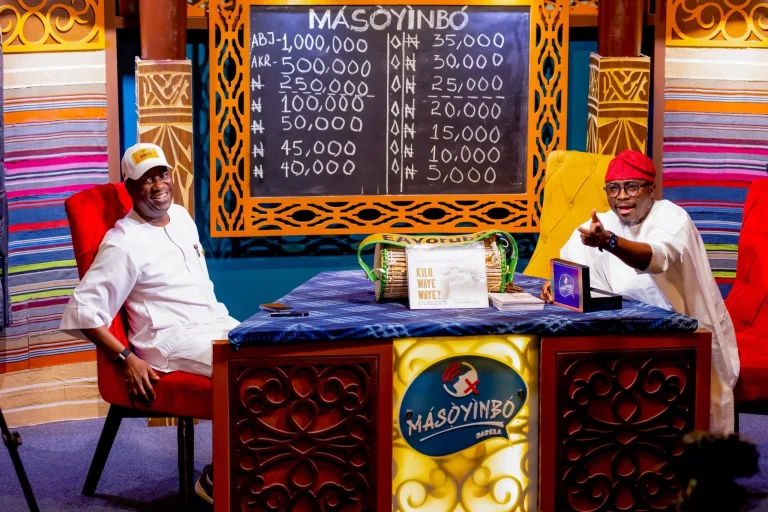
Lagos State Deputy Governor Obafemi Hamzat has renewed calls for the preservation of the Yoruba language and culture, describing them as vital pillars of the people’s identity, history and shared values.
Hamzat made the appeal after featuring on Masoyinbo, the popular Yoruba-focused cultural game show. In a post on his X account on Friday, accompanied by photos from the set, he reflected on the experience and the broader need to safeguard indigenous languages.
“I had a great time on Masoyinbo, exploring the importance of Yoruba in our society and why we must preserve the language, celebrate our culture and pass our rich heritage on to future generations,” he wrote.
“Yoruba is more than a language. It is part of our identity, history, values and what connects us as a community.”
The deputy governor also highlighted Nigeria’s cultural diversity as one of its greatest strengths, stressing that protecting indigenous languages is a collective responsibility.
“Building a greater Lagos means investing not only in infrastructure and public services but also in our people, culture and values. We must work together to keep our heritage alive for generations to come,” he added.
Hamzat appeared on the show’s 364th episode, hosted by Lekan Fabilola. He took part in the contest, which offers an ultimate prize package of ₦1 million, a car and a parcel of land. Although he correctly answered all 10 questions, penalties for code-switching and mixing languages reduced his winnings to ₦20,000.
Fabilola shared a snippet of the appearance on his X account, while the full episode is available on the programme’s official YouTube channel.
Masoyinbo has previously hosted several high-profile Nigerians, including Fuji star Saheed Osupa, activist Yele Sowore, actresses Funke Akindele and Femi Adebayo, rapper Falz, comedian Ali Baba, skit maker Cute Abiola and actor Lateef Adedimeji. The show uses entertainment, quizzes and challenges to spark interest in the Yoruba language and culture among audiences in Nigeria and the diaspora.