
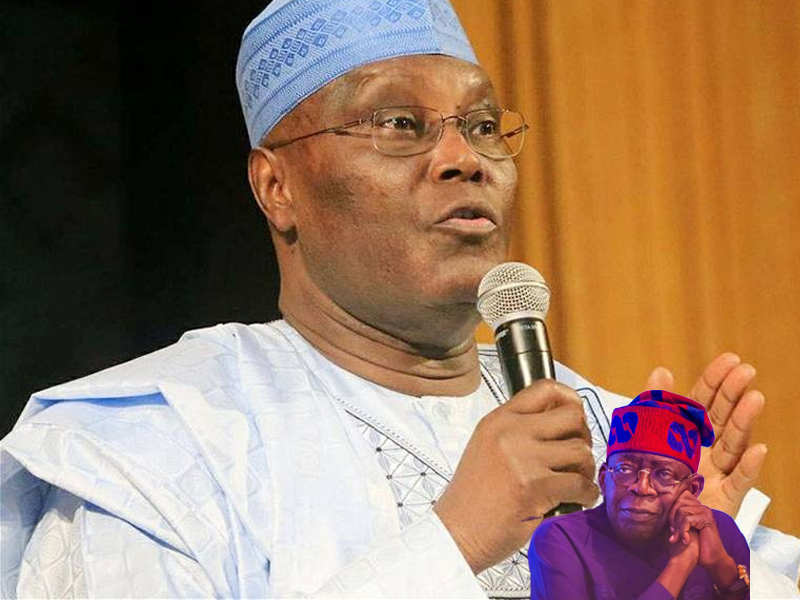
Former Vice-President Atiku Abubakar has challenged the federal government to explain what happens after its 30-day petrol price discount expires, accusing President Bola Tinubu of adopting his earlier petroleum pricing proposal while stripping it of the measures needed for lasting relief.
Speaking on Friday while inaugurating the African Democratic Congress (ADC) Presidential Campaign Council ahead of the 2027 general election, Atiku argued that a temporary reduction would fail to ease the persistent burden on households, transporters and businesses.
He claimed the President had embraced a policy idea the government once dismissed. “When I proposed targeted support to ease fuel costs, you called me ignorant of economic policy. Your government said it could not be done. Now, in a desperate and clumsy retreat, you have shamelessly embraced the principle you mocked,” Atiku said.
The former vice-president insisted his own production subsidy plan was designed as a lasting, targeted intervention to support locally refined products and lower fuel costs. In contrast, he described the government’s measure as a short-term palliative.
“Your 30-day discount is a sugar rush masquerading as economic policy: a fleeting taste of relief at the pump, followed by the same brutal crash when the month ends,” he said. “Families cannot plan their meals around a temporary discount. Transporters cannot set stable fares on it. Businesses cannot invest or plan for the future on it.”
Atiku further accused the administration of creating hardship over three and a half years and now offering “token relief” as elections approach. “You created the hardship and now want a medal for announcing fake relief. This is Deception 101 – or, better still, yahoo-yahoo subsidy,” he added, asking pointedly: “What happens on day 31?”
The price cushion initiative, which delivers a ₦60-per-litre reduction at Nigerian National Petroleum Company Limited (NNPC) retail outlets by forgoing the retailer’s profit margin, aims to shield households, commuters and commercial operators from rising petrol prices linked to global oil market volatility and Middle East tensions.
Minister of Finance and Coordinating Minister of the Economy Taiwo Oyedele defended the move, stressing it is a commercial decision by NNPC Retail rather than a return to the petroleum subsidy regime.
In a statement, Oyedele explained that a retail margin discount occurs when a marketer voluntarily reduces or temporarily relinquishes its profit margin, passing the saving to consumers. The cost, he said, is borne solely by NNPC Retail, with no public funds involved.
“Every marketer adds a margin to the price it pays for the fuel it sells. A margin discount means the retailer chooses to take a smaller margin, or no margin at all for a period, and passes the saving to the customer,” the minister stated. He noted that NNPC Retail continues to buy petrol from Dangote Refinery and other suppliers at market prices before applying its own margin.
Oyedele also pushed back against suggestions of broader production subsidies, arguing that Nigeria still lacks sufficient free crude oil to meet domestic refining needs after accounting for production-sharing contracts, costs, royalties and other commitments.
Minister of Aviation and Aerospace Development Festus Keyamo responded more personally, describing Atiku’s criticisms as symptoms of “agitated depression” stemming from political defeat.
In a post on his verified X account, Keyamo said Atiku was struggling to accept that Tinubu had “outsmarted him politically” to become president. “What we are witnessing with all his recent tantrums against Mr. President, veiled as opposition heroics, is actually a higher form of depression in the field of mental health called agitated depression,” Keyamo wrote, urging those close to Atiku to offer support.
The exchange has sharpened the political debate over the government’s handling of rising petrol prices, with the administration insisting the discount is a temporary commercial relief measure and critics, led by Atiku, arguing it lacks the structural depth needed to deliver sustainable ease for Nigerians.