

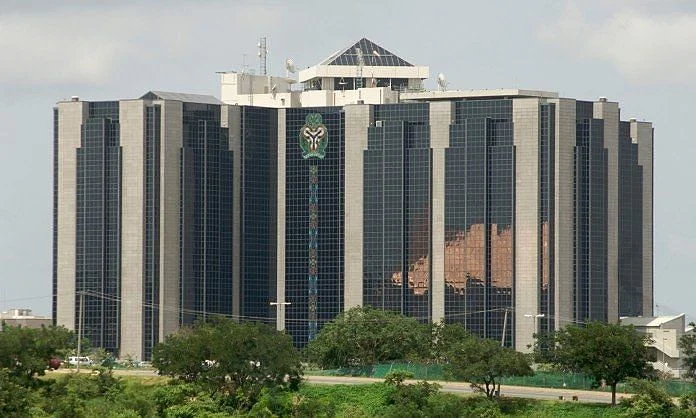
Nigerian deposit money banks have significantly reduced their physical presence, closing a net 476 branches and cash centres between 2022 and 2025. This represents an 8.8 per cent contraction in the industry’s brick-and-mortar footprint over three years, according to the Central Bank of Nigeria’s 2025 Statistical Bulletin for the Financial Sector.
The total number of bank branches and cash centres fell from 5,410 in 2022 to 4,934 in 2025. The decline occurred even as the number of banks operating in the country rose from 32 in 2022 to a peak of 35 in 2024 before settling at 34 in 2025. Branches operated abroad remained steady at two throughout the period.
The contraction gathered pace in the later years. Banks shed 37 locations in 2023, bringing the total to 5,373. A sharper drop followed in 2024, with 229 closures reducing the network to 5,144. Another net 210 locations disappeared in 2025. Roughly 92 per cent of the overall reduction therefore took place in 2024 and 2025. The figures cover commercial, merchant and non-interest banks and were compiled from CBN and Nigeria Deposit Insurance Corporation data.
Lagos recorded the largest absolute decline. The commercial capital’s branch and cash centre count dropped from 1,602 in 2022 to 1,444 in 2025 — a net loss of 158 locations, or 9.9 per cent. The state alone accounted for about one-third of the nationwide reduction. Despite the cutbacks, Lagos still hosted roughly 29 per cent of all physical banking outlets in 2025.
The Federal Capital Territory saw its network fall from 400 locations in 2022–2023 to 362 in 2025, a net reduction of 38 branches (9.5 per cent). Ekiti experienced one of the steepest proportional declines, with locations almost halving from 107 to 57 — a loss of 50 outlets or 46.7 per cent. Other notable reductions included Enugu (down 44), Oyo (down 41), Ondo, Plateau, Osun, Cross River and Rivers.
In the North, Kano’s network rose from 164 in 2022 to 183 in 2024 before falling to 157 in 2025, leaving it seven locations below its 2022 level. Kaduna followed a similar pattern, ending at 146 after peaking at 164.
A handful of states expanded their networks. Delta added 23 locations (173 to 196), Edo rose from 155 to 165, Jigawa from 31 to 37, and Kogi from 63 to 68.
Wide disparities persist. While Lagos maintained 1,444 outlets in 2025, Yobe had only 23, Taraba 26, Zamfara 28, and Bayelsa and Gombe 31 each. Ebonyi recorded 32.
The data underscore a clear migration of banking activity from physical branches to electronic platforms. The Central Bank of Nigeria has urged greater use of alternative payment channels to broaden access to financial services, particularly for farmers, traders, small businesses and operators in the informal sector who may lack convenient access to conventional banking outlets.