

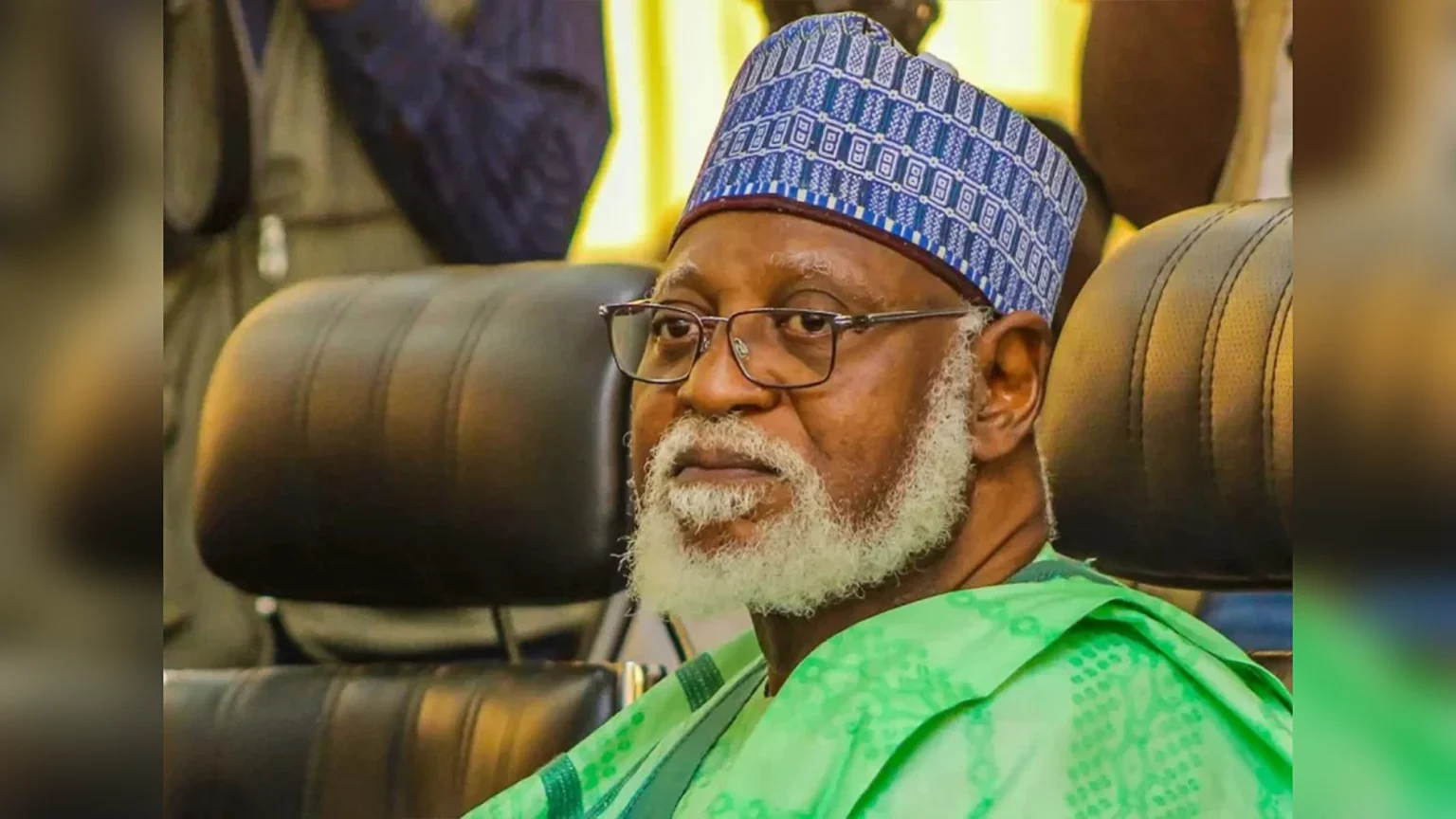
Former Head of State, General Abdulsalami Abubakar, has offered fresh insights into some of Nigeria’s most controversial historical events, including the death of Chief Moshood Kashimawo Olawale (MKO) Abiola and the country’s transition from military rule to democracy.
Speaking during the celebration of his 84th birthday and the unveiling of his autobiography, Call of Duty, at the Presidential Villa in Abuja, Abdulsalami reflected on the turbulent months that shaped Nigeria’s Fourth Republic.
The event drew an array of dignitaries, including President Bola Tinubu, former presidents, diplomats, military officers and elder statesmen, and became a platform for national reflection on leadership, sacrifice and democratic governance.
President Bola Tinubu, represented by Vice President Kashim Shettima, described Abdulsalami as a statesman who placed national interest above personal ambition at a critical point in Nigeria’s history.
Tinubu commended the retired general for steering the nation through a delicate transition after years of military rule and announced the allocation of land in Abuja for the permanent site of the Africa Resource Centre for Strategy and Leadership, founded by Abdulsalami.
Former President Goodluck Jonathan also praised the former military ruler for resisting pressure to remain in office beyond the transition period, saying his decision strengthened public confidence in democracy.
The revelation that Abdulsalami faced intense pressure to extend military rule came from Major General Aliyu Abdulrasheed (retd), chairman of the event’s organising committee.
According to him, several influential figures within the military establishment believed the six-month transition programme was too ambitious and urged the former Head of State to stay longer in office.
However, Abdulsalami rejected the calls and proceeded with the transition timetable, paving the way for the election of former President Olusegun Obasanjo and the return to civilian rule on May 29, 1999.
Obasanjo, speaking at the event, credited Abdulsalami with sustaining the transition process despite enormous political and security challenges.
The former president also disclosed that efforts had been underway to secure Abiola’s release before his sudden death in detention in July 1998.
In his memoir, Abdulsalami addressed one of Nigeria’s most enduring controversies by dismissing claims that Abiola was poisoned.
He said an autopsy requested by Abiola’s family and conducted by Nigerian, American, British and Canadian pathologists found no evidence of poisoning.
According to him, the autopsy concluded that the presumed winner of the June 12, 1993 presidential election died from natural causes linked to pre-existing health conditions, including hypertension and heart-related ailments.
The former Head of State recounted that Abiola became critically ill during a meeting with a visiting American delegation led by then U.S. Undersecretary of State for Political Affairs, Tom Pickering, and Assistant Secretary of State for African Affairs, Susan Rice.
Quoting eyewitness accounts, Abdulsalami said Abiola began coughing heavily and later struggled to breathe before efforts to revive him proved unsuccessful.
“My head went blank,” he wrote while recalling how he received the news of Abiola’s death.
The memoir also addresses another long-standing controversy surrounding the late General Sani Abacha.
Abdulsalami firmly denied allegations that he received $500 million following Abacha’s death.
“I want to put it on record that nobody gave me $500 million or any amount, bigger or smaller,” he stated.
Despite serving as Head of State for less than a year, Abdulsalami’s tenure witnessed some of Nigeria’s most defining moments, including the deaths of Abacha and Abiola, the dismantling of military rule and the restoration of democratic governance.
For many at the event, his enduring legacy lies not in the powers he wielded as a military ruler, but in his decision to relinquish power and hand over to a democratically elected government.
Twenty-seven years after that historic transition, Abdulsalami remains one of the pivotal figures in Nigeria’s democratic journey, remembered for choosing democracy over prolonged military rule.