

Iran Rejects US Claims of Agreement on Return of Nuclear Inspectors
Iran has dismissed claims by the United States that it agreed to permit international nuclear inspectors back into the country following the first round of diplomatic talks aimed at ending years of tension between Washington and Tehran.
The disagreement surfaced after negotiations held in Switzerland, where representatives of both countries met under the mediation of Qatar and Pakistan to discuss a broader peace framework.
Speaking after the talks, US Vice-President JD Vance expressed optimism that discussions on the return of inspectors from the International Atomic Energy Agency (IAEA) could begin almost immediately.
However, Tehran swiftly pushed back against the assertion.
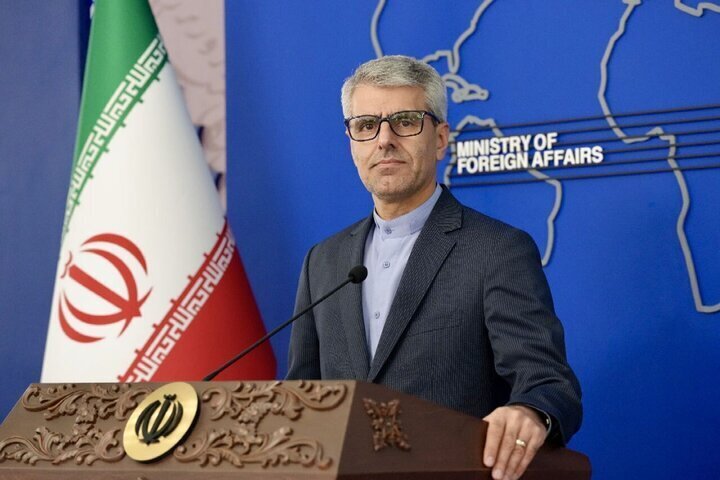
Iranian Foreign Ministry spokesman Esmail Baqai said the country had made “no new commitments” regarding nuclear inspections, stressing that any future cooperation with the UN nuclear watchdog would remain subject to existing regulations approved by Parliament and the Supreme National Security Council.
Despite the disagreement, both sides described the opening round of negotiations as productive.
In a joint statement, mediators Qatar and Pakistan revealed that the parties had agreed on a roadmap designed to achieve a comprehensive agreement within 60 days, with technical discussions expected to continue in the coming weeks.
Vance described the talks as having established a “very good foundation,” noting that discussions covered issues such as the reopening of the Strait of Hormuz and the preservation of regional ceasefire arrangements.
One of the most significant developments from the negotiations was the United States’ decision to temporarily ease sanctions on Iran.
Under a 60-day waiver issued by the US Treasury, Tehran has been authorised to produce, sell and transport crude oil and petrochemical products until August 21. The waiver also permits direct imports of Iranian oil into the United States and removes several financial and logistical barriers that had previously restricted Iran’s energy exports.
US Treasury Secretary Scott Bessent said the sanctions relief was linked to Iranian commitments to keep the Strait of Hormuz open and facilitate the return of IAEA inspectors.
US President Donald Trump also signalled confidence that Tehran would eventually accept extensive inspections, stating on social media that Iran “will agree to have Major Weapons Inspections.”
Iran, however, maintained that no such understanding had been reached.
The IAEA has yet to issue an official response to the conflicting claims.
Iran had previously suspended access to several nuclear facilities after they were targeted during last year’s conflict involving Israel and the United States. The UN nuclear watchdog subsequently withdrew its remaining inspectors from the country.
Beyond nuclear issues, the talks also addressed broader regional security concerns, particularly the situation in Lebanon.
According to the mediators, both countries agreed to establish a communication mechanism aimed at preventing misunderstandings and ensuring safe commercial navigation through the Strait of Hormuz. They also agreed to create a joint “de-confliction cell” involving Iran, the United States and Lebanon to support efforts to halt military operations in the region.
Iranian Foreign Minister Seyed Abbas Araghchi described developments in Lebanon as the first major test of the wider peace initiative.
Recent reports indicate a decline in hostilities between Israeli forces and Hezbollah, with a fragile ceasefire appearing to hold since the weekend.
While the talks have produced signs of progress, the dispute over nuclear inspections highlights the significant challenges that remain before a final agreement can be reached.