
In yet another contentious move within three months, the West African Examinations Council (WAEC) and the National Examinations Council (NECO) have introduced a one-off N4,000 result verification fee for candidates seeking tertiary admission with their O’Level results. Education advocates and commentators are demanding that the Federal Government cancel the policy immediately.
Moyosola Adesina, Head of Public Affairs at WAEC, issued a joint statement on behalf of both examination bodies. She described the initiative as designed to prioritise students’ interests. “This arrangement is designed to ensure that candidates who have successfully verified their WASSCE O’Level result through the Verification Service platform will not be required to repeat the same verification exercise,” the statement said.
Critics, however, view the collaboration as an objectionable assault on the right of Nigerian children to education. A total of 1,959,668 candidates sat the May/June 2026 WASSCE. These students had already paid examination fees to obtain their results. At N4,000 per candidate, WAEC and NECO stand to generate approximately N7.84 billion from the verification exercise alone—a substantial sum extracted from families already struggling to keep their children in school.
The timing has drawn sharp criticism. The Joint Admissions and Matriculation Board (JAMB) has demonstrated that examination bodies need not continually increase charges to remain viable. Under the immediate past Registrar, Ishaq Oloyede, JAMB reduced the UTME fee by 30 per cent—from N5,000 to N3,500—while still posting substantial operating surpluses. In 2017, its first year under Oloyede, JAMB remitted N7.86 billion to the Federal Government, a sharp rise from the N50 million remitted between 2015 and 2016. By 2022, cumulative remittances had reached N50 billion.
WAEC and NECO are being urged to adopt a similar model of prudent management. The new fee comes after the Federal Ministry of Education suspended an earlier plan by the two bodies to raise school certificate examination registration fees from N27,000 to N50,000. Many see the verification charge as an attempt to introduce another revenue measure through the back door.
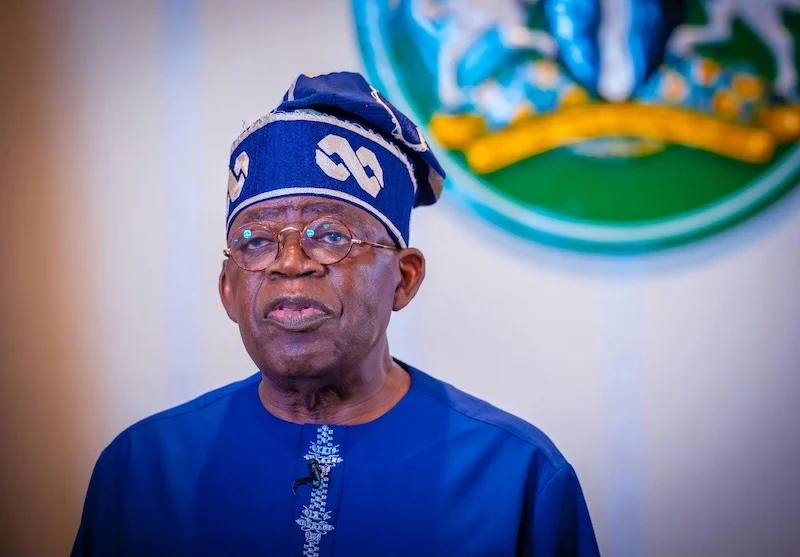
Education is a right, not a luxury, critics argue. Examination bodies should facilitate access and protect the integrity of academic records rather than function primarily as revenue-generating agencies. President Bola Tinubu has been called upon to intervene and halt the policy.
Commentators further recommend a broader policy shift: all three tiers of government should work towards fully sponsoring WAEC and NECO school certificate examination fees for Nigerian students, following the examples of Ghana and Sierra Leone (where full payment is provided) and The Gambia (which offers partial support). Given Nigeria’s greater resources, they argue, there is little justification for leaving families to bear these costs alone.
State governments are also urged to allocate a larger share of their budgets to education and to restore scholarships and bursaries for undergraduate and postgraduate students. The Nigeria Governors’ Forum has been asked to press the 19 states still indebted to NECO to clear their collective N2 billion debt.
While reducing administrative stress, simplifying admissions, and strengthening the security of academic records are legitimate goals, questions remain about why students should bear the cost of the technology used for verification. The actual per-head cost of the system has not been clearly disclosed. In a country where some government workers earn as little as N70,000 monthly and households face high costs for food, transport, healthcare and rent, every additional levy risks pushing more children out of the education system.
Observers note the irony of requiring students to pay to verify results issued by the same examination bodies. They warn against turning academic certification into another toll gate or allowing private IT partnerships to impose unexplained costs.
Parent-Teacher Associations and old students’ associations already shoulder school fees and examination costs for many poor students, sometimes even paying teachers’ salaries. Nigeria continues to rank among countries with the highest numbers of out-of-school children, driven by poverty, insecurity and underinvestment in education. Increasing the financial burden, critics say, cannot be the solution.
Several countries, including Germany and the Scandinavian nations, offer free education from primary through university level. While Nigeria may not replicate those systems overnight, it can at least stop erecting new barriers. Every unnecessary fee risks another child dropping out.
President Tinubu is being urged not to allow the proposed N4,000 WAEC/NECO verification fee to take effect. More fundamentally, the government is being called upon to treat education as a national investment rather than a convenient source of revenue. Nigeria cannot build a knowledge-driven, technology-powered economy by repeatedly reaching into the pockets of the young people expected to build it.