

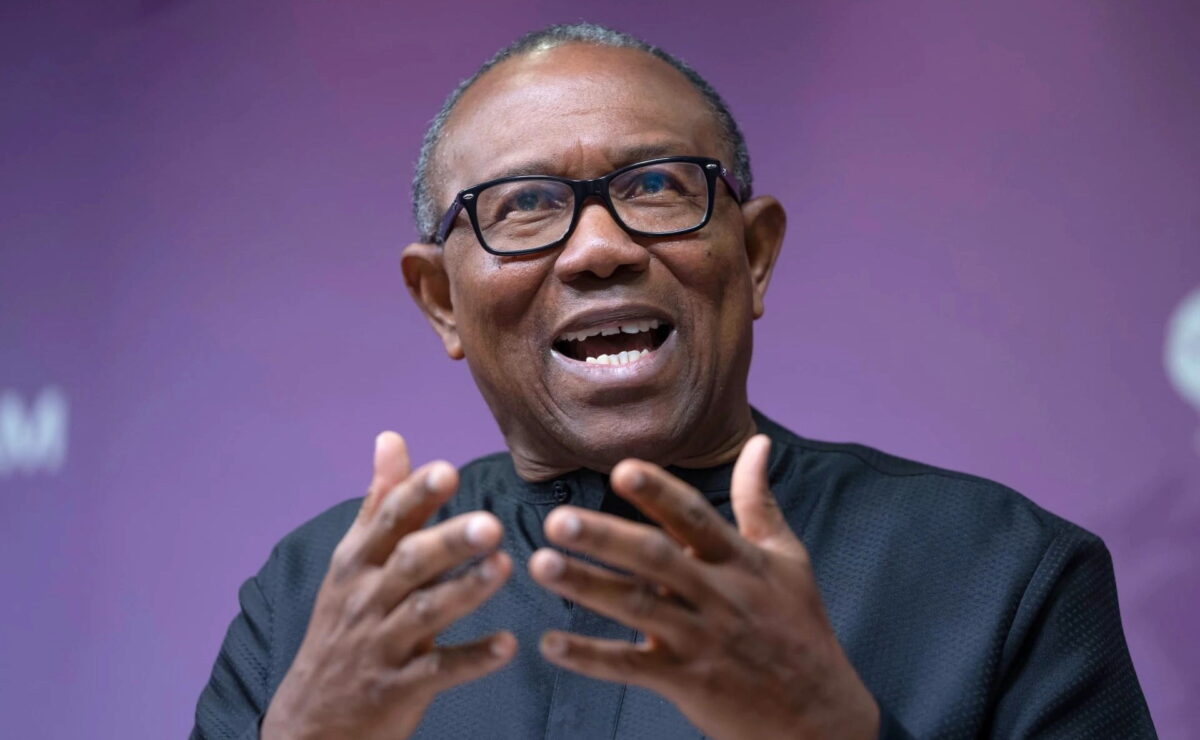
The presidential candidate of the Nigeria Democratic Congress (NDC), Peter Obi, has unveiled his plans for Nigeria ahead of the 2027 general elections, promising to run a campaign free from ethnic and religious sentiments.
Obi made the declaration on Friday while addressing journalists at a world press conference at his residence in Onitsha, Anambra State.
The former Anambra State governor described the 2027 election as a defining moment for Nigeria’s democracy, urging voters to assess the records, ideas and policies of all presidential candidates before making their choice.
According to him, Nigeria is facing serious economic, security and social challenges that require competent and responsible leadership.
“I enter this contest with one firm conviction: Nigeria can work, and Nigeria must work,” Obi said.
He cited poverty, food insecurity, internal displacement, unemployment, poor infrastructure, unreliable electricity, insecurity and the high cost of doing business among the major challenges confronting Nigerians.
Obi said millions of young Nigerians enter the labour market every year but struggle to secure productive employment, adding that the country must urgently create opportunities for its growing population.
On his campaign strategy, Obi called on Nigerians to reject propaganda, ethnic politics, religious sentiments, elitism and cronyism.
He said his campaign would focus on engaging citizens across the country, listening to their concerns and presenting practical solutions to the challenges facing the nation.
“We should debate ideas without hatred, compete without violence, and disagree without weakening the bonds that unite us,” he said.
Obi also unveiled his development priorities for Nigeria’s six geopolitical zones, stressing that the country’s diversity should be treated as an economic advantage.
He said the North-West would receive attention in agriculture, livestock, irrigation, agro-processing, manufacturing, education and security, while the North-East would focus on reconstruction, agriculture, education, enterprise and regional trade.
For the North-Central, Obi identified food production, processing and responsible development of mineral resources as key areas, while the South-West would build on its strengths in manufacturing, technology, finance, trade and the creative economy.
He said the South-East would benefit from improved infrastructure, connectivity and access to investment to strengthen its entrepreneurial and industrial base.
According to him, the South-South region would be positioned to derive greater value from oil and gas while expanding maritime services, fisheries and agriculture, alongside stronger environmental protection.
Obi added that the Federal Capital Territory must become a model for efficient urban planning, transportation, housing, sanitation, security and public services.
“Every region must produce. Every region must contribute. Every region must benefit,” he stated.
The presidential hopeful also highlighted his experience in governance, pointing to his tenure as governor of Anambra State and his private-sector background as part of the experience he would bring to the presidency.
He said his administration in Anambra prioritised education, healthcare, infrastructure, fiscal discipline and institutional capacity.
Obi also acknowledged the governing experience of Senator Rabiu Musa Kwankwaso, particularly his focus on education, technical training, scholarships, infrastructure and human capital development during his tenure as Kano State governor.
He said their different experiences reinforced the need for Nigeria to invest in its people and manage public resources responsibly.
“Public office is not a reward; it is a responsibility to the people,” Obi added.