

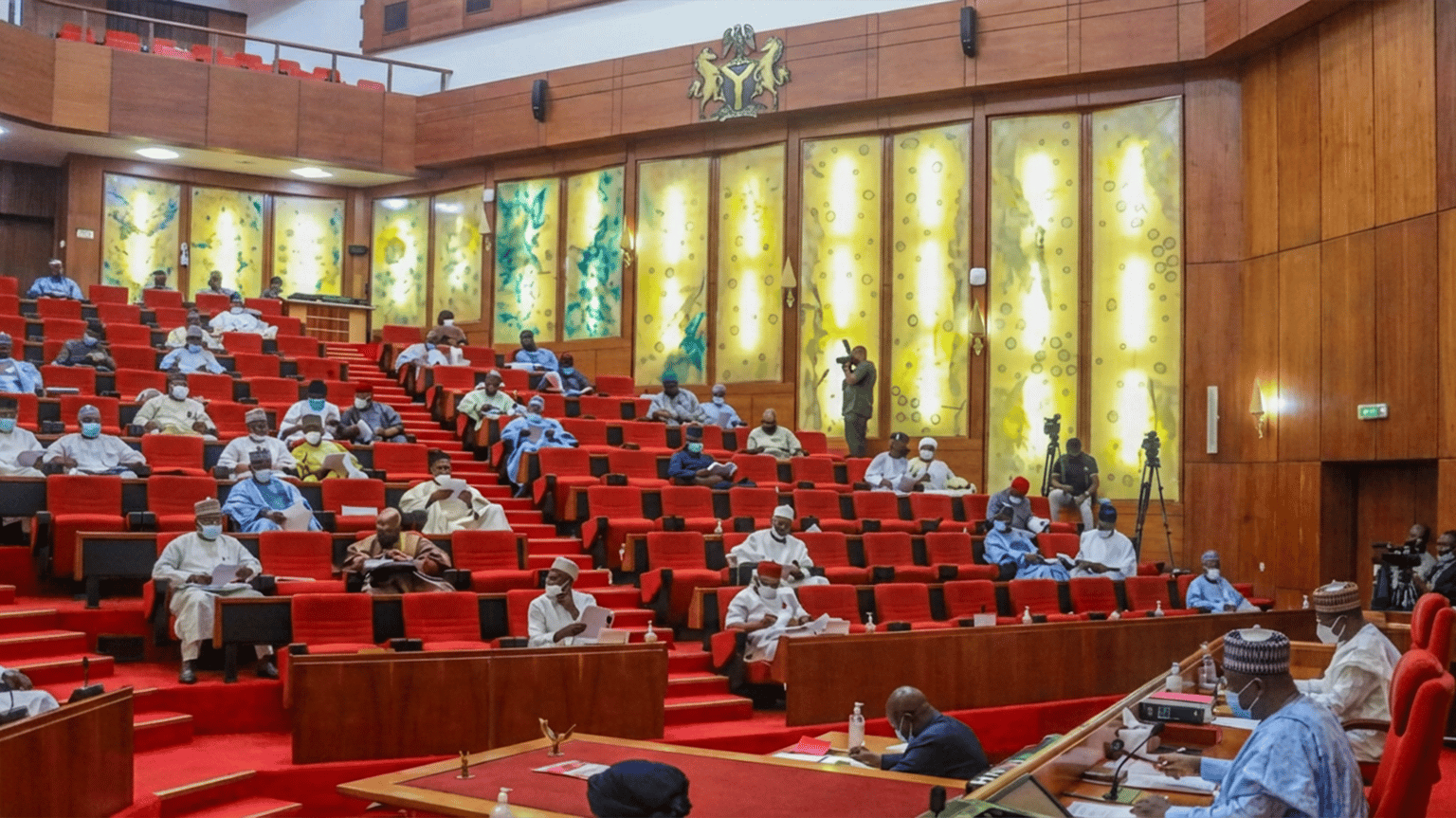
The Nigerian Senate has passed the Electoral Act Amendment Bill 2026 after hours of robust debate, approving reforms to election timelines, penalties for electoral offences, and voting technology, but it rejected a proposal to mandate real-time electronic transmission of results ahead of the 2027 general elections.
Central to the controversy was Section 60, which governs the transmission of polling unit results. Senators voted down a recommendation by the Senate Committee on Electoral Matters that would have required presiding officers to upload results to the Independent National Electoral Commission (INEC) Result Viewing (IReV) portal in real time. Instead, the Senate retained the provisions of the 2022 Electoral Act, which allow electronic transmission only after votes are counted and publicly announced at the polling unit.
Senate President Godswill Akpabio clarified that electronic transmission remains part of the law, dismissing claims that the provision had been removed. Senate Committee Chairman on Media and Public Affairs, Adeyemi Adaramodu, described the debate as largely semantic, noting that results will continue to be verifiable both electronically and via physical forms.
The amendments also include reductions in the election notice period from 360 to 180 days, shortened deadlines for submission of party candidate lists from 120 to 90 days, and a cut in nomination periods from 180 to 90 days. Penalties for unlawful possession of voters’ cards were increased from N500,000 to N5 million, though the Senate opted for financial penalties instead of a proposed 10-year ban for vote-buying. The smart card reader was removed from the electoral framework and replaced with the Bimodal Voter Accreditation System (BVAS).
While the Senate rejected the mandatory real-time upload and a proposed clause allowing electronic voter identification via QR codes, presiding officers are still required to count votes, record them on prescribed forms, announce them publicly, and transmit them electronically using BVAS or any INEC-approved device.
INEC, which has completed the timetable for the 2027 elections, is unable to release it due to ongoing amendments by the National Assembly. The commission also flagged the inclusion of deceased persons on the voters’ register, prompting plans for a nationwide verification exercise to cleanse the register and validate records in collaboration with relevant agencies.
Speaking on the FCT Area Council elections scheduled for February 21, INEC Chairman Prof. Joash Amupitan said the exercise will involve 1,680,315 registered voters across 2,822 polling units. A mock accreditation using BVAS will be conducted on February 7 in 289 selected units, and political campaigns are expected to end on February 19.
The opposition African Democratic Congress (ADC) and the Peoples Democratic Party (PDP) condemned the Senate’s decision, describing it as a setback for democratic consolidation. PDP’s National Publicity Secretary, Ini Ememobong, urged lawmakers to remember their mandate to reflect the aspirations of Nigerians, noting that electronic transmission from polling units is broadly supported across the country as a means to safeguard electoral integrity.
The nationwide verification exercise, according to INEC, will focus on removing deceased voters, correcting data errors, and ensuring the integrity of the national register ahead of the 2027 polls.