
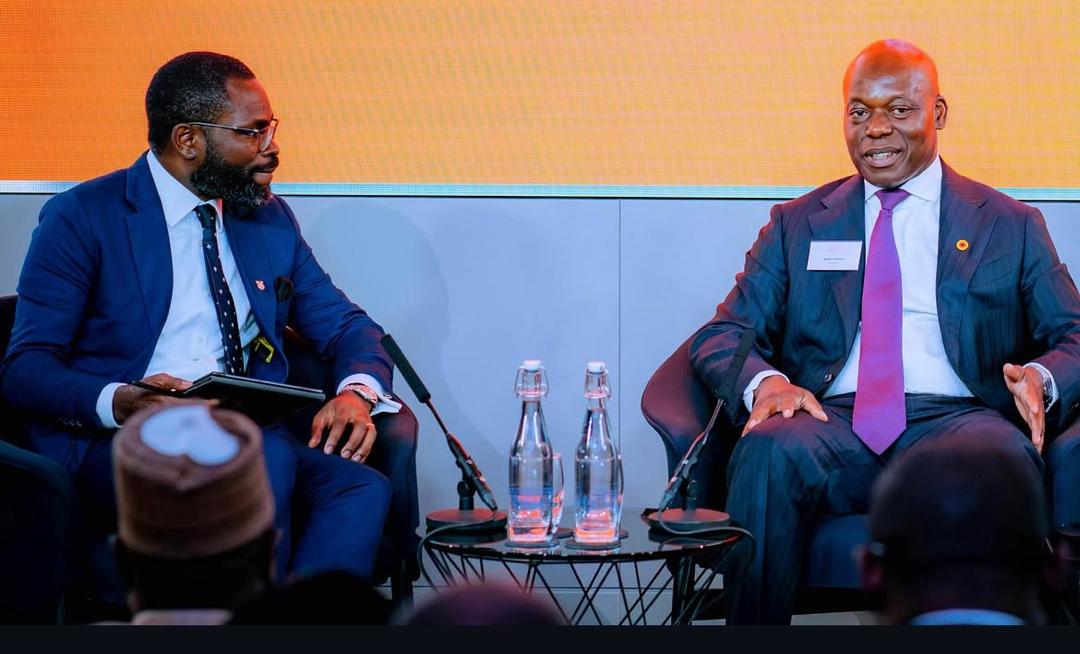
Group Chief Executive of Oando Plc, Jubril Adewale Tinubu, has urged African businesses to strengthen corporate governance, transparency and institutional structures to attract the long-term capital needed to scale and compete globally.
Tinubu made the call during a discussion organised by the Royal African Society in London on the future of mining, oil and gas in Africa.
He said stronger governance was critical to making African businesses more attractive to international investors, particularly as global capital increasingly demands greater transparency and accountability.
Reflecting on Oando’s listing on the Johannesburg Stock Exchange about two decades ago, Tinubu said the experience compelled the company to adopt international financial reporting standards, strengthen its board with independent directors and improve accountability to investors.
Although initially uncomfortable, he described the process as one of the most valuable exercises undertaken by the company, saying it demonstrated that corporate governance should go beyond regulatory compliance.
“Global capital hesitates over what it cannot examine,” Tinubu said, stressing that businesses seeking international funding must have structures that enable investors to assess their operations, financial performance and long-term prospects.
He noted that many African businesses began as family-owned enterprises with informal governance arrangements, which could become barriers when they sought institutional or international investment.
“Governance, hence, is more than a compliance exercise. It is the instrument that makes a company legible to the world,” he said.
Tinubu also pointed to changes in the global financing landscape, particularly the decision by some European financial institutions to reduce their exposure to African hydrocarbons as part of their net-zero commitments.
According to him, the retreat of some Western lenders has not reduced Africa’s energy needs or eliminated the demand for financing. Instead, he said, it presents an opportunity for African financial institutions to play a greater role in funding the continent’s development.
He cited the African Export-Import Bank (Afreximbank), which he said had committed more than $25 billion to financing Africa’s oil and gas sector.
Tinubu said Africa must continue building businesses capable of efficiently absorbing and deploying capital, noting that major opportunities remained across energy, infrastructure and other productive sectors.
“What doesn’t get financed doesn’t get built,” he said, adding that significant opportunities remained for investors willing to partner with credible African businesses.
He urged companies across the continent to embrace transparent reporting, professional management and stronger governance as foundations for sustainable growth and improved access to global capital.