
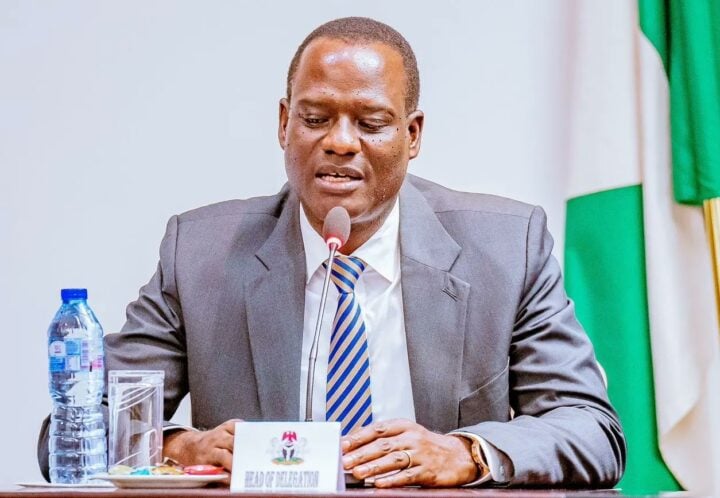
The Minister of Finance and Coordinating Minister of the Economy, Taiwo Oyedele, has dismissed claims that President Bola Tinubu’s administration borrowed between N75 trillion and N80 trillion, saying the increase in Nigeria’s public debt was largely caused by exchange rate adjustments, inherited liabilities and debt refinancing rather than fresh loans.
Speaking on Monday during a four-hour interactive session with the Senate Committee on Finance chaired by Senator Sani Musa, Oyedele explained that more than N40 trillion of the country’s debt increase resulted from the revaluation of existing foreign loans following the naira’s depreciation, while another N33 trillion came from the securitisation of Ways and Means advances inherited from the previous administration.
He added that a significant portion of domestic borrowing was used to refinance maturing debts rather than fund new spending.
According to the minister, all external borrowings require National Assembly approval, stressing that the government had not utilised even half of the approved borrowing plan.
Oyedele also disclosed that the Federal Government generated N21.6 trillion in tax revenue between January and June 2026, representing a 49 per cent increase compared to the same period last year. He attributed the growth to ongoing tax reforms, improved digital revenue collection and stronger tax compliance.
Despite the improved revenue, he explained that government expenditure continues to outpace earnings due to obligations such as debt servicing, implementation of the new national minimum wage, public sector salary adjustments and education funding through NELFUND.
The minister maintained that recent economic reforms had strengthened Nigeria’s macroeconomic outlook, noting that the economy expanded by 3.8 per cent in the first quarter of 2026, while external reserves rose above $51 billion, the highest level recorded in 17 years. He added that inflation remained a challenge but was beginning to ease through coordinated fiscal and monetary policies.
Oyedele also defended the government’s tax incentives and import duty waivers, saying many public estimates overstated their fiscal impact because they reflected the value of imported goods rather than the actual tax concessions granted. He said the incentives covered essential imports, including military equipment, pharmaceuticals, food, compressed natural gas equipment, electric vehicles and manufacturing inputs.
Chairman of the Senate Committee on Finance, Senator Sani Musa, said the committee would closely examine Nigeria’s debt sustainability and the utilisation of import duty waivers. He also advocated reforms to the country’s budgeting framework, calling for a performance-based budgeting system to improve efficiency and align spending with available revenue.
However, Senate Chief Whip Tahir Monguno questioned why stronger government revenues had not translated into improved implementation of national budgets. He noted that security agencies had reportedly received no capital releases despite increased revenue and warned that failure to implement an Appropriation Act amounted to a breach of the law.
Senator Adamu Aliero also expressed concerns over Nigeria’s rising debt profile, urging the government to provide greater public clarity on the country’s borrowing figures while acknowledging ongoing infrastructure projects across the country.