
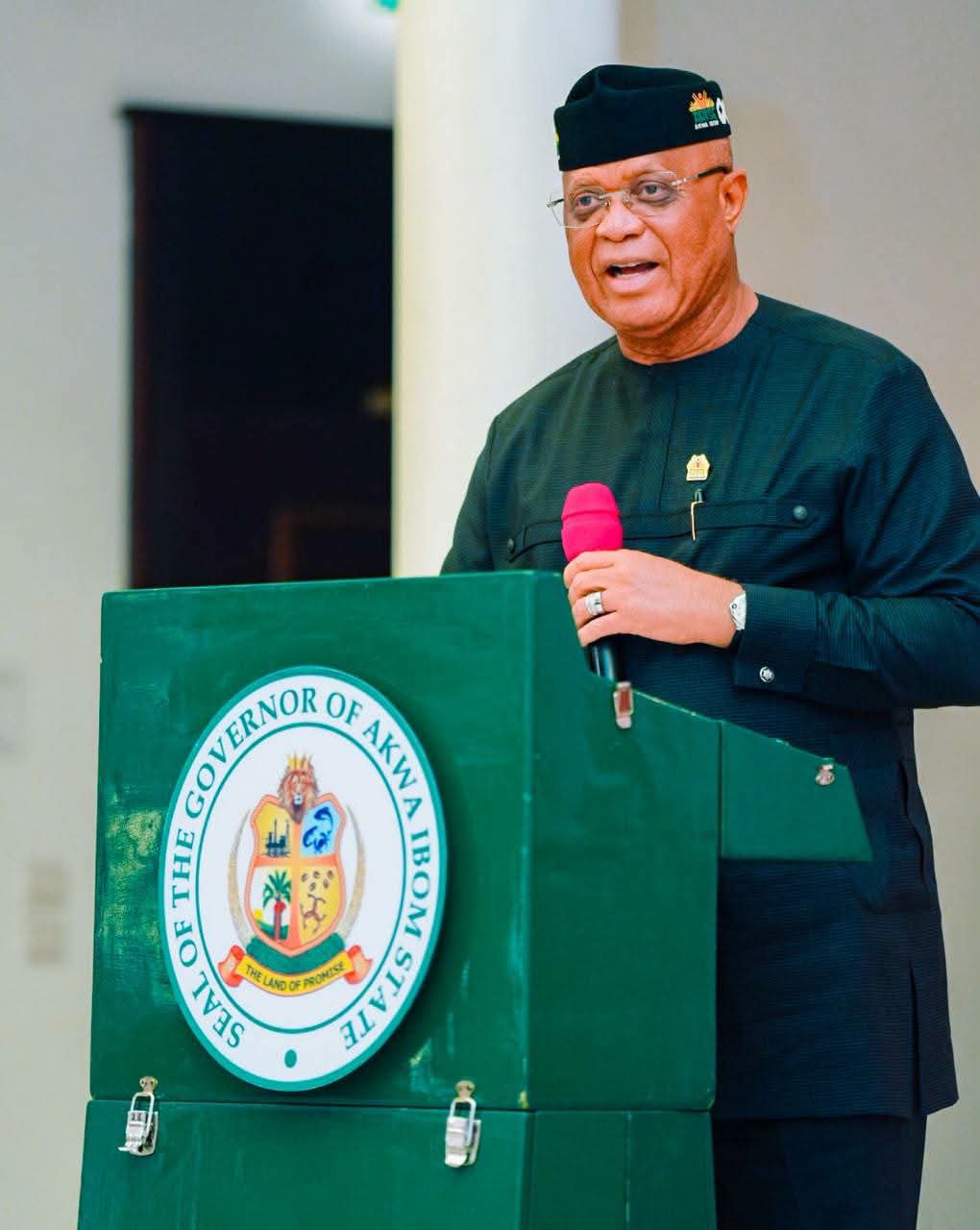
Akwa Ibom State Governor, Umo Eno, has disclosed that his administration saved more than ₦200 billion in public project costs through stricter procurement processes, in-house cost estimates and improved financial controls.
Speaking on his administration’s financial stewardship after three years and two months in office, Eno said the savings were achieved by carefully scrutinising contract bids before approval to eliminate inflated project costs.
He said the funds saved had been redirected to infrastructure development, social programmes and strategic investments without resorting to borrowing.
According to the governor, the administration has also cleared major inherited financial obligations by repaying ₦35 billion in outstanding bank loans and settling ₦87 billion in gratuity arrears owed to retired workers, bringing the total liabilities cleared to ₦122 billion.
Eno maintained that despite the repayments, the state continued to execute capital projects across its 31 local government areas.
He also stated that Akwa Ibom had not borrowed any money to finance projects since he assumed office.
According to the governor, more than ₦734 billion has been committed to road construction and other infrastructure projects, with savings from procurement reforms channelled into roads, bridges, schools, hospitals and other public facilities.
Officials explained that the reported ₦200 billion savings represent the difference between inflated project costs and the actual amounts approved after technical evaluation, rather than unspent government funds.
The administration added that the improved fiscal position has strengthened the state’s capacity to participate in strategic investments, including the proposed Ibom Deep Sea Port, which is expected to be financed through contributions from the Federal Government, private investors and the Akwa Ibom State Government.
On revenue generation, Eno said internally generated revenue (IGR) increased from ₦15.96 billion in 2017 to ₦43.18 billion in 2023 before rising to ₦75.7 billion in 2024, attributing the growth to improved tax administration and stronger compliance.
He also highlighted the implementation of the Treasury Single Account (TSA) on January 1, 2026, saying the policy boosted monthly IGR from about ₦2 billion to approximately ₦12 billion within three months by blocking revenue leakages across government agencies.
While acknowledging that increased statutory allocations from the Federation Account have also strengthened the state’s finances, the governor said his administration’s goal is to build a self-sustaining economy capable of funding critical government obligations through internally generated revenue while using federal allocations for long-term development projects.
Financial analysts, however, noted that sustaining the gains would require continued transparency in contract awards, strict adherence to procurement rules and effective oversight of public-private partnerships as the state pursues major infrastructure projects.