
The United States has announced a global campaign targeting what it described as transnational left-wing extremism, even as its military confrontation with Iran continued to escalate across the Middle East.
The announcement came amid a seventh consecutive night of US airstrikes inside Iran and retaliatory attacks by Tehran on key infrastructure in Kuwait and Bahrain. The latest round of violence also claimed the lives of two American service members in Jordan, while another remains missing following Iranian missile and drone strikes.
Speaking at an international counterterrorism summit in Washington attended by delegates from over 60 countries, US Secretary of State Marco Rubio said Western nations had underestimated the threat posed by violent left-wing extremist groups.
Rubio argued that global counterterrorism efforts had focused heavily on other forms of extremism while overlooking politically motivated violence linked to the far left. He said the US would strengthen cooperation with international partners to identify, disrupt and dismantle such organisations wherever they operate.
White House Homeland Security Adviser Stephen Miller echoed the administration’s position, accusing violent left-wing groups of exploiting democratic values and civil liberties to avoid accountability for extremist activities.
Meanwhile, the military conflict between Washington and Tehran intensified, with US forces carrying out fresh strikes targeting areas near the Persian Gulf, the Strait of Hormuz and transportation infrastructure deeper inside Iran.
Iran accused the United States of expanding its military campaign beyond strategic targets to include airports, railway stations, bridges, telecommunications facilities and energy infrastructure.
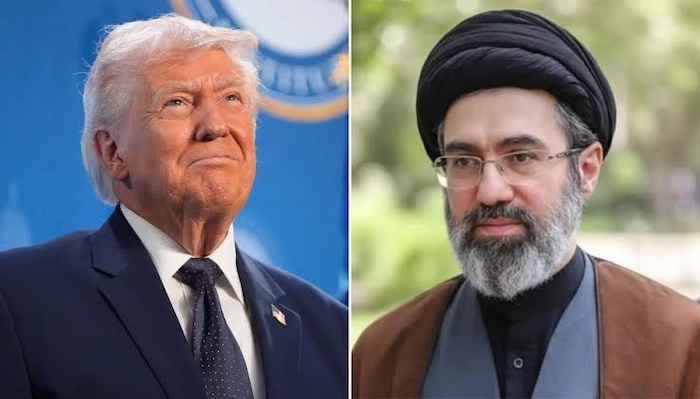
Iranian Supreme Leader Mojtaba Khamenei condemned the attacks, warning that the United States would face “unforgettable lessons” and accusing Washington of violating a recently negotiated framework agreement intended to reduce hostilities. He said the renewed strikes demonstrated that President Donald Trump’s commitments could not be trusted.
Iranian authorities reported that more than 100 communications towers had been destroyed, disrupting telephone and internet services across several communities. Officials in Khuzestan Province also claimed US forces had struck dozens of locations in multiple cities over the past 10 days.
In retaliation, Iran expanded its attacks beyond direct US military assets. Kuwait confirmed that Iranian missiles and drones struck another electricity generation and water desalination facility, sparking a fire that forced several power generation units offline.
The Kuwait Petroleum Corporation also reported significant damage to a strategic oil facility following repeated attacks, although workers were safely evacuated. Operations at Kuwait International Airport were temporarily suspended after rocket and drone threats disrupted air traffic.
Kuwait’s government vowed to take all necessary measures to defend the country against further attacks.
In neighbouring Bahrain, the country’s air defence systems intercepted multiple Iranian missiles and drones, while air raid sirens sounded repeatedly as residents were ordered to seek shelter.
Jordan also intercepted several missiles believed to be targeting military installations, with authorities reporting no civilian casualties.
Iran further escalated its rhetoric as senior military adviser Major General Mohsen Rezaei warned that Tehran would abandon its policy of proportionate retaliation if US military operations continued. He said Iran could launch full-scale offensive operations should the conflict persist.
Diplomatic efforts also suffered a major setback after Iran formally suspended its commitments under a memorandum of understanding signed with Washington only a month earlier. Iranian Deputy Foreign Minister Khazem Gharibabadi accused the United States of violating the agreement through continued military action, insisting Tehran would now focus solely on defending the country.
Foreign Ministry spokesman Esmaeil Baghaei also ruled out an immediate return to negotiations, saying Iran had no plans for fresh diplomatic talks.
Elsewhere, Lebanese President Joseph Aoun departed for Washington for talks with President Donald Trump following recent discussions between Lebanon and Israel aimed at advancing a peace agreement.
The visit comes after US-backed negotiations produced a framework for Israeli troop withdrawal from southern Lebanon and deployment of the Lebanese Army, though the agreement remains dependent on the disarmament of Hezbollah, which has rejected the deal.
Fresh Israeli airstrikes were reported in southern Lebanon on Saturday, while the US Embassy warned American citizens against travelling to Lebanon due to heightened regional tensions.
Two US Troops Killed in Jordan
The Pentagon confirmed that two US service members were killed on Friday while defending against Iranian ballistic missile and drone attacks targeting military positions in Jordan.
According to US Central Command (CENTCOM), one additional service member remains missing in action, while four others were evacuated to hospitals in Jordan for medical treatment following the attacks.
The incident marks another significant escalation in the growing military confrontation between the United States and Iran, raising concerns over the risk of a broader regional conflict.