
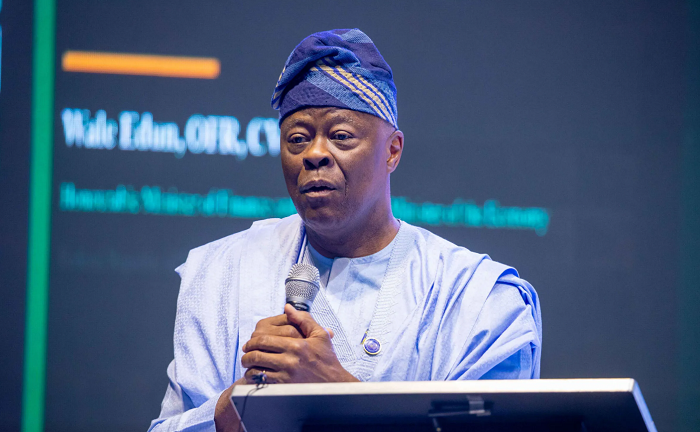
Nigeria’s Minister of Finance and Coordinating Minister of the Economy, Wale Edun, has raised alarm that Africa is losing an estimated $88 billion annually to illicit financial flows, warning that the trend is undermining the continent’s development.
Speaking at a high-level fiscal meeting in Abuja, Edun described illegal financial outflows as one of the most significant barriers to Africa’s economic progress, noting that the lost funds could have been invested in critical sectors such as infrastructure, healthcare, and education.
He highlighted broader structural challenges facing African economies, including tax evasion, weak institutions, limited economic diversification, and heavy reliance on external financing.
According to him, urgent fiscal reforms are needed across the continent, with governments expected to expand their tax base, improve compliance, and plug revenue leakages to achieve sustainable growth.
Edun also called for the development of stronger capital markets and enhanced collaboration among African countries to tackle illicit financial flows, which often transcend national borders and exploit regulatory gaps.
He stressed that reforms must be supported by robust institutions, improved digital systems, and citizen participation to ensure long-term success.
The minister pointed to African Union’s Agenda 2063 as a clear roadmap for strengthening governance, improving tax systems, and boosting domestic revenue mobilisation across the continent.
On Nigeria’s domestic efforts, Edun said reforms introduced under President Bola Tinubu since May 2023 are already reshaping the fiscal landscape. These include tax system simplification, expansion of the tax base, and measures aimed at easing the burden on vulnerable citizens.
He added that recent policies—such as fuel subsidy removal and exchange rate unification—have improved transparency, reduced market distortions, and enhanced investor confidence.
Edun also cited the implementation of a National Single Window system to streamline trade processes and curb revenue leakages linked to illicit flows.
Earlier, Executive Chairman of the Nigeria Revenue Service, Zacch Adedeji, echoed similar concerns, warning that billions lost annually to illegal transfers, trade mispricing, and tax evasion translate into fewer public services and infrastructure projects.
He called for stronger cross-border cooperation to combat the challenge, noting that illicit financial flows often exploit weak regulatory systems across jurisdictions.
Also speaking, Executive Secretary of the African Tax Administration Forum, Mary Baine, said African countries must prioritise domestic revenue mobilisation to fund development goals amid limited fiscal space.
While noting gradual improvements in economic growth projections and tax revenue performance across the continent, Baine stressed that Africa’s current tax-to-GDP ratio remains below its potential, urging more decisive policy action to accelerate growth.
The meeting, stakeholders said, is expected to shape policies and partnerships aimed at protecting Africa’s resources and building a more self-reliant and economically stable continent.