
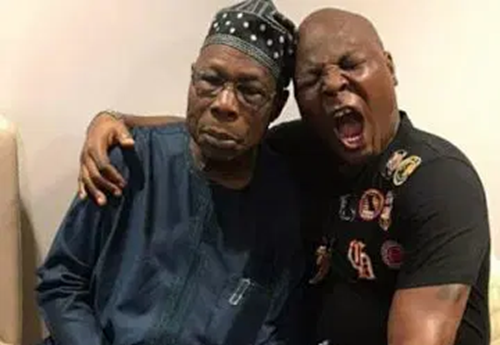
Maverick entertainer and activist Charly Boy has shed light on his longstanding relationship with former President Olusegun Obasanjo, describing it as a bond rooted in mutual respect and deep understanding.
In a post shared Monday on X, Charly Boy acknowledged that many Nigerians were initially puzzled by the closeness between a self-styled rebel known for challenging authority and a former military leader turned president.
“When you mention the kind relationship wey no too common for this country, you go talk about Charly Boy and Olusegun Obasanjo,” he wrote, reflecting on the public reaction to their friendship.
According to the entertainer, their connection defies simplistic labels.
“Life no be black and white,” he stated, explaining that while he built his reputation on activism and confronting government excesses, Obasanjo recognised in him qualities such as courage, consistency and commitment to truth.
Charly Boy added that he, in turn, looked beyond Obasanjo’s military background and presidential office, seeing instead an elder statesman who had endured war, leadership pressures and national challenges.
He described their bond as a “quiet understanding” rather than a performative alliance, noting that their conversations about Nigeria often involved strong disagreements but never bitterness.
“Their relationship no be noise relationship. Na quiet understanding. When dem talk, na two strong minds wey dey reason Nigeria matter,” he wrote.
Charly Boy pointed to a defining moment in their relationship when Obasanjo personally hosted the launch of his autobiographical book, 999, calling it a gesture of honour and acknowledgment.
“That event no just be about selling book. Na elder telling younger warrior say, ‘I see you,’” he said.
The activist suggested that their friendship offers a broader lesson for a deeply divided country, demonstrating that dialogue and respect can exist even among individuals with differing perspectives.
“For country wey division too much, their connection send message say dialogue possible. Respect possible. Unity possible,” he wrote.
Charly Boy’s reflections highlight an uncommon alliance in Nigeria’s political and cultural landscape one that bridges activism and establishment politics through personal regard rather than ideological conformity.