
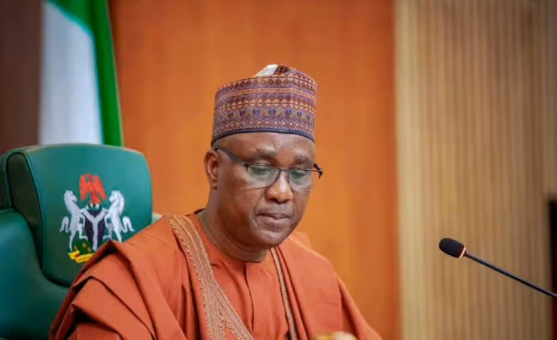
The Speaker of the House of Representatives, Abbas Tajudeen, has warned that Nigeria risks losing up to 30 per cent of its Gross Domestic Product (GDP) by 2050 if urgent action is not taken to address climate change.
The projected loss, estimated at about $460 billion, underscores the severe economic risks associated with climate inaction, the Speaker said while declaring open the National Decarbonisation Technical Roundtable in Abuja.
The event was organised by the House Committee on the Mandatory National Decarbonisation Programme.
Represented by Muktar Shagaya, Tajudeen said the effects of climate change are already evident across Nigeria, warning that environmental disruptions are having growing economic and social consequences.
According to him, climate change is no longer a distant threat but a present reality affecting communities nationwide through extreme weather conditions and environmental degradation.
“From drought in the North to flooding and erosion in the East, and irregular rainfall patterns in the South, climate change has become a lived experience for Nigerians,” he said.
He noted that while northern parts of the country are facing increasing drought and desertification, western regions have recorded rising temperatures. Meanwhile, eastern states continue to battle flooding and erosion, while southern areas are experiencing increasingly unpredictable rainfall patterns.
The Speaker also referenced global climate commitments made under the Paris Agreement, where 196 countries, including Nigeria, pledged to reduce greenhouse gas emissions through nationally determined contributions aimed at limiting global warming.
He cautioned that failure to respond decisively could severely impact critical sectors such as agriculture, infrastructure and energy, all of which are highly vulnerable to climate-related disruptions.
“As one of Africa’s largest economies and the most populous nation on the continent, Nigeria consistently ranks among countries most affected by extreme weather events,” Tajudeen said.
Despite the push for decarbonisation, the Speaker emphasised that Nigeria’s climate agenda should not be seen as an attempt to undermine the oil and gas sector, which remains a vital pillar of the country’s economy.
Instead, he said the transition presents an opportunity for economic diversification, the growth of competitive green industries and increased investment aligned with global climate priorities.
Chairman of the House Committee on the Mandatory National Decarbonisation Programme, Sesi Whingan, said ongoing legislative initiatives are aimed at establishing a comprehensive national framework to guide Nigeria’s shift toward a low-carbon economy.
Whingan explained that the roundtable marked the start of a nationwide consultation process involving policymakers, regulators, industry leaders, development partners and civil society organisations to build consensus on implementing a mandatory national decarbonisation programme.
He noted that the National Assembly has already enacted several key laws supporting Nigeria’s climate and energy transition, including the Climate Change Act 2021, Electricity Act 2023, and Petroleum Industry Act 2021.
Whingan added that the legislative efforts are intended to complement the green economy initiatives of President Bola Tinubu, particularly policies designed to unlock opportunities within the emerging carbon market.
He revealed that the Federal Government has already approved a National Carbon Market Framework expected to generate between $2.5 billion and $3 billion annually over the next decade.
The framework will establish guidelines for carbon credit registration, issuance and verification while promoting emission-reduction projects in areas such as forestry, renewable energy, clean cooking technologies and climate-smart agriculture.
Also speaking, the Director for Africa at the Global Wind Energy Council, Wangari Muchiri, said Nigeria’s growing commitment to decarbonisation presents significant opportunities for job creation, economic diversification and increased investment in clean energy.
Muchiri noted that sectors such as oil and gas and agriculture remain carbon-intensive but said the global shift toward cleaner energy systems offers Nigeria an opportunity to reposition itself economically.
“The decarbonisation agenda for Nigeria is really critical. Many sectors in Nigeria are carbon-heavy, but this presents a major opportunity for the country to capitalise on the carbon economy and create jobs,” she said.
She also commended the engagement between lawmakers, technical experts and international partners aimed at strengthening national dialogue on decarbonisation and encouraging coordinated action.
According to Muchiri, Nigeria has already demonstrated readiness to pursue a low-carbon transition through commitments made by President Tinubu at international climate platforms, including the United Nations Climate Change Conference.
She called on development partners, investors and technical experts to deepen their support through financing, knowledge sharing and capacity development to accelerate Nigeria’s transition to a sustainable and resilient low-carbon economy.