


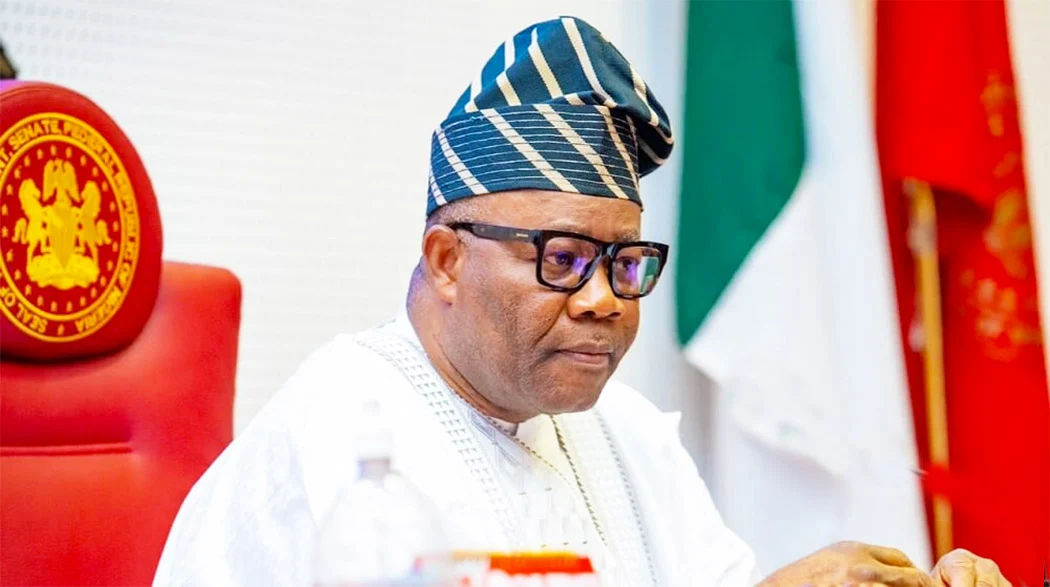
The Senate has announced an emergency plenary session for Tuesday, February 10, 2026, following intense public backlash over its passage of the Electoral Act (Amendment) Bill, which excluded a provision mandating real-time electronic transmission of election results.
The decision was disclosed on Sunday in a notice signed by the Clerk of the Senate, Emmanuel Odo, directing all senators to reconvene by 12 noon.
“The President of the Senate, Godswill Akpabio, has directed the reconvening of plenary for an emergency sitting on Tuesday, February 10, 2026,” the statement read.
The emergency sitting comes amid escalating pressure from labour unions, civil society organisations and opposition groups, who accuse the Senate of weakening electoral transparency ahead of the 2027 general elections.
NLC Threatens Protests, Election Boycott
The Nigeria Labour Congress (NLC) warned that it could mobilise nationwide protests and election boycotts if the National Assembly fails to clearly mandate electronic transmission of results.
In a statement on Sunday, NLC President Joe Ajaero said the Senate’s “confusion and contradictory narratives” over the amended Electoral Act threaten electoral integrity and public trust.
“Nigerians deserve a transparent system where votes are not only counted but seen to be counted,” Ajaero said, warning that legislative ambiguity could institutionalise doubt in the electoral process.
The labour body demanded an immediate and unambiguous clarification of the final provisions passed by the Senate, insisting that INEC must be compelled by law to transmit results electronically in real time from polling units.
Civil Society Plans ‘Occupy NASS’ Protest
A newly formed coalition, the Movement for Credible Elections (MCE), also condemned the Senate’s decision, describing it as “deliberate democratic sabotage.”
The group announced plans for a mass protest tagged “Occupy NASS”, scheduled for Monday in Abuja, to demand the reinstatement of mandatory real-time electronic transmission of results.
According to the coalition, rejecting Clause 60(3) of the bill—which sought to compel presiding officers to upload results directly to the INEC Result Viewing (IReV) portal—opens the door to manipulation between polling units and collation centres.
“Mandatory electronic transmission is a minimum safeguard against ballot rewriting and post-election fraud,” the group said, accusing the political elite of resisting technological transparency.
The MCE includes prominent activists such as Ayuba Wabba, Oby Ezekwesili, Femi Falana (SAN), Pat Utomi, Usman Bugaje, Bilikisu Magoro, Nkoyo Toyo and Shehu Sanni, among others.
Harmonisation Committee Set to Meet
Meanwhile, the House of Representatives’ bipartisan Conference Committee on the Electoral Act Amendment Bill is expected to meet with its Senate counterpart this week to reconcile differences between both versions of the bill.
A member of the committee, Saidu Abdullahi, confirmed that discussions would begin within the week as part of the harmonisation process required before final passage and transmission to the President for assent.
Senate Defends Position
Despite the backlash, Senate President Godswill Akpabio has defended the chamber’s action, insisting that electronic transmission was not rejected outright and that lawmakers would not be intimidated by public pressure.
The Senate argues that the amended bill retains the existing discretionary provision, allowing INEC to determine the mode of result transmission based on operational realities.
Afenifere Joins the Call
The pan-Yoruba socio-political group Afenifere has also urged the National Assembly’s joint committee to adopt mandatory real-time electronic transmission of results, warning that failure to do so could further erode public confidence in Nigeria’s democracy.
In a statement by its leadership, the group described the Senate’s action as regressive and cautioned that democracy “must be allowed to breathe” ahead of the 2027 polls.
As pressure mounts from labour, civil society and regional groups, Tuesday’s emergency sitting is now widely seen as a critical moment that could shape the credibility of Nigeria’s next general elections.