
Industry experts have raised concerns that Nigeria’s ambition to become a major aviation hub in Africa is being undermined by inadequate maintenance, repair and overhaul (MRO) facilities and the absence of efficient transit systems.
Key stakeholders, including Debo Adewolu of Embraer, George Uruesi of Ibom Air, and Ado Sanusi of Aero Contractors, highlighted these challenges in separate interviews.
Adewolu described the lack of local MRO infrastructure as a major constraint, noting that Nigerian airlines are often forced to ferry aircraft abroad for routine maintenance—driving up costs, causing delays, and disrupting operations.
Despite being one of Africa’s largest aviation markets, Nigeria continues to underperform as a transit hub, missing out on significant passenger traffic and revenue opportunities.
“A market as big as Nigeria still struggles as a transit airport. Lack of MRO capabilities is still a major issue,” Adewolu said.
He added that poor regional connectivity further compounds the problem, limiting the country’s competitiveness in the African aviation space.
Adewolu noted that Embraer is supporting airlines with technical services, training, and operational assistance, while also advocating for aircraft suited to Africa’s fragmented route networks. He pointed out that smaller aircraft, such as the E-Jet family, are better suited for low-frequency intra-African routes and can help improve connectivity and profitability.
On his part, Uruesi stressed that infrastructure alone does not define a hub, arguing that Nigeria must develop strong indigenous airlines to compete regionally.
“A hub is not a big airport,” he said, explaining that a true hub requires a significant proportion of transit passengers, not just point-to-point traffic.
He identified three key pillars for a successful aviation hub: strong home-based airlines, efficient infrastructure, and high-quality passenger experience.
According to him, Nigeria’s airlines remain too small to support hub operations effectively, making them vulnerable to market shocks and limiting route connectivity.
Uruesi also highlighted passenger experience as a critical factor, noting that travellers often prefer transit hubs like Accra due to smoother connections and better service delivery.
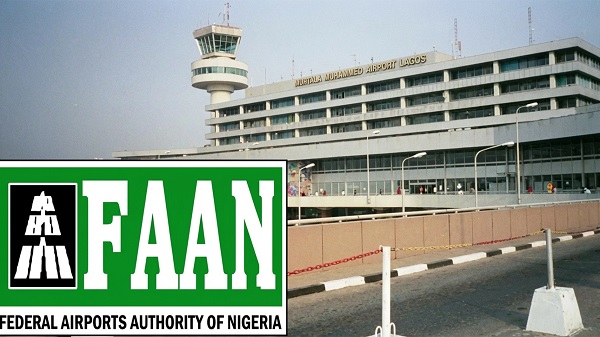
While acknowledging longstanding policy challenges, he expressed optimism about improved coordination under the Federal Airports Authority of Nigeria and the aviation ministry.
Similarly, Sanusi emphasised that achieving hub status requires more than modern airports, pointing instead to the need for strong domestic carriers and enabling policies.
He cautioned against government-run airlines, advocating instead for policies that empower private carriers to operate competitively as national flag bearers.
“Government should not run airlines but create the right environment for strong local carriers to thrive,” he said.
Sanusi also called for urgent reforms to tackle multiple taxation, foreign exchange constraints, and high operating costs, which he said continue to stifle airline growth.
He stressed the importance of modern air navigation systems, including Performance-Based Navigation (PBN), as well as seamless passenger and cargo handling processes to attract international traffic.
In addition, he underscored the need for investment in MRO facilities and aviation training centres, lamenting that existing training infrastructure in the country remains underutilised.
The experts agreed that without coordinated investment, policy reforms, and stronger airlines, Nigeria risks falling behind in the race to become a competitive aviation hub in Africa.