
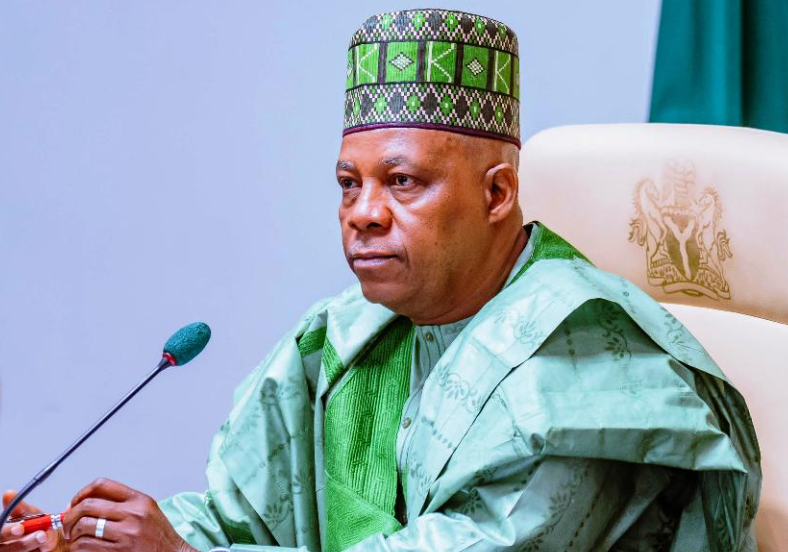
The Federal Government has intensified efforts to tackle unemployment by rallying global partners and industry leaders to invest in skills development aimed at creating sustainable jobs for millions of Nigerian youths.
Vice President Kashim Shettima made the call while declaring open the National Skills and Industry Alignment Roundtable Series (Q1 2026) in Abuja, stressing the need for coordinated action to align skills acquisition with labour market demands.
Represented by Senator Ibrahim Hassan Hadejia, Shettima emphasised that Nigeria’s challenge is not a lack of talent, but a disconnect between skills and industry needs.
“Until skills meet industry demand, job creation will remain below its full potential,” he stated, calling for a transition from fragmented programmes to a unified national system where skills translate into jobs, and jobs into enterprise-driven economic growth.
The roundtable, themed “Bridging Skills Supply and Labour Market Demand,” was convened by the Office of the Vice President with support from the European Union.
Highlighting Nigeria’s rapidly growing youth population, Shettima noted that many available jobs remain informal and disconnected from productivity, underscoring the urgency of reform.
He revealed that the current administration is prioritising a structured approach to workforce development, moving away from isolated interventions towards a coordinated framework that aligns training with industry requirements.
The Vice President also urged the private sector to play a central role in job creation by actively participating in workforce development.
“Industry must take its place at the table—not just as employers but as co-creators of the workforce Nigeria needs,” he said.
Minister of Housing and Urban Development, Ahmed Musa Dangiwa, described the initiative as vital to addressing Nigeria’s housing deficit, noting that the sector offers vast employment opportunities across both professional and artisan roles.
Also speaking, the EU Head of Cooperation for Nigeria and ECOWAS, Massimo De Luca, reaffirmed the Union’s commitment to supporting Nigeria’s job creation agenda through demand-driven skills programmes.
He noted that the EU is collaborating with partners such as the Tony Elumelu Foundation to strengthen Nigeria’s production system by developing relevant, market-driven skills.
Participants at the roundtable included representatives from the organised private sector, development partners like the German Agency for International Cooperation, and the Aliko Dangote Foundation.
The initiative underscores a growing consensus that only strong collaboration between government, industry, and development partners can unlock job opportunities and drive sustainable economic growth in Nigeria.