
The Federal Government has announced plans to significantly reduce its reliance on borrowing while intensifying efforts to mobilise foreign and domestic investments as part of a broad strategy to accelerate economic growth.
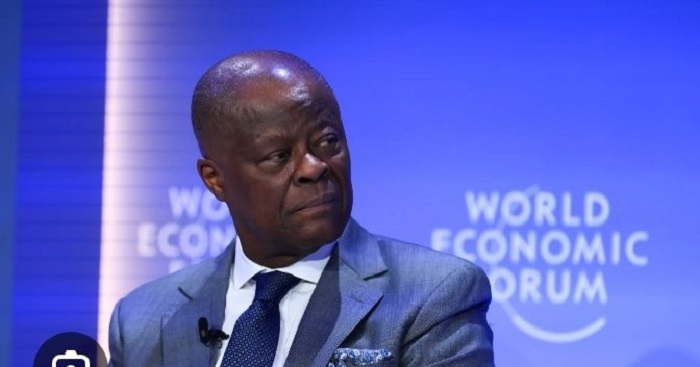
Minister of Finance and Coordinating Minister of the Economy, Wale Edun, disclosed this in an interview with Bloomberg on the sidelines of the World Economic Forum (WEF) in Davos, Switzerland.
Edun said the government’s fiscal direction is now firmly anchored on revenue generation and sustainable financing, stressing that borrowing is no longer Nigeria’s first option for funding development.
“The issue now is to focus on revenue and domestic resource mobilisation. We’re hoping to rely less on borrowing,” the minister said.
According to him, the Tinubu administration is implementing far-reaching reforms aimed at strengthening fiscal sustainability in the face of mounting global economic pressures. He noted that improved revenue generation, particularly through tax reforms, would naturally reduce the need for debt.
While Nigeria remains open to international capital markets, Edun said the priority has shifted to attracting private investment and making better use of domestic resources.
He revealed that the government is targeting wealthy regions, especially the Middle East, as a major source of private capital inflows. He cited the recently signed Comprehensive Economic Partnership Agreement (CEPA) with the United Arab Emirates as a critical step towards attracting foreign investors.
“We are looking to rely more on our own resources than on international institutions,” Edun said. “We also want to make better use of our regional market in ECOWAS and the wider African market under the African Continental Free Trade Area (AfCFTA).”
The minister said Nigeria’s economy has shown notable improvement, growing from about two per cent in early 2023 to over four per cent in the first half of 2025.
He added that the country is making progress on industrialisation, noting that Nigeria now refines about 650,000 barrels of crude oil daily, reducing dependence on raw exports.
“In terms of value, we now take oil that used to be exported as raw crude and refine it here into fuel and other chemical products. We are getting back on the path of industrial growth,” Edun said.
Despite global economic headwinds, Edun said Nigeria remains an attractive destination for investors due to its large market, abundant natural resources, and improving investment climate.
“We are confidently telling a story of real economic reform that we plan to continue. We are ready to do business,” he said.
Looking ahead, the minister said the government aims to further raise Nigeria’s tax-to-GDP ratio, enabling public spending of more than 20 per cent of GDP on infrastructure and social services over the long term.
He highlighted key reforms under the Tinubu administration, including the removal of fuel subsidies, lifting of foreign exchange restrictions, and a comprehensive overhaul of the tax system. The reforms are designed to raise government revenue to about 18 per cent of GDP by next year, from roughly 14 per cent currently.
Edun said the policies are targeted at achieving long-term economic sustainability, reducing dependence on external debt, and boosting investor confidence as part of a broader effort to modernise the economy.
At the Davos meeting, the minister is expected to engage global investors and address concerns around inflation, policy consistency, foreign exchange stability, and fiscal sustainability.
Recent economic indicators point to an improving macroeconomic outlook. The International Monetary Fund (IMF) has revised Nigeria’s growth forecast upward to 4.4 per cent in 2026, from an estimated 4.2 per cent in 2025, despite softer global oil prices.
According to the IMF, ongoing government reforms are expected to stabilise revenue collection and strengthen fiscal sustainability, underscoring Nigeria’s push to reduce debt dependence.
Data from the National Bureau of Statistics show that Nigeria’s public debt-to-GDP ratio stood at 39.4 per cent in the first quarter of 2025 following the rebasing of the GDP.
Meanwhile, the Debt Management Office reported that total public debt rose to N152.4 trillion, or $99.66 billion, by the second quarter of 2025. External debts accounted for N71.85 trillion, while domestic debts stood at N80.55 trillion.
The 2026 Appropriation Bill projects total revenue of N34.33 trillion against total expenditure of N58.18 trillion, with N15.52 trillion allocated to debt servicing and a budget deficit of N23.85 trillion, representing 4.28 per cent of GDP.