
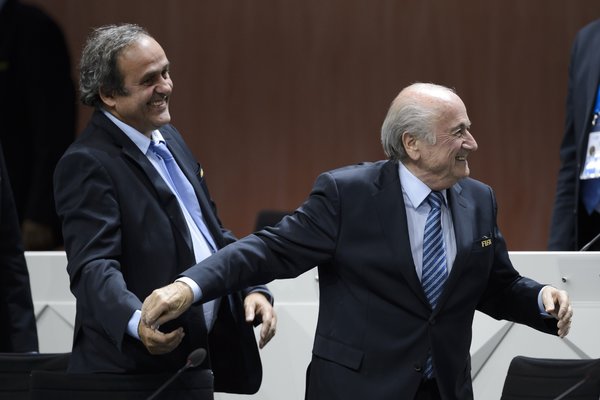
Sepp Blatter, the longtime president of FIFA, was provisionally suspended from all soccer activities for 90 days on Thursday, as Swiss authorities investigate him on suspicion of corruption.
FIFA’s vice president, Michel Platini, and its secretary general, Jérôme Valcke, who was already on leave, were also provisionally barred from the sport. The suspensions take effect immediately.
The provisional suspension was imposed by FIFA’s independent ethics committee. The ban can be renewed for another 45 days after the initial 90, and it requires a complete separation from FIFA, world soccer’s governing body, where Mr. Blatter has worked in various roles since 1975, meaning he cannot visit the organization’s headquarters in Zurich or even attend matches.
Mr. Blatter has been the president of FIFA since 1998 and for years had largely avoided any direct impact from the various scandals that have enveloped a variety of top soccer officials during his tenure. This spring, however, 14 soccer and marketing officials were arrested in connection with investigations by Swiss and United States authorities. Several were arrested as they gathered in Zurich for FIFA’s annual congress, on charges that included racketeering, wire fraud and money laundering, and a few have been extradited to the United States.
Mr. Blatter was not among those charged in the United States indictments. But less than a week later, he announced — only days after winning a fifth term as president — that he would voluntarily relinquish his position. He called for a special election to choose his successor, and it was later scheduled for February. Mr. Blatter said then that while he had not done anything wrong personally, it was clear that FIFA needed immediate reform.
Late last month, however, officials from the office of Switzerland’s attorney general surprised Mr. Blatter at FIFA’s headquarters, seizing documents from his office and questioning him about two transactions that it was investigating. The first was a 2005 agreement for World Cup television rights that FIFA — with Mr. Blatter leading — sold to Jack Warner, the former president of Concacaf, for a price seen as well below market value. Mr. Warner later resold the rights at a significant profit.
The second transaction was a payment of 2 million Swiss francs, or about $2.1 million, that Mr. Platini, also the head of European soccer’s governing body, UEFA, received in 2011. Mr. Platini has claimed the payment was for work he performed for Mr. Blatter nine years earlier. Mr. Platini, who Swiss prosecutors said was “in between” a witness and an accused person, is also being investigated by FIFA’s ethics committee.
In recent days, Mr. Blatter has rejected calls from major sponsors demanding that he step down. This week, the German magazine Bunte printed an interview with him in which he labeled the Swiss investigation “outrageous.”
Now that Mr. Blatter has been suspended, FIFA’s rules of succession dictate that Issa Hayatou, the leader of African soccer’s governing body, will serve as acting president because he is FIFA’s most senior vice president. Mr. Blatter’s top deputy, Mr. Valcke, was relieved of his duties in September in a separate ethics case.