
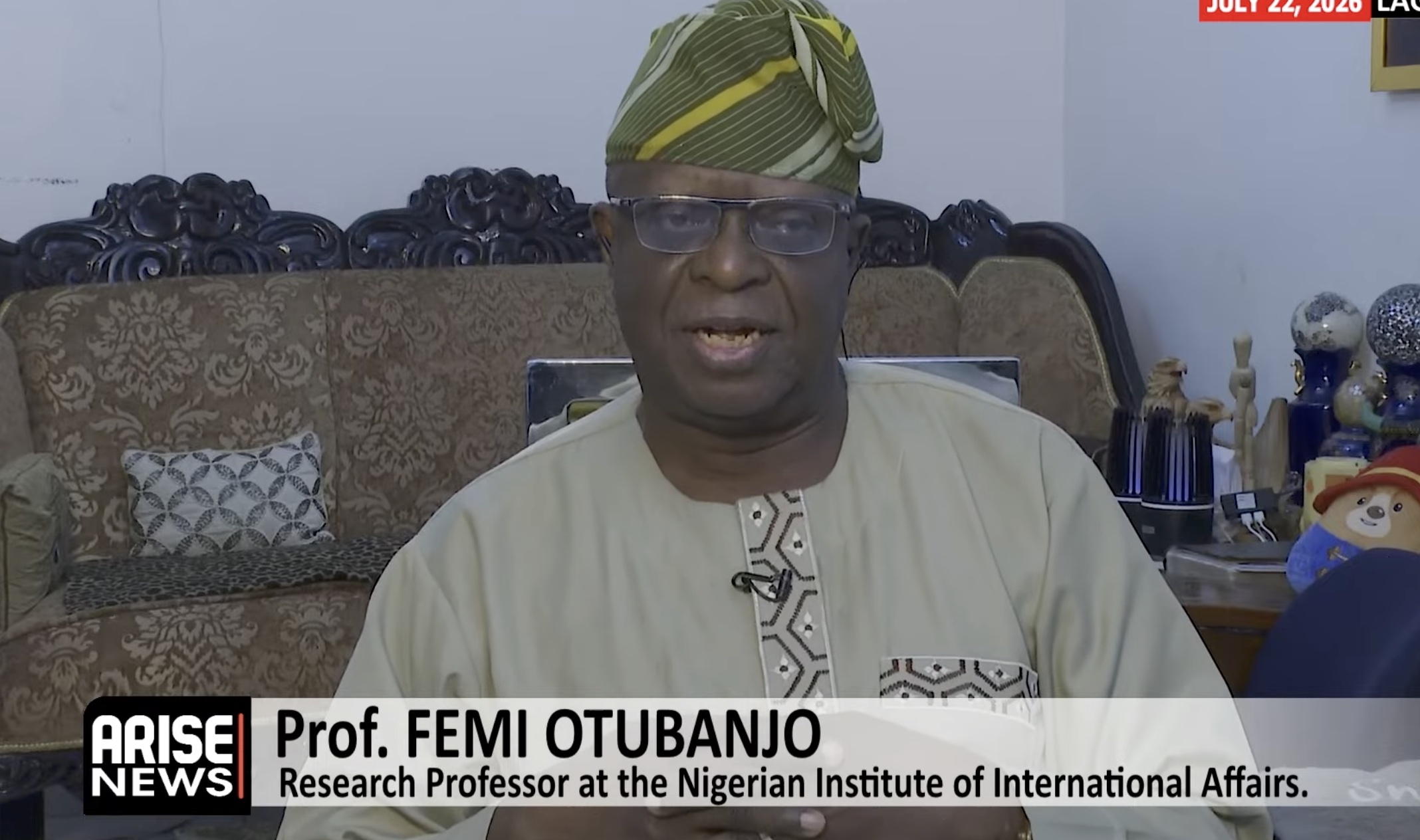
Research Professor at the Nigerian Institute of International Affairs (NIIA), Prof. Femi Otubanjo, has dismissed reports of a one-term agreement between the African Democratic Congress (ADC) presidential candidate, Peter Obi, and former Kano State Governor, Senator Rabiu Kwankwaso, describing the alleged arrangement as lacking constitutional and political validity.
Speaking during an interview with ARISE NEWS on Wednesday, Otubanjo argued that Nigeria’s Constitution does not mandate the rotation of the presidency between the North and the South, stressing that competence, ability and federal character should take precedence over informal political agreements.
He questioned the basis of zoning power strictly along regional lines, insisting that leadership should be determined by merit rather than geographical considerations.
Reacting to claims by Kwankwaso that Obi would serve only one four-year term if elected in 2027, the professor said such promises were unlikely to survive the realities of governance.
According to him, the powers and privileges associated with the presidency often change political calculations, making pre-election agreements difficult to sustain.
Otubanjo also argued that a single four-year term would not be sufficient for any president to fully understand the complexities of governance and effectively implement reforms before another election cycle begins.
Describing the reported pact as “eyewash,” he questioned who such an agreement would be signed with, noting that there was no constitutional or institutional framework backing such an arrangement.
He maintained that if President Bola Tinubu secures a second term in 2027, the presidency would naturally return to the North in 2031 under existing political realities, regardless of any informal agreements.
The professor also rejected proposals for a single six-year presidential tenure, saying the opportunity for citizens to either renew or withdraw a president’s mandate after four years remains an important democratic principle.
Otubanjo urged opposition figures to focus on presenting clear policy alternatives instead of discussing power-sharing arrangements, arguing that Nigerians deserve to hear how prospective leaders intend to address the country’s challenges.
He further lamented the state of Nigeria’s democracy, blaming poor leadership, corruption and electoral malpractice for weakening the country’s political foundation.
According to him, meaningful governance reforms will remain difficult until Nigeria addresses the underlying issues affecting its political culture, leadership and institutional accountability.